
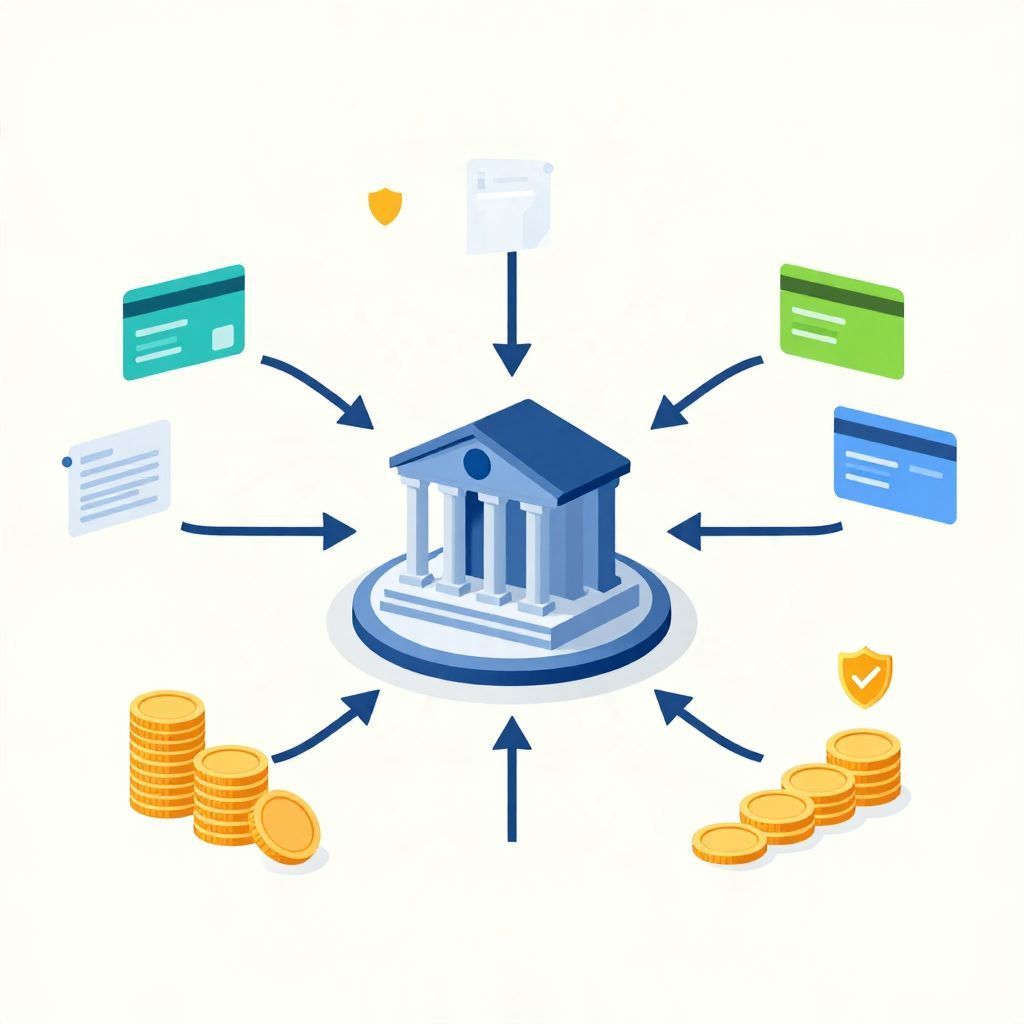
If you’ve ever wondered how money, securities, or bets move safely between two parties, you’re really asking: what is a clearing house? In simple terms, it is an intermediary that helps confirm, match, and settle transactions so both sides can complete the deal with less risk.
Clearing houses are used in banking, investing, and payments to reduce the chance that one party fails to deliver what it promised. They do not usually replace the buyer or seller; instead, they help make the transaction orderly, accurate, and more secure.
What Is A Clearing House?
A clearing house is a financial intermediary that stands between two parties in a transaction to verify details, manage obligations, and help ensure settlement happens correctly. In many markets, it reduces counterparty risk by making sure each side meets its commitments before the trade is finalized.
How a Clearing House Works
When two parties agree to trade, there can be a risk that one side does not pay or deliver on time. A clearing house helps manage that risk by checking the trade details, recording the obligation, and coordinating the final exchange of money or assets.
Basic process
- Two parties agree to a transaction.
- The clearing house receives the trade information.
- It verifies and matches the details.
- It may become the central counterparty, meaning it effectively sits between the buyer and seller.
- Settlement occurs when cash, securities, or other assets are exchanged.
This process can happen very quickly in modern markets, but the exact timing depends on the asset class, the market rules, and the jurisdiction.
Why this matters
- Lower counterparty risk: Each side has more confidence that the transaction will complete.
- Better market efficiency: Trades are processed in a standardized way.
- Reduced operational errors: Matching and recordkeeping help catch mistakes.
- Support for large markets: Clearing houses help high-volume markets function smoothly.
Clearing House Meaning in Everyday Language
If that sounds technical, think of a clearing house as a trusted middle layer that checks the paperwork and makes sure both sides of a financial deal hold up their end. It does not create money or guarantee profits; it simply helps transactions settle with less confusion and less risk of default.
Clearing House Examples
Clearing houses appear in several parts of the financial system. The exact structure depends on the market, but the core job is similar: confirm obligations and help settlement happen.
1. Stock and derivatives markets
In securities markets, a clearing house may help process stock trades, options, futures, and other contracts. For example, if an investor buys a futures contract, the clearing house helps ensure the buyer and seller can meet the contract terms. This is especially important because derivatives can involve larger obligations than the initial cash paid.
2. Payment systems
Some payment networks use clearing mechanisms to move funds between banks. A card payment, for instance, may be authorized quickly, then cleared and settled later through the payment network and banking system. The clearing step helps reconcile who owes what before final settlement.
3. Check clearing
When a check is deposited, the bank needs to verify the payment and move funds from the payer’s bank to the recipient’s bank. A clearing process helps route that transaction and confirm that the funds are available before final settlement.
4. Insurance and other financial contracts
In some specialized markets, clearing-like functions help standardize obligations and reduce uncertainty. The details vary widely, so it is important not to assume every contract uses the same process or protections.
Clearing House vs. Settlement vs. Custodian
These terms are related, but they are not the same. Understanding the difference can help you read financial documents more clearly.
Clearing house
Handles verification, matching, risk management, and the coordination of obligations between parties.
Settlement
Is the actual final exchange of money, securities, or other assets that completes the transaction.
Custodian
Safeguards assets on behalf of a client, such as holding securities in an investment account. A custodian may work alongside a clearing house, but it serves a different role.
In short, clearing is about organizing and reducing risk; settlement is about completing the transfer; custody is about holding assets safely.
Why Clearing Houses Matter for Investors and Consumers
Most people do not interact with clearing houses directly, but they benefit from them every time a market transaction is processed more reliably. That said, a clearing house does not eliminate all risk. Market prices can still change, counterparties can still face problems, and fees may still apply depending on the product or platform.
Benefits
- More confidence that trades will be completed
- Less chance of one party walking away from a deal
- Standardized processing across large markets
- Improved transparency in trade processing
Limitations
- It does not protect you from market losses
- It does not remove all operational or legal risk
- Rules and protections vary by country and market
- Fees, margin requirements, or delays may still apply
Example: A Simple Trade Through a Clearing House
Imagine two parties agree to a trade for 100 shares of a company at $50 per share. The total trade value is $5,000 before fees. The clearing house helps verify the trade details, tracks the obligation, and coordinates delivery of the shares and the cash.
If the buyer is required to post margin, that amount is not the same as the final cost of the shares. Margin is a performance deposit, not a purchase price. The exact amount depends on the market, the broker, and the asset’s risk profile.
Are Clearing Houses Safe?
Clearing houses are designed to improve safety and reduce default risk, but they are not a guarantee against every problem. Their effectiveness depends on strong rules, capital requirements, and risk controls. In stressed markets, clearing houses can face pressure too, which is why they are closely monitored in many jurisdictions.
For the average person, the main takeaway is that clearing houses are a back-end protection mechanism, not an investment product. They help the financial system work more smoothly, but they do not guarantee returns or prevent losses from bad trades.
Common Questions About Clearing Houses
Do all financial transactions use a clearing house?
No. Many do, especially in organized markets, but not every transfer or contract goes through a clearing house. Some transactions are handled directly between institutions or through other payment and settlement systems.
Is a clearing house the same as a bank?
No. A bank takes deposits, makes loans, and offers financial services to customers. A clearing house primarily processes and manages transactions between other financial parties.
Does a clearing house guarantee payment?
It can reduce the risk that a trade fails, but “guarantee” depends on the market structure and rules. There are safeguards, but no system removes all financial risk.
Why do markets need clearing houses?
Because large markets involve many transactions, and without a central process, the risk of errors and defaults would be much higher. Clearing houses help standardize and stabilize that process.
Key Takeaway
So, what is a clearing house? It is a financial intermediary that helps verify, clear, and settle transactions while reducing the risk that one side fails to deliver. You may not see it as a consumer, but it plays an important role in keeping markets, payments, and trades running more smoothly. If you want to understand the broader system around it, you may also find what is business finance and this clearing house guide helpful.