
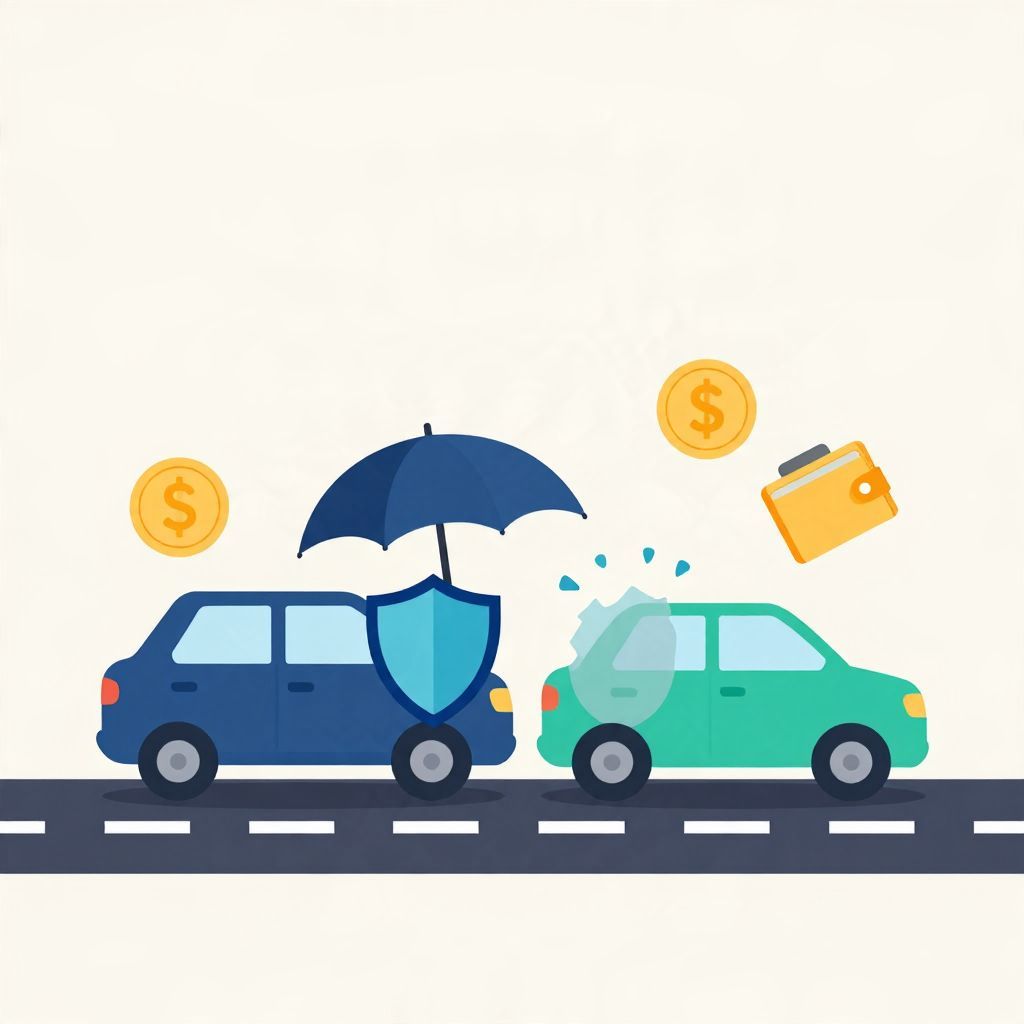
If you’re wondering whether uninsured motorist coverage is worth it, the short answer is often yes, especially if you drive regularly and want protection from a costly gap in auto insurance. It can help pay for injuries and, in some policies, related losses when the at-fault driver has no insurance or not enough insurance.
Whether it makes sense for you depends on your budget, your health insurance, your state or country’s rules, and how much financial risk you can handle out of pocket.
Is uninsured motorist coverage worth it?
For many drivers, uninsured motorist coverage is worth the relatively modest extra premium because it can protect you from major medical and financial losses after a crash caused by an uninsured or underinsured driver. It is especially valuable if you have limited savings, a long commute, or live where uninsured drivers are common.
What uninsured motorist coverage actually does
Uninsured motorist coverage, often shortened to UM coverage, is designed to help when the other driver cannot pay for the damage they caused. Depending on where you live and how the policy is written, it may cover bodily injury, and in some places property damage as well.
Common situations it may cover
- A driver hits you and has no insurance.
- The at-fault driver leaves the scene and is never identified.
- The other driver has insurance, but their limits are too low to cover your losses fully.
What it usually does not cover
- Your own car repairs, unless your policy includes a property damage version of UM or a similar add-on.
- Mechanical breakdowns or wear and tear.
- Losses unrelated to a covered accident.
Because policy wording varies by insurer and jurisdiction, it is important to read the definitions carefully. The same phrase can mean slightly different things in different places.
Why this coverage can be valuable
The main reason uninsured motorist coverage matters is simple: the other driver’s lack of insurance should not automatically become your financial problem. If you are injured, medical bills, missed work, and follow-up care can add up quickly.
It can protect your savings
Without this coverage, you may have to rely on your emergency fund, health insurance, or a lawsuit to recover costs. Lawsuits can take time, and winning a judgment does not guarantee the other driver can actually pay.
It can reduce out-of-pocket risk
Even a relatively small crash can create large expenses. For example, if you have $8,000 in medical bills and $3,000 in lost wages after a serious accident, that is $11,000 in potential losses before you even consider pain, recovery time, or follow-up treatment. UM coverage can help absorb that risk, subject to your policy limits and deductible rules.
It can be especially useful if you do not have strong backup coverage
If you do not have comprehensive health insurance, a large emergency fund, or disability coverage, uninsured motorist coverage can serve as an important financial backstop.
When uninsured motorist coverage may be less necessary
That does not mean everyone needs the highest possible limit. In some situations, the coverage may be less urgent, though still worth considering.
You can comfortably cover a large loss yourself
If you have substantial savings and could absorb a several-thousand-dollar or even larger setback without disrupting your finances, you may be more willing to self-insure part of the risk.
Your area has strong insurance enforcement
Some places have lower rates of uninsured driving than others, but this can change over time. Even in areas with strong enforcement, uninsured drivers still exist, so the risk is reduced rather than eliminated.
You already have strong overlapping protection
Health insurance, disability coverage, and a solid emergency fund can reduce the need for UM coverage, but they do not replace it. Health insurance may still leave you with deductibles, copays, and non-medical losses such as lost income.
How it compares with underinsured motorist coverage
Many people confuse uninsured motorist coverage with underinsured motorist coverage. They are related but not identical.
- Uninsured motorist coverage helps when the at-fault driver has no insurance or cannot be identified.
- Underinsured motorist coverage helps when the at-fault driver has insurance, but not enough to cover your losses.
In practice, underinsured coverage can be just as important as uninsured coverage. A driver may carry the legal minimum and still leave you with unpaid bills after a serious accident.
How to think about the cost
The value of uninsured motorist coverage is not just about the premium. It is about comparing a known, smaller cost now with a potentially much larger cost later.
A simple way to evaluate it
- Estimate how much financial damage you could face in a worst-case accident.
- Check how much UM coverage you already have, if any.
- Compare the extra premium to the amount of risk transferred to the insurer.
- Consider whether your savings could cover the gap if the other driver cannot pay.
For example, if adding UM coverage costs an extra $12 per month, that is $144 per year. If it helps protect you from a possible five-figure loss after a crash, many drivers will see that as worthwhile. But if your budget is tight, even a small premium matters, so the decision should fit your overall financial picture.
What to check before you buy
Not all policies are the same. Before deciding, review the details carefully so you know what you are actually buying.
Coverage limits
Limits are the maximum the insurer will pay. A low limit may not be enough if you have serious injuries. Higher limits usually cost more, but they can offer better protection.
Deductibles and exclusions
Some versions of this coverage may have deductibles or special conditions. Exclusions can also apply, depending on the policy and location.
Whether property damage is included
In some places, UM coverage focuses on injuries only. In others, there may be a separate property damage option. Make sure you know whether your car repairs are covered or whether you would need collision coverage for that.
How claims are handled
Claims may require proof that the other driver was uninsured or could not be identified. That can mean police reports, witness statements, or other documentation. The process can vary by insurer and jurisdiction.
Who should strongly consider it
Uninsured motorist coverage tends to be most useful for drivers who would struggle to absorb a large unexpected expense.
- People with limited emergency savings
- Commuters who spend a lot of time on the road
- Families relying on one vehicle
- Drivers with high medical risk or expensive vehicles
- Anyone living in a place where uninsured driving is a concern
If you fit one or more of these categories, the coverage may be a practical way to protect your budget from a rare but expensive event.
Who might decide against higher limits
Some drivers may choose lower limits or skip extra protection if their financial situation allows it, but this is a trade-off, not a free pass.
- Drivers with strong savings and low debt
- People who drive infrequently
- Households with broad insurance protection elsewhere
Even then, it is worth asking whether the premium is small enough to justify the protection. In many cases, the question is not whether to have any coverage at all, but how much coverage is enough.
How uninsured motorist coverage fits into a bigger money plan
Insurance is one part of financial planning. The goal is not to insure every possible inconvenience, but to protect yourself from losses that could derail your budget or force you into debt.
A balanced approach
- Keep an emergency fund for smaller surprises.
- Use insurance for losses that would be hard to pay from savings alone.
- Review coverage after major life changes, such as a new car, a new job, or a move.
- Compare the premium with the size of the risk, not just with other monthly bills.
This is why uninsured motorist coverage often makes sense: it helps protect your financial foundation from someone else’s mistake.
Bottom line
Is uninsured motorist coverage worth it? For many drivers, yes. It can be an affordable way to protect against a serious financial loss if you are hit by someone who has no insurance or too little insurance. The right choice depends on your budget, your risk tolerance, and the other protections you already have. If you want to keep learning, you may also find does insurance follow the car or the driver and how much does insurance increase after an accident helpful.