
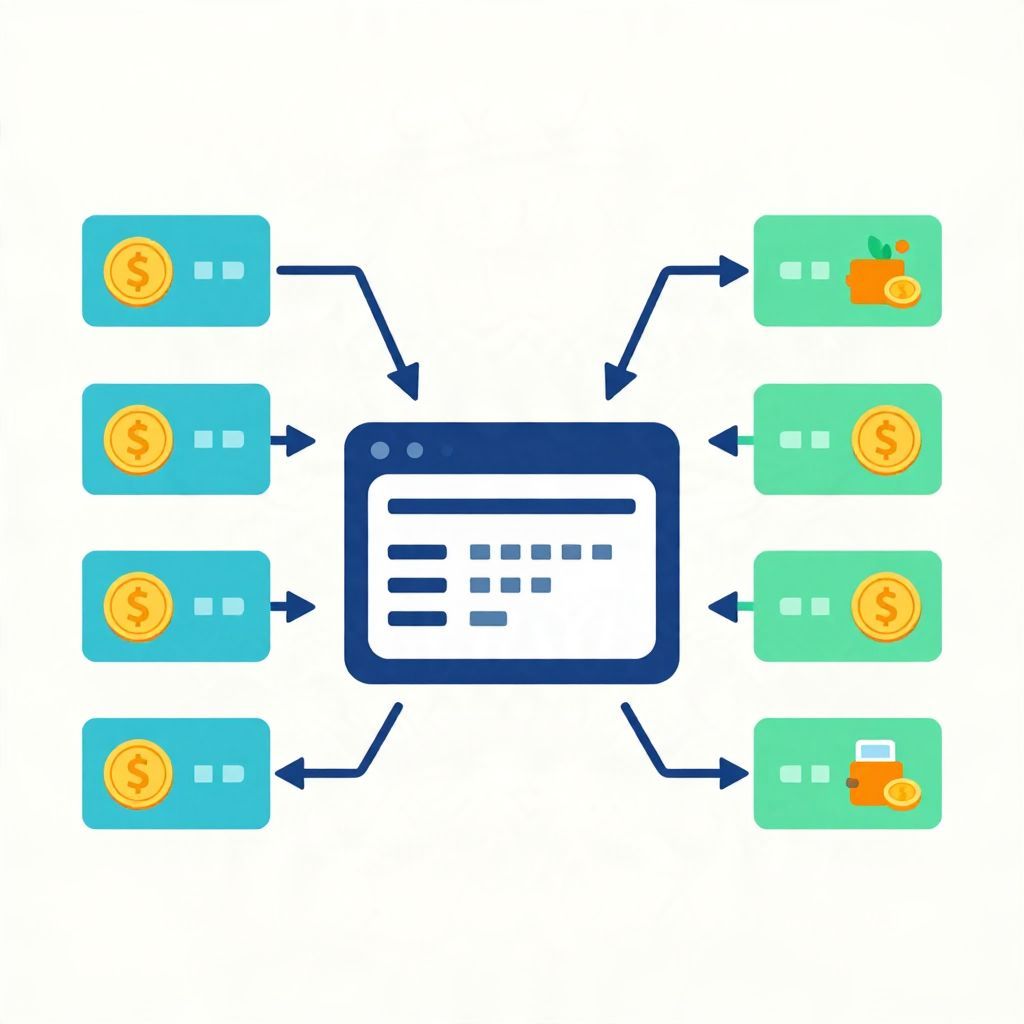
If you’re asking, “How does split pay work?” the short answer is that it divides one purchase or payment into two or more smaller payments instead of charging the full amount all at once. The exact setup depends on the provider, merchant, or bank involved, so the timing, fees, and eligibility rules can vary.
Split pay is common in budgeting tools, buy now pay later plans, payroll arrangements, and bill-sharing situations. Understanding the terms matters because splitting a payment can make cash flow easier, but it can also create fees, interest, or missed-payment risks if you do not track the schedule carefully.
How does split pay work?
Split pay works by breaking a single payment into multiple parts that are collected over time or from different funding sources. In consumer finance, this often means paying part now and part later. In payroll or business settings, it can also mean dividing income or expenses across accounts, dates, or people.
The basic idea
Instead of paying the full amount upfront, you agree to a payment structure such as two equal installments, a deposit plus a final balance, or several scheduled payments. The total cost may stay the same, or it may increase if fees or interest are added.
Common examples of split pay
- Retail checkout: A purchase is divided into multiple payments.
- Bill splitting: Roommates or friends divide one shared expense.
- Payroll split deposit: A paycheck is sent to more than one bank account.
- Invoice payments: A client pays a deposit first and the rest later.
What happens when you use split pay?
When you choose split pay, the provider usually checks whether you qualify, then sets the payment schedule. You may pay the first portion immediately, and the remaining balance is charged automatically on later dates. Some plans are interest-free if paid on time, while others charge finance fees or interest.
Typical steps in a split pay plan
- You select split pay at checkout or in your account.
- The provider shows the payment schedule and any fees.
- You agree to the terms and authorize payment.
- The first payment is taken, or a deposit is charged.
- Future payments are collected on scheduled dates.
Illustrative example
Suppose a $400 purchase is split into four equal payments. If there are no fees, each payment is $100. If the provider charges a $10 service fee, the total becomes $410, and each payment may be $102.50 depending on how the fee is allocated. Always check whether the advertised amount includes fees.
Different types of split pay
1. Buy now, pay later plans
These plans let you receive goods or services now and pay in installments. They may be interest-free for a short period or may charge interest if the balance is not paid by a certain date. Terms vary by provider, merchant, and location.
2. Split deposits and final payments
Some businesses ask for a deposit upfront and the rest later. This is common for travel, event bookings, custom services, and large purchases. The deposit may be nonrefundable, so it is important to understand cancellation rules before paying.
3. Payroll split deposit
With split deposit, your employer sends part of your paycheck to one account and the rest to another. This can help with budgeting, saving, or paying bills automatically. It does not change your gross pay; it only changes where the net pay is deposited.
4. Shared expense splitting
Apps and banking tools may help divide a bill among multiple people. For example, if three roommates share a $90 utility bill equally, each person owes $30. This is not a loan or credit product; it is simply a way to divide a payment fairly.
Does split pay cost extra?
Sometimes yes, sometimes no. A split payment can be free if the provider does not charge interest or fees and you pay on time. But some plans include service fees, late fees, interest, or account charges. The real cost depends on the contract, not just the headline payment amount.
Costs to watch for
- Interest: The balance may grow over time if the plan is not interest-free.
- Service fees: A fixed fee may be added for using the plan.
- Late fees: Missed or delayed payments can trigger penalties.
- Returned payment fees: Failed bank drafts or card charges may cost extra.
Why the total matters
A payment plan can look affordable because each installment is small, but the total amount paid may be higher than paying in full. Compare the total cost, not just the monthly or weekly payment, before agreeing.
How split pay affects your budget
Split pay can make a large expense easier to manage by spreading it across several pay periods. That can help with cash flow, especially if you are waiting for your next paycheck. However, it also creates future obligations that must fit into your budget.
Budgeting benefits
- Reduces the amount needed upfront
- Can help avoid draining savings all at once
- May make essential purchases more manageable
Budgeting risks
- Future payments can overlap with other bills
- It may encourage overspending because the first payment is smaller
- Missed payments can damage your finances and possibly your credit, depending on the product
Simple budgeting check
Before using split pay, ask: “Can I comfortably cover every installment from my normal income after rent, food, transportation, and other fixed bills?” If the answer is uncertain, the plan may be too risky.
Is split pay the same as a loan or credit card?
Not always, but it can function similarly. Some split pay plans are short-term installment agreements with no interest. Others are credit products that may report to credit bureaus, charge interest, or involve underwriting. A credit card gives you a revolving line of credit, while split pay usually has a fixed payment schedule.
Main differences
- Split pay: Fixed number of payments, often tied to one purchase.
- Loan: Borrowed amount repaid over time, often with interest.
- Credit card: Revolving balance that can be reused after repayment.
If a split pay plan is treated as credit, it may affect your credit file depending on the provider and local rules. If it is not reported, it may still affect you if you miss payments and the account is sent to collections.
What should you check before choosing split pay?
Read the terms carefully before you agree. The key details are usually the payment dates, total cost, fees, refund rules, and what happens if a payment fails. If anything is unclear, ask the merchant or provider before confirming the transaction.
Important questions to ask
- How many payments will I make?
- What is the total cost, including fees?
- Is there interest, and if so, how is it calculated?
- Are payments automatic?
- What happens if I return the item or cancel the service?
- Are late fees or penalties possible?
- Will this affect my credit?
Watch for refund and cancellation rules
Refunds can be complicated if you have already paid part of the balance. In some cases, you may get a refund after the provider adjusts the remaining payments. In other cases, fees may not be refunded. Policies vary by merchant, provider, and jurisdiction.
How to use split pay responsibly
Split pay is most useful when it helps you manage timing, not when it lets you buy something you cannot truly afford. A good rule is to treat each installment like a separate bill and make sure it fits your monthly plan.
Practical tips
- Use split pay only for planned purchases.
- Keep a calendar of due dates.
- Set reminders or automatic payments if available.
- Leave room in your budget for unexpected expenses.
- Avoid stacking multiple installment plans at once.
Example of good vs. risky use
Good use: You need to replace a broken appliance and can afford $75 a month for four months. Risky use: You split several nonessential purchases and end up with five different payment schedules that strain next month’s budget.
How split pay works in business and banking
Outside consumer shopping, split pay can also describe how money is divided in business or banking. For example, a business may split revenue between operating accounts and tax reserves, or an employer may split a paycheck between checking and savings. In these cases, the purpose is organization rather than borrowing.
Why businesses use split pay
- To separate operating funds from savings or tax money
- To divide payments among vendors or partners
- To manage cash flow across different dates
For businesses, the accounting treatment can matter. A split payment may need to be recorded across invoices, deposits, or expense categories. If you run a business, it is wise to confirm how your accounting system handles partial payments.
When split pay may not be a good idea
Split pay is not ideal if the payment schedule is tight, the fees are high, or you are already carrying significant debt. It can also be a poor choice if you are unsure about returning the item, because refunds and reversals may be slower or more complicated than a single payment.
Consider avoiding split pay if:
- Your income is irregular and future payments are uncertain
- You are already struggling with debt or overdrafts
- The plan includes high fees or interest
- You may need to cancel or return the purchase
Bottom line
How does split pay work? It divides one payment into smaller parts over time or across accounts, which can make budgeting easier but may add fees, interest, or repayment risk. Always compare the total cost, read the terms, and make sure every installment fits comfortably into your budget. For related reading, see can I split payment on Amazon and how does Cash App Afterpay work.