
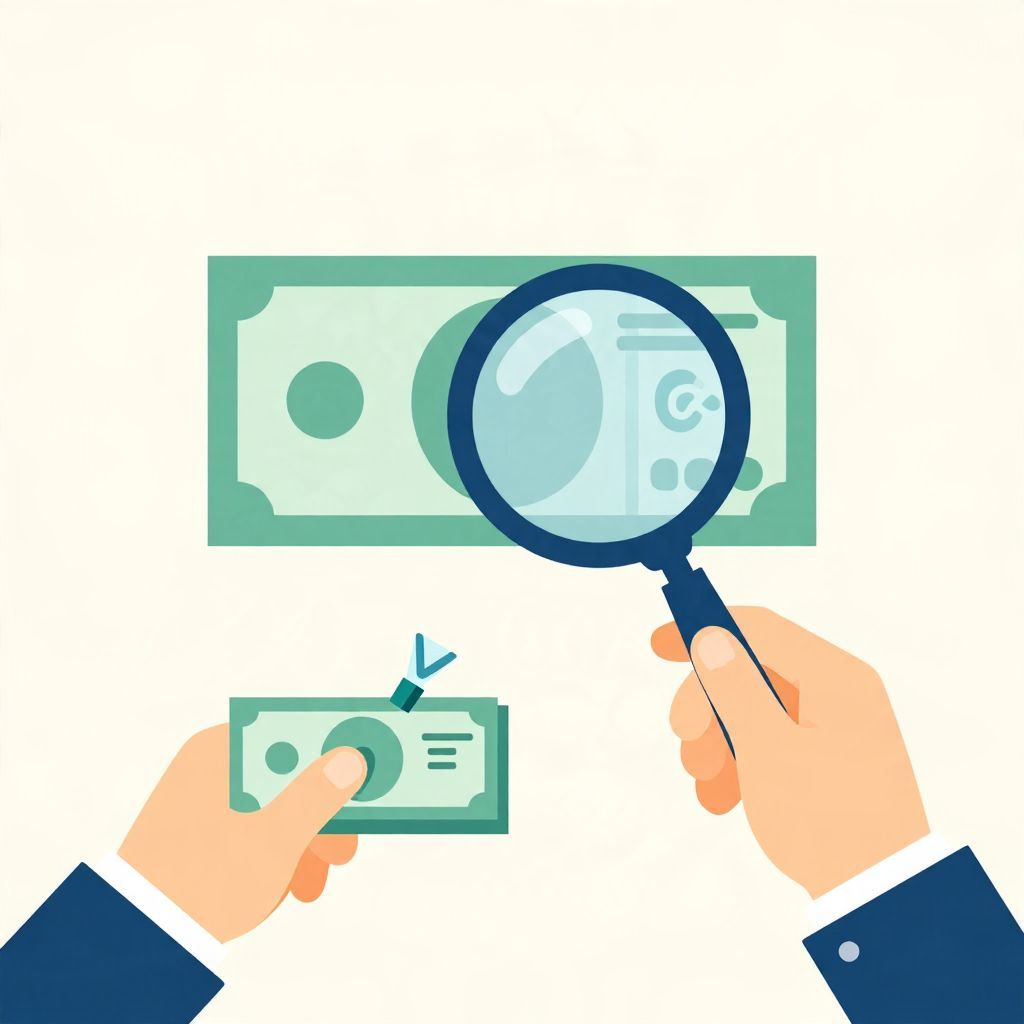
If you’re wondering how to tell if 100 dollar bill is real, the good news is that U.S. $100 notes have several easy-to-check security features. You do not need special equipment to spot many fakes. A quick look, feel, and tilt test can reveal most obvious counterfeits before you accept the bill.
Still, no single sign is enough on its own. The safest approach is to check multiple features together and compare the bill to one you know is genuine. If you suspect a fake, do not try to spend it.
How To Tell If 100 Dollar Bill Is Real
A real U.S. $100 bill has a distinct feel, raised printing, a blue 3-D security ribbon, a color-shifting bell in the inkwell, and a watermark visible when held to light. Check several features together, not just one. If multiple details look off, the bill may be counterfeit.
Step-by-Step Guide to Checking a $100 Bill
1. Feel the paper and printing
Genuine U.S. currency is printed on a special cotton-and-linen blend, not ordinary paper. It usually feels crisp, slightly rough, and more durable than standard printer paper. The ink on the portrait and large numerals should feel slightly raised when you run a finger over it.
Counterfeit bills often feel too smooth, too flimsy, or too glossy. That said, wear and age can change the texture of a real bill, so this test works best when combined with other checks.
2. Hold the bill up to light
When you hold a genuine $100 bill to the light, you should see a faint watermark of Benjamin Franklin on the right side of the note. You should also see a vertical security thread that glows pink under ultraviolet light. The thread is embedded in the paper, not printed on top of it.
If the watermark is missing, blurry, or printed-looking, that is a warning sign. If the thread appears to be drawn on or placed incorrectly, the bill may be fake.
3. Look for the blue 3-D security ribbon
Modern $100 bills include a blue security ribbon woven into the paper. This ribbon is not printed; it is part of the bill itself. When you tilt the note, the images on the ribbon should appear to move and shift.
On a counterfeit bill, the ribbon may look flat, printed, or static. Some fake notes try to imitate the ribbon, but the motion effect is difficult to copy well.
4. Tilt the bill to check the color-shifting bell
The copper-colored bell inside the inkwell on the front of the bill should change to green when you tilt it. This is one of the easiest visual checks for a newer $100 note.
If the bell does not change color, changes in a strange way, or looks like a simple printed image, the bill deserves a closer look.
5. Examine the portrait and fine details
Real currency has sharp, clean lines in the portrait, borders, and lettering. The portrait of Franklin should look detailed and crisp, not blurry or smudged. The background patterns should also be even and precise.
Counterfeit bills often show uneven borders, fuzzy printing, or small mistakes in the design. Look especially closely at the edges of the bill and the tiny text.
Key Security Features on a Real $100 Bill
Watermark
A genuine bill has a watermark that is visible from both sides when held to light. It should match the portrait on the bill and appear as part of the paper, not as an added image.
Security thread
The embedded security thread is another important feature. It is positioned vertically and should be visible when backlit. Under ultraviolet light, it should glow pink.
Blue 3-D ribbon
The blue ribbon is woven into the note and contains shifting bells and “100” images. Because it is integrated into the paper, it should not peel off or look like a sticker.
Color-shifting ink
The bell in the inkwell changes from copper to green when tilted. This shifting effect is a strong sign of authenticity on newer designs.
Raised printing
Real bills often have raised ink on the portrait, Treasury seal, and serial numbers. This tactile feature is harder for counterfeiters to reproduce accurately.
Common Signs a $100 Bill May Be Fake
- The paper feels like regular printer paper or is unusually smooth.
- The watermark is missing or looks printed on.
- The security thread is absent, misplaced, or printed on the surface.
- The blue ribbon does not move when the bill is tilted.
- The color-shifting bell stays the same color.
- The portrait or borders look blurry, uneven, or poorly aligned.
- The bill has repeated serial numbers that look odd or inconsistent.
One suspicious feature does not always prove a bill is fake, especially if it is worn or damaged. But several warning signs together should make you cautious.
What to Do If You Think a $100 Bill Is Counterfeit
Do not spend it
Passing a counterfeit bill along can create legal trouble, even if you did not know it was fake. If you suspect a bill is counterfeit, set it aside and avoid using it.
Compare it with another bill
If possible, compare the suspicious note with another genuine $100 bill. Look at the feel, printing quality, watermark, ribbon, and color-shifting features side by side.
Contact the appropriate authority
In the United States, banks and law enforcement agencies can help determine whether a bill is counterfeit. If you received the note from a business, you may also want to let them know where and when you got it.
Rules and procedures can vary by country, so if you are outside the U.S., check your local central bank or law enforcement guidance for the correct process.
Helpful Tips for Spotting Counterfeit Money Faster
- Use more than one test. Feel, look, and tilt the bill.
- Check the bill in good light. Poor lighting can hide details.
- Learn the design of the newest $100 note. Counterfeiters often copy older versions poorly.
- Be cautious with unusually clean or unusually worn bills. Both can hide flaws.
- Trust inconsistencies. If the paper, print, and security features do not match, investigate further.
Why It Matters to Check Cash Carefully
Accepting counterfeit money means you may lose the full value of the bill, because banks and businesses usually do not reimburse fake currency. That is why it is worth taking a few seconds to inspect large bills, especially in cash-heavy transactions.
This is particularly important for small businesses, side hustles, and anyone handling cash payments. A careful check can help reduce losses and avoid awkward disputes later.
Quick Checklist Before You Accept a $100 Bill
- Does the paper feel authentic?
- Is the portrait sharp and detailed?
- Can you see the watermark when held to light?
- Is the security thread embedded in the paper?
- Does the blue ribbon move when tilted?
- Does the bell change from copper to green?
Final Takeaway
The best way to tell if a 100 dollar bill is real is to check several security features together: the feel of the paper, the watermark, the embedded thread, the blue 3-D ribbon, and the color-shifting bell. If anything seems off, compare it with a known genuine bill and avoid spending it. For more personal-finance basics, you may also find how rare is a 2 dollar bill and how to find cost of goods sold useful.