
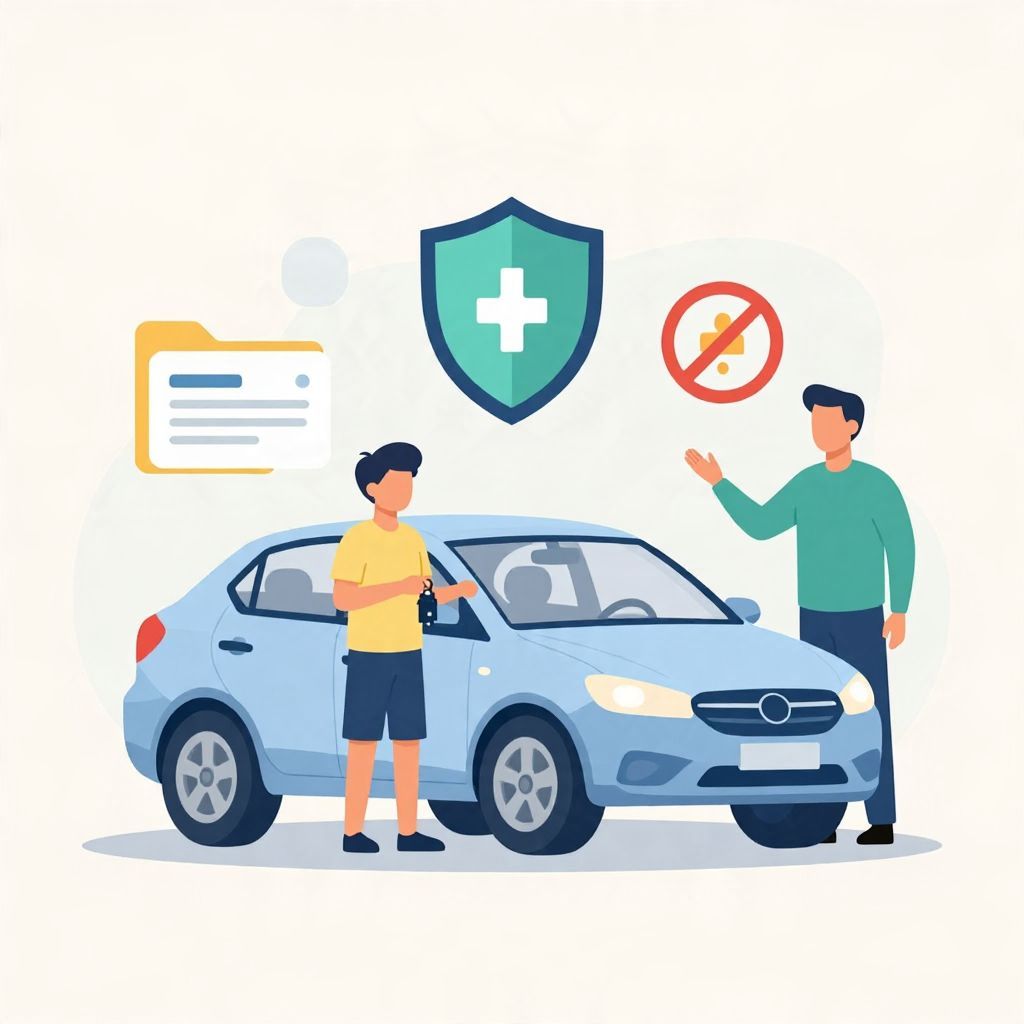
If you’re wondering, “Can my son drive my car if he is not insured?” the short answer is: sometimes, but it depends on your insurance policy, where you live, and how often he drives the car. In many cases, a driver can legally borrow a car without having their own policy, but that does not mean your insurer will automatically cover every accident.
The biggest issue is not just whether your son is “insured” on his own. It is whether your auto policy covers permissive drivers, whether he lives in your household, and whether he is listed or should be listed on your policy. A mistake here can lead to denied claims, higher costs, or coverage gaps.
Can My Son Drive My Car If He Is Not Insured?
Yes, in many situations your son can drive your car even if he does not have his own insurance, but coverage is not guaranteed. If he has permission to drive and your policy allows permissive use, your insurance may apply first. However, if he lives with you, drives often, or is an excluded or unlisted driver, your claim could be limited or denied.
How auto insurance usually works for borrowed cars
Auto insurance often follows the car first, then the driver, but the exact rules vary by policy and jurisdiction. That means your policy may cover an occasional driver using your vehicle with permission. Still, the insurer may look closely at who the driver is, how often they use the car, and whether they should have been disclosed.
Permissive use
Permissive use generally means someone has your permission to drive your car. If your son borrows the car once in a while, your policy may extend coverage to him. But permissive use is not a blank check. Some policies limit coverage for household members or frequent drivers.
Household drivers
If your son lives in your home, insurers often expect him to be listed on the policy, even if he does not own a car. This is a common source of confusion. A household member who regularly has access to the vehicle may be treated differently from a friend or relative who borrows it occasionally.
Excluded drivers
Some policies allow you to exclude a specific person from coverage. If your son is excluded, he should not drive the car under any circumstances unless you are willing to accept the risk that the policy may not cover a loss. This is an important detail to check before handing over the keys.
What happens if your uninsured son gets into an accident?
If your son causes an accident while driving your car, your policy may still respond first if he was allowed to drive and not excluded. But the insurer may investigate the facts carefully. If the policy does not cover him, you could be responsible for repair costs, liability claims, and possible legal expenses.
Possible outcomes
- Your policy covers the claim: The insurer pays according to your policy limits and deductibles.
- Coverage is limited: The insurer may pay part of the loss but not all of it.
- Claim is denied: You may have to pay out of pocket.
- Your premium may rise: Even when a claim is covered, your future rate can change.
For example, if your son rear-ends another car and the damage is $8,000, your liability coverage may help if the policy applies. But if coverage is denied because he was an undisclosed regular driver, you could be personally responsible for the full amount, subject to local laws and any court judgment.
Why insurers care whether your son is listed on the policy
Insurance pricing is based partly on risk. A household driver who uses the car regularly changes that risk. If your son is a young driver, has a poor driving record, or is newly licensed, the insurer may want to know because those factors can affect premiums and underwriting decisions.
Common reasons a son should be added to a policy
- He lives in the same household.
- He regularly drives your car.
- He has a learner’s permit or a new license.
- He is the primary or frequent user of the vehicle.
- Your insurer asks that all licensed household drivers be disclosed.
Failing to list a regular driver can create a coverage dispute. Even if the insurer does not cancel the policy, it may adjust the claim handling if it believes the risk was not accurately reported.
Does your son need his own insurance to drive your car?
Not always. A person can sometimes drive a car they do not insure personally. The key question is whether the vehicle owner’s policy covers that driver. If your son borrows the car only occasionally and your insurer permits it, his lack of a separate policy may not be a problem.
When his own policy may matter
- He owns a car and has his own auto policy.
- He regularly drives multiple vehicles.
- He is not part of your household but uses your car often.
- Your insurer requires evidence of coverage for certain drivers.
If he owns a vehicle but is not insured on it, that is a separate issue. In many places, drivers are expected to maintain insurance on cars they own or regularly use. Rules vary by jurisdiction, so it is worth checking local requirements.
What to check in your policy before letting him drive
Before your son drives your car, review the declarations page and the policy wording. If anything is unclear, call your insurer or agent and ask specific questions. A few minutes of checking can prevent a costly misunderstanding later.
Questions to ask your insurer
- Does my policy cover permissive drivers?
- Does it matter if the driver lives in my household?
- Do I need to list my son as a household driver?
- Is there a difference between occasional and regular use?
- Are there exclusions for unlicensed, excluded, or young drivers?
- Will my deductible or liability limits change if he drives?
Keep in mind that a phone conversation is helpful, but written confirmation is better. If your insurer changes the policy or adds your son, ask for updated documents.
Legal and financial risks to think about
Insurance is only one part of the picture. Local traffic laws, licensing rules, and financial responsibility laws can also affect what happens after an accident. In some places, an uninsured or improperly insured driver can face fines, license consequences, or civil liability.
Financial risks for the car owner
- Repair costs above your deductible.
- Liability claims from other drivers or passengers.
- Higher premiums after a claim.
- Possible policy cancellation or nonrenewal.
- Out-of-pocket costs if coverage is denied.
Even if your son is a careful driver, accidents can happen. Insurance is meant to manage that risk, but only if the policy terms match the real use of the car.
Special situations to watch for
He is a teenage driver
Teen drivers often cost more to insure because insurers generally view them as higher risk. If your son is a teen and lives with you, he is very likely to need to be disclosed to the insurer. Letting a teen drive without proper coverage can be especially risky.
He borrowed the car for an emergency
A one-time emergency use may be treated differently from regular driving. Still, if there is an accident, the insurer will look at the facts and policy language. An emergency does not automatically guarantee coverage.
He has a learner’s permit
Permit holders may be covered under some policies, but not all. Some insurers require supervision, age limits, or specific conditions. Do not assume a permit alone is enough.
He is visiting from out of town
A visiting adult child who is not part of your household may be treated as a permissive driver. That said, the exact treatment depends on the policy and how long he is using the vehicle.
Practical steps to reduce your risk
If you want to let your son drive your car, take a few simple precautions first. These steps do not guarantee coverage, but they can help you avoid surprises.
- Review your auto policy carefully.
- Ask your insurer whether your son should be listed.
- Confirm he has a valid driver’s license.
- Make sure he understands your car’s rules and safety features.
- Keep proof of insurance in the vehicle if required in your area.
- Do not assume “he has no insurance” means “the car is automatically covered.”
Bottom line: should you let him drive?
If your son is not insured on his own, he may still be able to drive your car, but only if your policy and local rules allow it. The safest approach is to check whether he is a household driver, whether he should be listed, and whether your insurer covers permissive use. When in doubt, ask before he gets behind the wheel.
For more background on how coverage works, see does insurance follow the car or the driver and is uninsured motorist coverage worth it.