
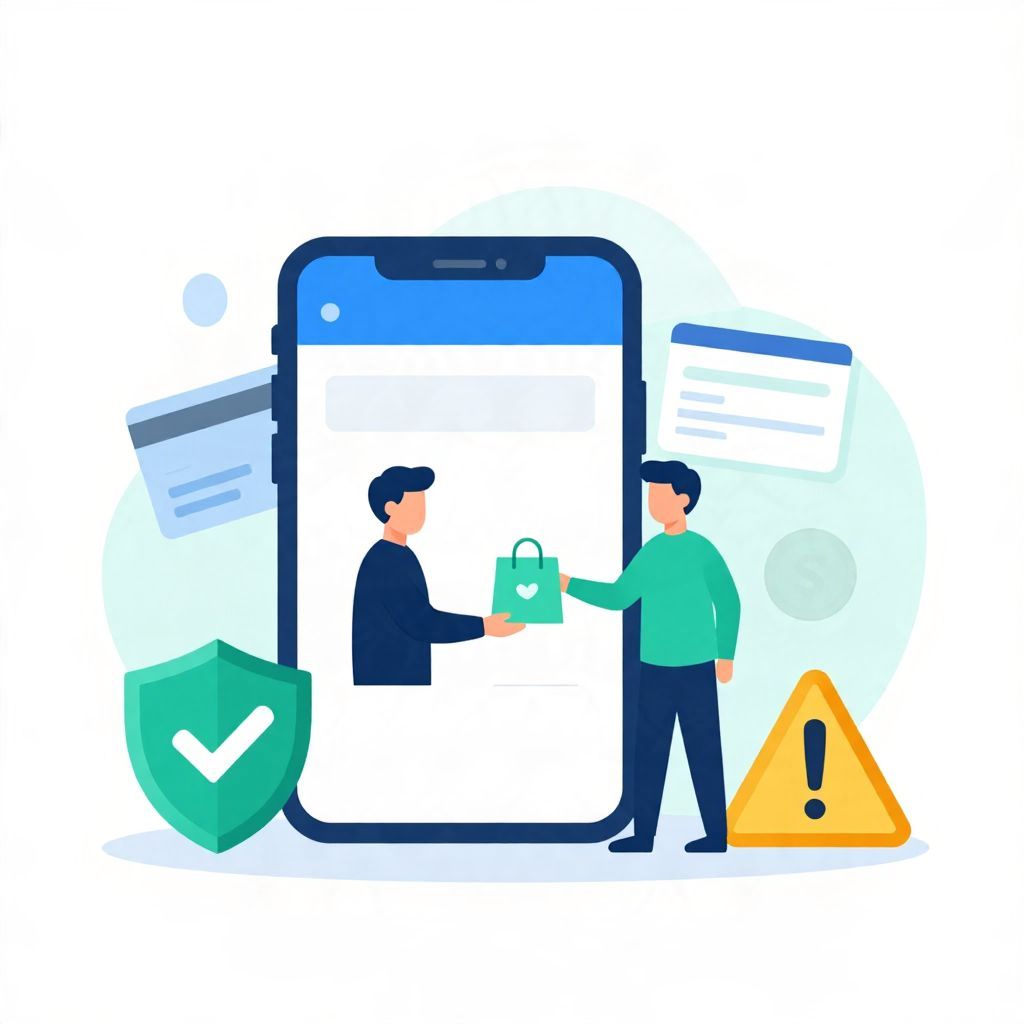
If you’re wondering, “Is Venmo safe for Facebook Marketplace?” the short answer is: sometimes, but only if you use it carefully and understand the risks. Venmo can be convenient for paying people you know, but Facebook Marketplace transactions often involve strangers, which raises the chance of scams, disputes, and irreversible payments.
The safest approach is to use payment methods with buyer protection whenever possible, meet in person in a public place, and avoid sending money before you have the item. If you do use Venmo, treat it as a cash-like transfer, not a built-in protection service.
Is Venmo Safe For Facebook Marketplace?
Venmo is not the safest payment method for Facebook Marketplace when you are buying from or selling to strangers. It can be fine for trusted local exchanges, but payments are often hard to reverse, and Venmo generally does not offer the same buyer protection as a credit card or a marketplace payment system designed for purchases.
Why Venmo Can Be Risky on Facebook Marketplace
Facebook Marketplace is a peer-to-peer platform, which means you are usually dealing directly with another person rather than a retailer. That creates more room for misunderstandings, fake listings, and payment disputes. Venmo is built for sending money quickly, not for managing complicated purchase disputes.
Common risks for buyers
- No guaranteed item delivery: If you pay first and the seller disappears, getting your money back may be difficult.
- Limited dispute protection: Venmo is not the same as a credit card chargeback or a buyer-protection marketplace checkout.
- Scam pressure: A seller may push you to pay immediately to “hold” an item.
- Wrong payment type: Sending money as a personal transfer can reduce your options if something goes wrong.
Common risks for sellers
- Fake payment screenshots: A buyer may show a doctored confirmation image.
- Reversal disputes: A buyer may later claim the payment was unauthorized or tied to a stolen account.
- Chargeback confusion: Depending on how the payment was funded and handled, you may face a dispute even after handing over the item.
- Overpayment scams: A scammer may “accidentally” send too much and ask for a refund before the original payment clears or before it is reversed.
When Venmo May Be Reasonably Safe
Venmo can be safer when the transaction is low-risk, local, and completed in person. For example, if you are buying a used chair from a neighbor and you inspect it before paying, the risk is lower than paying upfront to a stranger who promises to ship an expensive phone later.
Safer situations include
- Local meetups where you can inspect the item first
- Low-value items you are comfortable losing if the deal falls through
- Transactions with people you know and trust
- Payments made only after you have the item in hand
Even in these cases, Venmo is still a transfer tool, not a guarantee. Safety depends more on the transaction setup than on the app itself.
Best Practices If You Use Venmo on Facebook Marketplace
If you decide to use Venmo, reduce risk by treating the transaction like a cash exchange with extra caution. The goal is to verify the person, verify the item, and verify the payment before you release anything of value.
For buyers
- Inspect the item first. Check condition, model, serial number, and any obvious damage.
- Meet in a public place. Choose a well-lit, busy location if the item is small enough to transport.
- Confirm the seller’s identity. Make sure the profile, name, and payment details match reasonably well.
- Use the app carefully. Double-check the recipient before sending money.
- Save proof. Keep screenshots of the listing, messages, and payment confirmation.
For sellers
- Do not rely on screenshots alone. Open your Venmo account and confirm the money actually arrived.
- Wait for confirmation before handing over the item.
- Avoid shipping until payment is verified. If you ship, the risk rises significantly.
- Be cautious with overpayments. Refund only after you are sure the original payment is legitimate.
- Keep records. Save the conversation and payment details in case of a dispute.
How Venmo Compares With Other Payment Methods
Different payment methods offer different levels of protection. The safest choice depends on whether you are buying, selling, meeting locally, or shipping an item. In general, the more protection a method offers, the more fees or friction it may involve.
Venmo vs. cash
- Cash advantages: Immediate, final, and simple for in-person exchanges.
- Cash disadvantages: No digital record unless you keep one yourself, and it is risky to carry large amounts.
- Venmo advantages: Digital record and no need to carry cash.
- Venmo disadvantages: Can be harder to reverse and may offer less protection than some card-based methods.
Venmo vs. credit card
- Credit card advantages: Often better dispute rights and chargeback options.
- Credit card disadvantages: Not always accepted for person-to-person Marketplace deals.
- Venmo advantages: Convenient for quick local transfers.
- Venmo disadvantages: Usually less protection for Marketplace-style purchases.
Venmo vs. marketplace checkout or escrow-like services
- Marketplace checkout advantages: May include built-in dispute handling or purchase protections.
- Marketplace checkout disadvantages: Not every listing uses it, and terms vary by platform.
- Venmo advantages: Fast and familiar.
- Venmo disadvantages: Protection depends heavily on the transaction setup, not just the app.
Red Flags That Suggest You Should Not Use Venmo
Some situations are too risky for Venmo, especially if you do not know the other person. If any of these warning signs appear, consider walking away or using a safer method.
- The seller refuses to meet in person for a local item
- The buyer pressures you to accept payment before inspection
- The person wants to move the conversation off-platform immediately
- The deal sounds unusually cheap or urgent
- The seller asks for a friends-and-family style payment or another non-protected transfer
- The buyer sends a screenshot instead of actual funds
- The other person changes the payment instructions at the last minute
What To Do If a Venmo Marketplace Deal Goes Wrong
If you have already sent money or received it and something looks suspicious, act quickly. The sooner you document the situation, the better your chances of resolving it through the payment app, your bank, or law enforcement if needed.
Steps to take
- Save all evidence. Keep messages, listing screenshots, payment records, and photos of the item.
- Contact the other person. Ask for a clear explanation in writing.
- Check the payment status. Confirm whether the transfer actually completed.
- Report the issue to Venmo. Follow the app’s dispute or support process.
- Contact your bank or card issuer. If your funding source was a bank account or card, ask what options exist.
- Report suspected fraud. If you believe you were scammed, file a report with the appropriate local authorities or consumer protection agency in your area.
Keep in mind that outcomes vary. Some disputes are resolved, while others are not. Recovery is never guaranteed.
Practical Rules for Safer Facebook Marketplace Payments
A few simple rules can reduce risk a lot. These are especially useful if you use Venmo occasionally and want to avoid common mistakes.
- Pay only after inspecting the item whenever possible
- Use public meetups for local exchanges
- Do not trust screenshots as proof of payment
- Avoid shipping expensive items to strangers without stronger protection
- Do not rush because the other person says there are “many buyers waiting”
- Keep the conversation and payment trail in writing
So, Is Venmo Safe For Facebook Marketplace?
Venmo can be safe enough for some Facebook Marketplace transactions, but it is not the safest option by default. For in-person local deals, it may be acceptable if you verify the item and the payment carefully. For strangers, shipped items, or higher-value purchases, safer payment methods usually offer better protection.
If you want to improve your odds, use Venmo only after inspection, never rely on screenshots, and treat every Marketplace deal as a potential risk until the exchange is complete. For more money-related guidance, you may also find how much Venmo charges and whether you can add cash to Venmo helpful.