
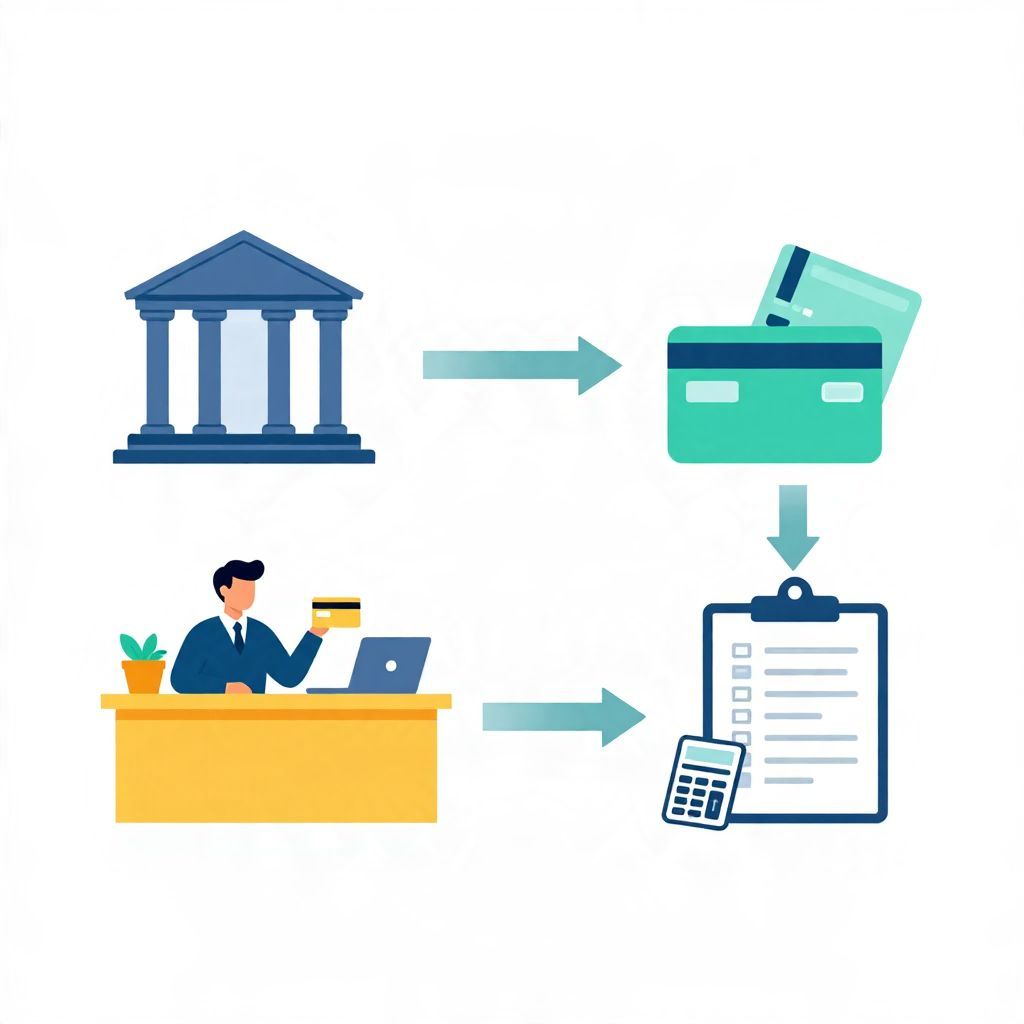
If you’re wondering how to apply for a business credit card, the process is usually straightforward: choose a card that fits your business needs, gather your business and personal information, and submit an application online or in person. Approval depends on factors like your credit history, income, business details, and the issuer’s underwriting rules.
Business credit cards can help separate business and personal spending, simplify bookkeeping, and provide short-term financing. But they also come with fees, interest charges, and personal liability considerations, so it helps to understand the application process before you apply.
How To Apply For A Business Credit Card
To apply for a business credit card, compare card options, confirm you meet the issuer’s basic requirements, complete the application with accurate business and personal details, and wait for a credit decision. Most issuers review both your business information and your personal credit, especially if your business is new or has limited financial history.
Step-by-Step: How To Apply For A Business Credit Card
1. Decide whether a business credit card is the right tool
A business credit card is often useful if you want to track business expenses separately, earn rewards on business purchases, or manage cash flow between payables and receivables. It may be less useful if you carry a balance often, because interest can be expensive.
Before applying, think about how you plan to use the card:
- Everyday spending: office supplies, ads, travel, software, shipping
- Cash flow support: bridging short gaps between income and expenses
- Recordkeeping: separating business and personal transactions
- Rewards: earning points, miles, or cash back on business purchases
2. Check the issuer’s eligibility requirements
Requirements vary by card issuer and country, but many applications ask for a legal business name, business structure, tax identification number or equivalent, business address, and estimated annual revenue. Some cards are available to sole proprietors and freelancers, while others are aimed at incorporated businesses.
If you are applying in the United States, issuers commonly ask for a Social Security number or other personal identification for the owner or applicant. In other countries, the required identification and business registration documents may differ.
3. Gather the information you’ll need
Having your details ready can make the application faster and reduce errors. Typical information includes:
- Business legal name and any DBA/trading name
- Business structure, such as sole proprietorship, LLC, partnership, or corporation
- Business address and phone number
- Tax ID number or business registration number, if applicable
- Estimated annual revenue
- Years in business
- Owner or applicant name, home address, date of birth, and personal tax ID or national ID
- Personal income and sometimes household income
Some issuers also ask for the number of employees or the nature of your business. If your business is new, estimates are usually acceptable as long as they are honest and reasonable.
4. Compare card features, not just rewards
It’s easy to focus on points or cash back, but the best card depends on your spending habits and repayment ability. Compare the annual fee, interest rate structure, grace period, foreign transaction fees, late fees, and any introductory offers.
Useful comparison points include:
- Annual fee: the yearly cost to keep the card open
- APR: the annual percentage rate charged on carried balances, if you do not pay in full
- Rewards structure: flat-rate cash back versus category-based rewards
- Employee cards: whether you can issue cards to team members
- Expense tools: accounting integrations, spending controls, and receipt tracking
Remember that rewards are not “free” if you pay interest. For example, if a card offers 2% cash back but you carry a balance at a much higher APR, interest can outweigh the rewards quickly.
5. Understand the difference between personal and business liability
Many business credit card applications require a personal guarantee, especially for small or newer businesses. That means the issuer may hold you personally responsible if the business cannot repay the debt. This is an important trade-off, because business credit cards are not always separate from personal liability.
Also, business card activity may or may not be reported to personal credit bureaus depending on the issuer and your payment behavior. Policies vary, so read the card terms carefully.
6. Fill out the application accurately
When you apply, make sure every field is accurate and consistent with your legal business records. Small mistakes can delay approval or trigger extra verification. If your business is new, do not exaggerate revenue or years in operation.
Common application fields include:
- Business legal name and structure
- Owner information and contact details
- Business tax ID or registration number
- Estimated revenue and business expenses
- Requested credit limit, if the form asks for it
- Consent to a credit check and terms review
If you are unsure how to classify your business, use the legal structure that applies to your registration documents. For example, a freelancer operating under their own name may apply as a sole proprietor in some jurisdictions.
7. Submit the application and wait for a decision
Many issuers provide an instant decision, but some applications require manual review. If approved, you may receive the card by mail and need to activate it before use. If the issuer needs more information, they may ask for documents such as proof of business registration or income verification.
If you are denied, the issuer should provide a reason or an adverse action notice, depending on the rules that apply in your region. Common reasons include limited credit history, high existing debt, low income, or incomplete application details.
8. Review the terms before using the card
Once approved, read the cardholder agreement carefully. Pay attention to the APR, fees, payment due date, grace period, and any rules about rewards expiration or redemption. Business cards can be helpful, but only if you understand how the costs work.
What Credit Score Do You Need?
There is no universal credit score requirement for a business credit card. Approval depends on the issuer, the card type, and your overall financial profile. Many issuers look closely at the owner’s personal credit, especially for smaller businesses or first-time applicants.
In general, stronger personal credit can improve your chances and may help you qualify for better terms, but it does not guarantee approval. Other factors matter too, including income, debt levels, business revenue, and recent credit applications.
Tips to Improve Your Chances of Approval
Keep your personal credit in good shape
Pay bills on time, keep credit card balances manageable, and avoid unnecessary hard inquiries before applying. Lenders often view personal credit as a proxy for how reliably you may handle business debt.
Reduce existing debt
If you already have high credit card balances or other debt obligations, paying them down may improve your application profile. Lower debt can also improve your cash flow after approval.
Use accurate and consistent business information
Make sure your business name, address, and tax details match your official records. Inconsistent information can slow down verification or lead to a denial.
Apply for a card that matches your profile
If your business is new, a premium card with strict requirements may be harder to obtain. A simpler card with a lower fee or more basic benefits may be a better starting point.
Avoid applying for too many cards at once
Multiple applications in a short period can make you appear riskier to lenders and may temporarily affect your credit. It is usually better to apply selectively.
Business Credit Card Costs and Risks
Before you apply, understand the main costs and risks. A business credit card can be convenient, but it is still a form of borrowing.
- Interest charges: If you carry a balance, the APR determines how much interest accrues over time.
- Fees: Annual fees, late fees, cash advance fees, and foreign transaction fees can add up.
- Overspending risk: Easy access to credit can lead to spending beyond your cash flow.
- Personal liability: A personal guarantee may make you responsible for repayment if the business cannot pay.
- Credit impact: Missed payments can hurt both business and personal credit, depending on reporting practices.
For example, if you carry a $3,000 balance on a card with a high APR, the cost of interest may exceed the value of any rewards you earn. Exact interest depends on the APR, compounding method, and how quickly you repay the balance.
How Business Credit Cards Affect Taxes and Bookkeeping
Using a business credit card can make bookkeeping easier because transactions are grouped in one place. That said, the card itself does not make expenses tax-deductible. Only legitimate business expenses may be deductible, and tax rules vary by country and state or province.
Keep receipts and records for every purchase. If you mix personal and business spending, it becomes harder to track deductible expenses and may create accounting problems. When in doubt, consult a qualified tax professional familiar with your jurisdiction.
When a Business Credit Card May Not Be the Best Choice
A business credit card is not always the right answer. If you need long-term financing, a business loan or line of credit may be more suitable. If your spending is unpredictable and you are not confident you can pay in full each month, a credit card can become expensive.
You may want to consider another option if:
- You need a fixed repayment schedule
- You often carry balances month to month
- Your business has limited cash flow
- You want to avoid personal liability where possible
Frequently Asked Questions
Can a sole proprietor apply for a business credit card?
Yes, in many cases a sole proprietor can apply. Some issuers allow freelancers and self-employed applicants to use their own name and business information, but requirements vary.
Will a business credit card build business credit?
Sometimes, but not always. It depends on whether the issuer reports activity to business credit bureaus or equivalent agencies. Review the card terms before assuming it will help build business credit.
Do you need an LLC to apply?
No, not necessarily. Many applicants use other business structures, including sole proprietorships and partnerships. The exact rules depend on the issuer and your jurisdiction.
Can you use a business credit card for personal expenses?
It is usually best to avoid that. Mixing personal and business spending can complicate accounting, tax records, and liability protection. If you do use the card for a personal purchase by mistake, record it properly and separate it in your books.
Takeaway
To apply for a business credit card, compare options carefully, prepare your business and personal information, complete the application honestly, and review the terms before you use the card. The best card is not just the one with the biggest rewards, but the one that fits your spending, repayment habits, and business goals. For related guidance, see how to use a credit card and how much an LLC costs.