
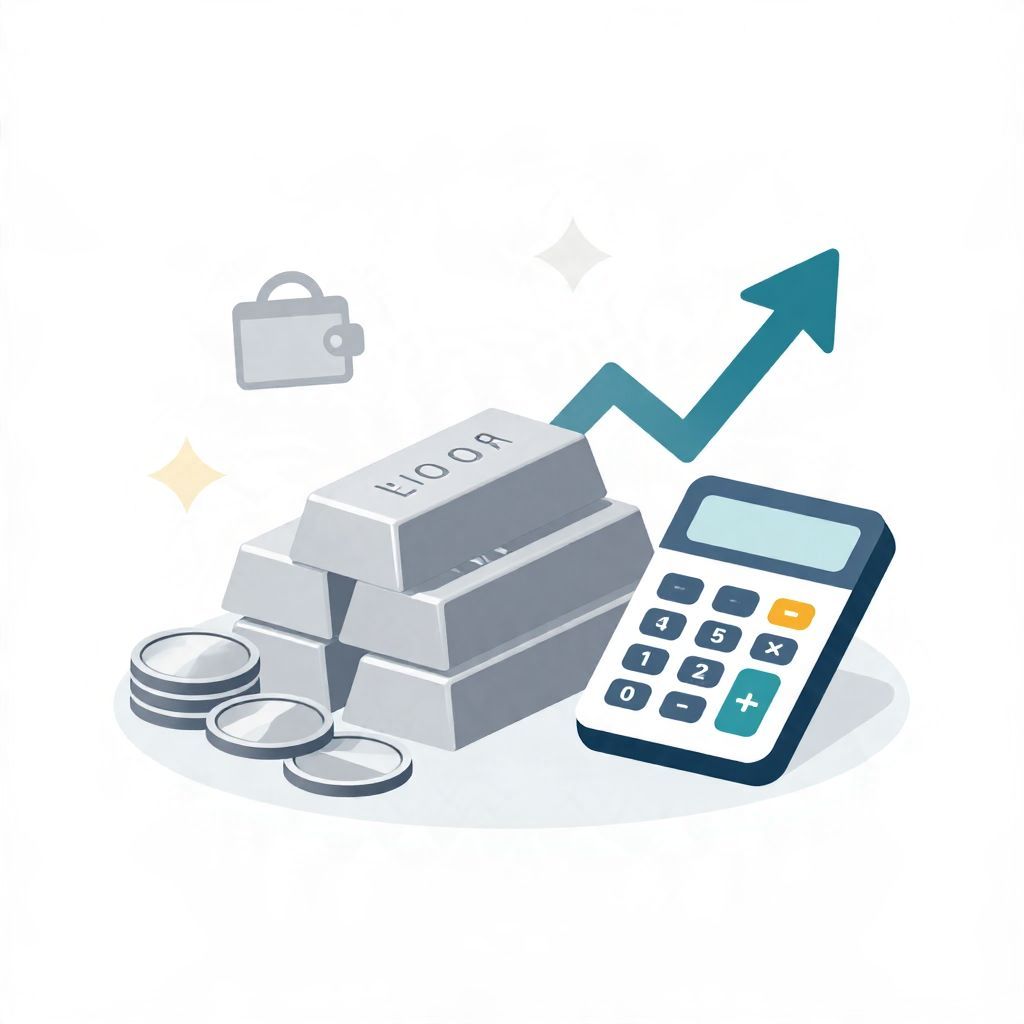
If you’re asking, “How much is 5 oz of silver worth?” the short answer is: it depends on the current silver spot price, the form of the silver, and any premiums or fees. Five troy ounces of pure silver are worth 5 times the price of 1 troy ounce, before dealer markups, shipping, taxes, or discounts.
That means the value changes with the market. If you know the per-ounce silver price, you can estimate the melt value quickly and then adjust for real-world buying or selling conditions.
How Much Is 5 Oz Of Silver Worth?
Five troy ounces of silver are worth 5 × the current silver spot price per troy ounce. For example, if silver is $25 per troy ounce, then 5 oz of silver has a melt value of about $125. The actual buying or selling price may be higher or lower because of premiums, fees, and condition.
The Simple Formula for Silver Value
To estimate the raw metal value, use this formula:
Value of 5 oz silver = 5 × spot price per troy ounce
Important note: precious metals are usually priced in troy ounces, not regular household ounces. A troy ounce is slightly heavier than a standard ounce used for everyday goods.
Why the unit matters
- 1 troy ounce = the standard unit for silver, gold, and other precious metals
- 1 avoirdupois ounce = the common everyday ounce used for food and household items
If a product says “5 oz of silver,” it usually means 5 troy ounces unless the seller clearly states otherwise. Always check the listing or coin specifications.
Example Calculations for 5 Oz of Silver
Because silver prices move, the examples below are illustrative only. They show how to calculate value at different spot prices.
Example 1: Silver at $20 per troy ounce
Calculation: 5 × $20 = $100
So, 5 oz of silver is worth about $100 in melt value.
Example 2: Silver at $25 per troy ounce
Calculation: 5 × $25 = $125
So, 5 oz of silver is worth about $125 in melt value.
Example 3: Silver at $30 per troy ounce
Calculation: 5 × $30 = $150
So, 5 oz of silver is worth about $150 in melt value.
What Can Change the Actual Price You Pay or Receive?
The melt value is only the starting point. In real transactions, the final price can differ because of premiums, dealer spreads, and product type.
1. Premiums over spot
Many silver products sell for more than melt value. A premium can reflect minting costs, packaging, brand demand, or collectible appeal. This is common with bars, rounds, and coins.
2. Dealer buy-sell spread
Dealers often buy silver for less than they sell it for. That difference is called the spread. It helps cover their costs and profit margin, but it means you may receive less than the spot-based value when selling.
3. Condition and collectibility
Generic silver bars are usually valued close to melt, while collectible coins may be worth more or less depending on rarity, grade, and demand. Scratches, damage, or missing packaging can also affect price.
4. Fees, shipping, and taxes
If you buy online or through a dealer, shipping and handling may add to the cost. Depending on your country, state, or local rules, sales tax or VAT may also apply. These costs can raise the total amount you pay above the silver’s metal value.
How to Estimate the Worth of Your 5 Oz Silver Item
If you want a practical estimate, follow these steps:
- Confirm whether the item is measured in troy ounces.
- Find the current silver spot price per troy ounce.
- Multiply the spot price by 5.
- Add or subtract any premium, discount, or dealer fee.
- Check whether the item has collectible value beyond its metal content.
For a plain silver bar or generic round, the result is often close to melt value. For a rare coin or special edition piece, the market value may be much higher.
Spot Value vs. Retail Value vs. Resale Value
These three numbers are not always the same.
Spot value
This is the raw market price of silver itself. It is the baseline used for most calculations.
Retail value
This is what a buyer may pay to purchase the silver item from a dealer or retailer. It often includes premiums and fees.
Resale value
This is what you might receive if you sell the item back to a dealer or another buyer. It is often lower than retail value and may be below spot, depending on the item and market conditions.
Does 5 Oz of Silver Always Mean the Same Thing?
Not always. “5 oz of silver” can describe several different products:
- Five ounces of pure silver in bar or round form
- Five troy ounces total weight in a coin or collectible item
- Silver-plated items, which may contain very little actual silver
If the item is silver-plated rather than solid silver, its intrinsic metal value may be much lower than the value of 5 ounces of pure silver. Always verify purity markings such as .999, .925, or other fineness indicators.
How Purity Affects Value
Purity matters because not every silver item is 100% silver.
Common purity examples
- .999 fine silver: nearly pure silver
- .925 sterling silver: 92.5% silver, often used in jewelry and flatware
- Silver-plated: only a thin layer of silver over another metal
If a piece is not pure silver, you would estimate its silver content first. For example, 5 troy ounces of sterling silver contains less than 5 troy ounces of pure silver because of the copper or other metal mixed in.
Is Silver a Good Store of Value?
Silver is often used as a precious-metal asset and may help diversify a portfolio, but it can also be volatile. Its price can rise or fall based on supply, industrial demand, investor sentiment, and broader market conditions.
That means silver can be useful for some savers and investors, but it is not risk-free. If you buy silver, you may pay premiums, and if you sell later, you may receive less than what you paid. There is no guarantee of profit.
Practical Example: Estimating a Real Purchase
Suppose you find a 5 oz silver bar listed at a dealer.
- Silver spot price: $24 per troy ounce
- Raw melt value: 5 × $24 = $120
- Dealer premium: $15
- Total purchase price before tax/shipping: $135
In this example, you are paying $15 above melt value. If you later sell, the dealer may offer less than spot, so your resale value could be below $120 depending on market conditions and the dealer’s spread.
Practical Example: Estimating a Sale
Now suppose you own 5 oz of silver and want to sell it.
- Silver spot price: $26 per troy ounce
- Raw melt value: 5 × $26 = $130
- Dealer buy offer: spot minus a spread, depending on the dealer
If a buyer offers less than spot, that does not necessarily mean the silver is undervalued. It may simply reflect normal resale pricing, processing costs, and market risk.
Key Takeaways Before You Buy or Sell
- 5 oz of silver is worth 5 times the current spot price in melt value.
- Use troy ounces, not everyday ounces.
- The final price can differ because of premiums, dealer spreads, taxes, shipping, and collectibility.
- Pure silver, sterling silver, and silver-plated items are valued differently.
- Silver prices move, so any estimate is only a snapshot.
If you’re comparing different silver pieces, it can also help to learn how smaller or larger forms are priced, such as how much a silver dime is worth or how much silver dollars are worth. The main rule is the same: start with silver content, then adjust for premiums and market conditions.