
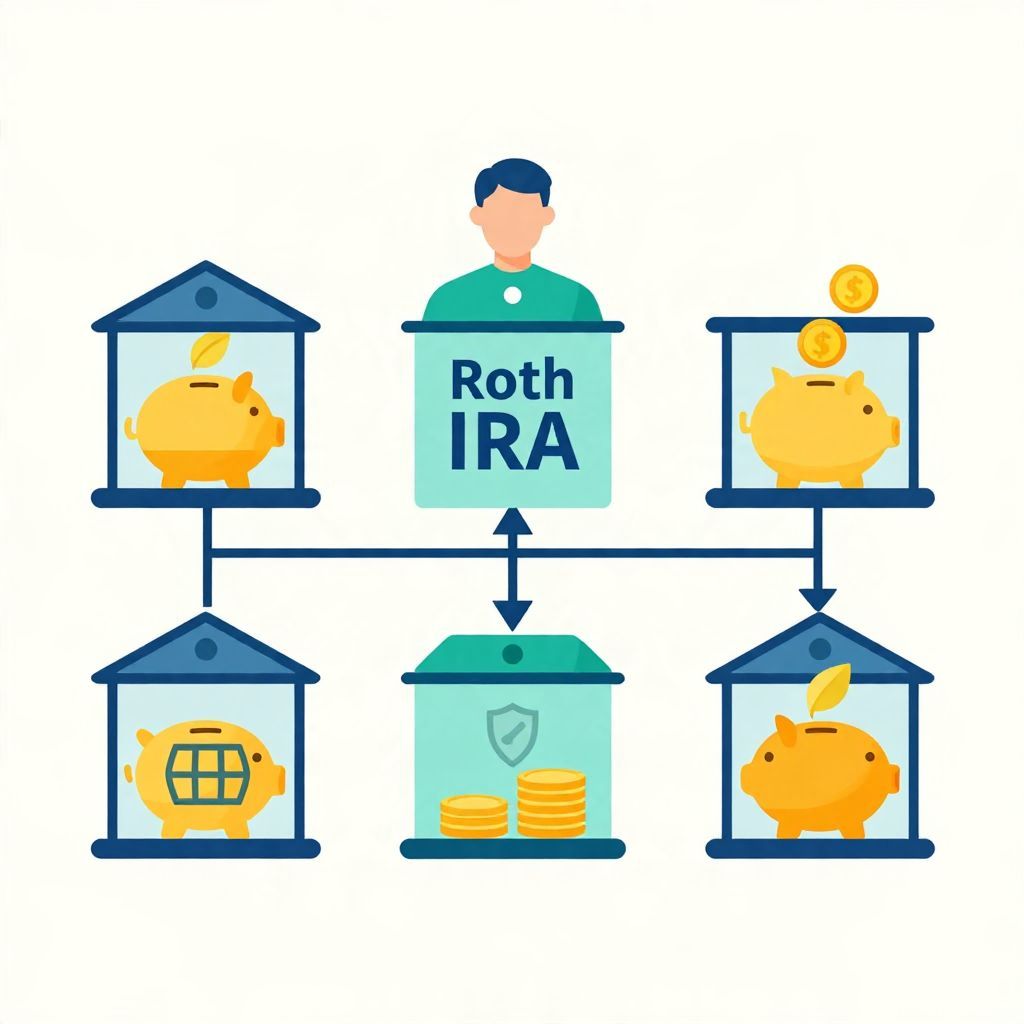
If you’re asking, “Can I have multiple Roth IRAs?” the short answer is yes. In the U.S., you can open and contribute to more than one Roth IRA, but your total annual contributions across all IRAs are still limited by IRS rules.
That means the main issue is not how many accounts you own, but how much you put in each year, whether you’re eligible to contribute, and how your investments are managed across those accounts.
Can I Have Multiple Roth IRAs?
Yes. You can have multiple Roth IRAs at the same time, at different financial institutions if you want. However, your combined annual contributions to all of your IRAs cannot exceed the IRS contribution limit for that year, and your income must be within the Roth IRA eligibility rules.
How Multiple Roth IRAs Work
A Roth IRA is a type of individual retirement account funded with after-tax money. You can open one account for different goals, or several accounts for different investment styles, providers, or beneficiaries. The IRS generally cares about your total contributions, not the number of accounts.
Example of the contribution rule
Suppose the annual IRA contribution limit for your age is $7,000. You could put:
- $4,000 into one Roth IRA
- $3,000 into another Roth IRA
Your combined contribution would be $7,000, which stays within the limit. But if you contributed $7,000 to each account, you would exceed the annual limit and may face tax penalties unless you correct the excess in time.
Why Have More Than One Roth IRA?
People open multiple Roth IRAs for practical reasons. It can help organize money, simplify investing choices, or separate savings for different purposes. There is no rule that says all your Roth money must sit in one account.
Common reasons people use more than one account
- Different investment strategies: one account may hold low-cost index funds while another holds more conservative assets.
- Different financial institutions: you may prefer one provider for trading tools and another for customer service or fees.
- Organization: some people separate long-term retirement savings from inherited or rollover-related assets.
- Beneficiary planning: multiple accounts can make it easier to leave different assets to different heirs, though estate planning rules can still apply.
What Limits Still Apply?
Having multiple Roth IRAs does not remove the normal Roth IRA rules. The most important limits are contribution limits, income eligibility, and tax treatment. These rules can change over time and may vary depending on your tax situation and country of residence.
1. Annual contribution limit
Your total annual contributions across all traditional IRAs and Roth IRAs are capped by the IRS. If you contribute to both types in the same year, the combined amount still must stay within the annual limit for your age.
2. Income eligibility
Roth IRA contributions are subject to income limits. If your income is too high, you may not be able to contribute directly, or you may only be able to contribute a reduced amount. The exact thresholds depend on filing status and the tax year.
3. Tax reporting
Each IRA provider may issue tax forms, but you are responsible for making sure your total contributions are correct. If you overcontribute, you may need to withdraw the excess or take other corrective steps, which can involve taxes or penalties.
Can You Open Multiple Roth IRAs at Different Banks or Brokerages?
Yes. You can open Roth IRAs at more than one bank, brokerage, or investment firm if you meet the account-opening requirements. The institution does not usually limit you to one Roth IRA overall; the IRS contribution rules are what matter most.
Things to compare before opening another account
- Fees: account maintenance fees, trading fees, or fund expense ratios
- Investment choices: stocks, bonds, mutual funds, ETFs, CDs, or cash options
- Minimums: some providers require a minimum opening deposit
- Tools and service: research tools, automation, and customer support
- Transfer flexibility: how easy it is to move money later
Do Multiple Roth IRAs Mean More Tax Advantages?
Not by themselves. The tax benefit comes from the Roth IRA structure, not from the number of accounts. Multiple accounts do not increase your contribution limit, and they do not create extra tax-free space beyond what the law allows.
In other words, two Roth IRAs are not better than one simply because there are two. The benefit comes from how you invest and how consistently you contribute, not from multiplying accounts.
Potential downside of having too many accounts
- Harder to track contributions
- More paperwork at tax time
- More scattered investment allocations
- Possible duplicate fees or cash drag
What Happens If You Overcontribute?
If your total Roth IRA contributions across all accounts go over the annual limit, the excess may be subject to penalties unless corrected. The exact correction method and deadline matter, so it is important to act quickly if you discover a mistake.
General correction options
- Withdraw the excess contribution and any earnings tied to it, if required by the rules that apply to your situation.
- Recharacterize or apply the contribution differently if allowed under the current tax rules.
- File the appropriate tax forms if needed.
Because tax consequences can be significant, it is wise to review the rules carefully or speak with a qualified tax professional if you are unsure.
Can You Move Money Between Roth IRAs?
Yes. You can usually transfer or roll over money between Roth IRAs, but the process should be handled correctly to avoid taxes or penalties. A direct transfer between custodians is often simpler than taking the money out yourself and redepositing it.
Transfer vs. rollover
- Transfer: money moves directly from one Roth IRA provider to another without you taking possession of the funds.
- Rollover: you receive the distribution and then redeposit it, which can involve stricter timing rules.
For many people, a direct transfer is the cleaner option because it reduces the chance of mistakes.
When Multiple Roth IRAs May Make Sense
Multiple Roth IRAs can be useful when you want flexibility, but they are not automatically necessary. One well-managed account is often enough for many savers. More than one account may make sense if you have a clear reason and can keep track of everything.
Possible situations where multiple accounts help
- You want to separate long-term investments from cash reserves.
- You are consolidating old accounts but not ready to merge everything yet.
- You prefer different providers for different investment styles.
- You are coordinating retirement assets with a spouse or family estate plan.
When One Roth IRA May Be Better
For many investors, one Roth IRA is simpler. It can reduce confusion, make rebalancing easier, and lower the chance of missing contribution limits. If your investments and goals are straightforward, a single account may be the most efficient choice.
Signs you may want to consolidate
- You have trouble remembering where your money is held.
- You are paying unnecessary fees across multiple accounts.
- Your investments are duplicated without a clear strategy.
- You want easier recordkeeping and fewer statements.
Key Takeaways Before Opening Another Roth IRA
Before opening multiple Roth IRAs, check three things: your eligibility to contribute, your total annual contribution limit, and the fees or features of each provider. If those pieces make sense, having more than one Roth IRA can be perfectly fine.
The bottom line is simple: yes, you can have multiple Roth IRAs, but you cannot use them to sidestep contribution limits or income rules. If you want a deeper look at account limits and account-count rules, see how many Roth IRAs you can have and whether you can have more than one Roth IRA.