
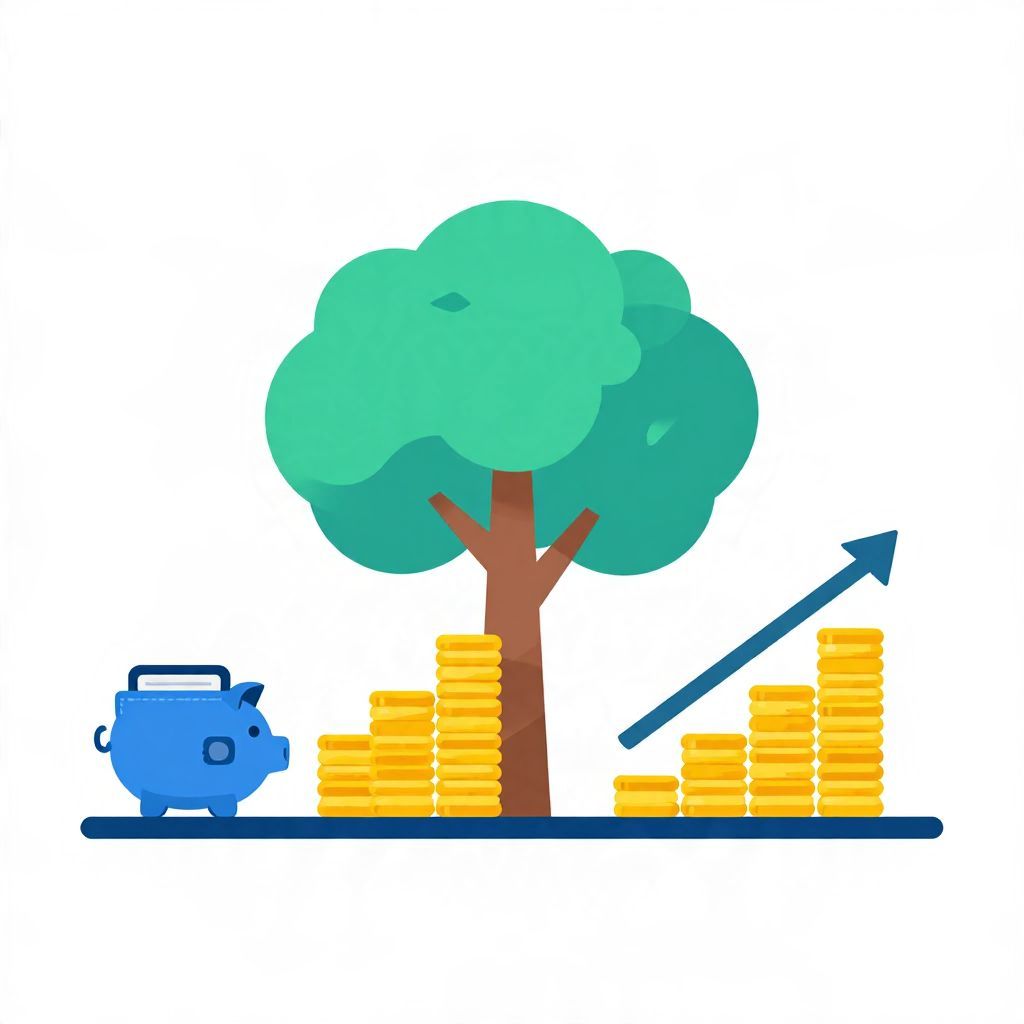
If you start saving earlier, compound interest has more time to work, and that usually means a much larger ending balance. The difference is not just about how much you save, but how long your money stays invested and keeps earning returns on prior returns.
In simple terms, starting at a younger age can matter more than investing a larger amount later. Below, you’ll see how compound interest works, why time is so powerful, and how to estimate the impact for your own savings goals.
How does the age that a person starts saving impact the amount they can earn in compound interest?
The earlier you start saving, the more years your money has to compound, which can dramatically increase growth over time. Even if two people save the same amount at the same rate, the one who starts younger usually ends up with more because earnings begin generating their own earnings sooner.
Why compound interest rewards time
Compound interest means you earn interest on both your original contributions and the interest already added to the account. Over long periods, this “interest on interest” effect can become more important than the size of the original deposits.
The key idea is simple: each year’s growth becomes part of the next year’s starting balance. That creates a snowball effect, especially when money stays invested for decades rather than just a few years.
A basic formula
A common way to estimate compound growth is:
Future Value = Present Value × (1 + r)n
Where:
- Present Value = the amount you start with
- r = the annual interest or return rate
- n = the number of compounding periods, usually years
This is an illustrative formula. Real accounts may compound monthly, daily, or on another schedule, and fees or taxes can reduce the result.
Example: starting at 25 versus starting at 35
To show the effect of age, let’s use a simple example with the same assumptions for both savers:
- Annual contribution: $3,000
- Annual return: 7% before fees and taxes
- Compounding: once per year for illustration
- Saving period: one person starts at age 25, the other at age 35
- Both stop at age 65
That means the first person saves for 40 years, while the second saves for 30 years.
Illustrative result
- Start at 25: about $640,000
- Start at 35: about $303,000
These numbers are estimates, not guarantees. The exact result depends on the actual return, contribution timing, compounding frequency, taxes, and fees.
The difference is striking: starting 10 years earlier can more than double the ending balance, even though the yearly contribution is the same. That happens because the earlier saver’s money has an extra decade to compound.
Why age matters even if you cannot save a lot at first
Many people assume they need to wait until they earn more before investing. But from a compound interest perspective, a smaller amount saved earlier can be more valuable than a larger amount saved later.
That does not mean you should ignore debt, emergencies, or basic needs. It means that, when possible, starting early with even modest amounts can create a strong long-term advantage.
Three reasons early saving helps
- More compounding periods: Your money has more years to grow.
- Less pressure later: Smaller early contributions may reduce the amount you need to save later to reach a goal.
- More flexibility: A longer timeline can make it easier to ride out short-term market ups and downs if you are investing rather than holding cash.
Saving in cash versus investing for compound growth
Compound interest can apply to savings accounts, certificates of deposit, bonds, and investments, but the growth rate and risk are very different. A bank savings account may offer lower, more stable interest. Investments such as stocks or stock funds may offer higher long-term growth potential, but they also carry the risk of loss.
So when people ask how age affects compound interest, the answer depends partly on where the money is kept. A guaranteed savings rate compounds predictably, while an investment return is only an estimate and can vary from year to year.
APR versus APY
If you are comparing savings products, watch the difference between APR and APY:
- APR is usually a nominal annual rate and may not reflect compounding.
- APY includes the effect of compounding and is often better for comparing savings accounts.
For borrowing, APR is often more relevant because it helps show the cost of a loan. For saving, APY is usually the more useful number.
How to estimate the benefit of starting earlier
If you want to compare two starting ages, use the same assumptions for both and change only the number of years. That keeps the comparison fair.
- Choose a monthly or yearly contribution.
- Pick an assumed annual return or interest rate.
- Estimate how many years you will save.
- Compare the future value at different starting ages.
For example, if someone saves $200 per month for 30 years instead of 20 years, the extra decade can create a large gap in the final balance. The exact amount depends on the return rate and compounding schedule, but the direction is clear: more time usually means more growth.
A simple rule of thumb
When contributions and rates are similar, time is often the biggest driver of compound growth. A later saver can still build wealth, but they may need to save more each month to catch up.
What can reduce the power of compound interest?
Compound growth is powerful, but it is not automatic in the same way for every account. Several factors can reduce the final amount:
- Fees: Investment fees and account charges can lower net returns.
- Taxes: Interest, dividends, and capital gains may be taxed depending on the account and jurisdiction.
- Inflation: Rising prices can reduce what your money buys in the future.
- Withdrawals: Taking money out interrupts compounding.
- Low or variable rates: A lower return means slower growth, and investment returns can fluctuate.
Because of these factors, the real-world outcome is usually lower than a simple pre-tax, no-fee illustration.
Practical ways to use time to your advantage
You do not need to predict the market perfectly to benefit from compound interest. What matters most is getting started and staying consistent.
Helpful habits
- Start now, even small: A small contribution today can matter more than a larger one years later.
- Automate savings: Regular transfers help you stay consistent.
- Increase contributions over time: When income rises, try to raise your savings rate too.
- Avoid unnecessary withdrawals: Leaving the money invested longer usually improves compounding.
- Match the account to the goal: Short-term goals may belong in safer, liquid accounts; long-term goals may suit investing.
When starting later can still work
Starting late is not ideal for compound interest, but it is not hopeless. A person who begins at 35, 45, or even later can still make meaningful progress by saving more aggressively, reducing fees, and choosing an appropriate risk level for their timeline.
The trade-off is that later starters usually have less room for error. They may need higher contributions, a longer working life, or a more disciplined plan to reach the same goal.
Questions to ask yourself
- How many years do I have until I need the money?
- How much can I save regularly without harming my budget?
- Am I using a cash account, retirement account, or investment account?
- What fees, taxes, and risks apply?
The bottom line
The age you start saving has a major impact on compound interest because time is one of the most important ingredients in growth. Starting earlier usually leads to a much larger ending balance, even if the monthly or yearly contribution is modest. If you are already behind, do not panic—beginning now is still better than waiting.
For related personal-finance guidance, you may also find how to build credit as a college student and the biggest mistake parents make when setting up a trust fund useful as you plan your financial future.