
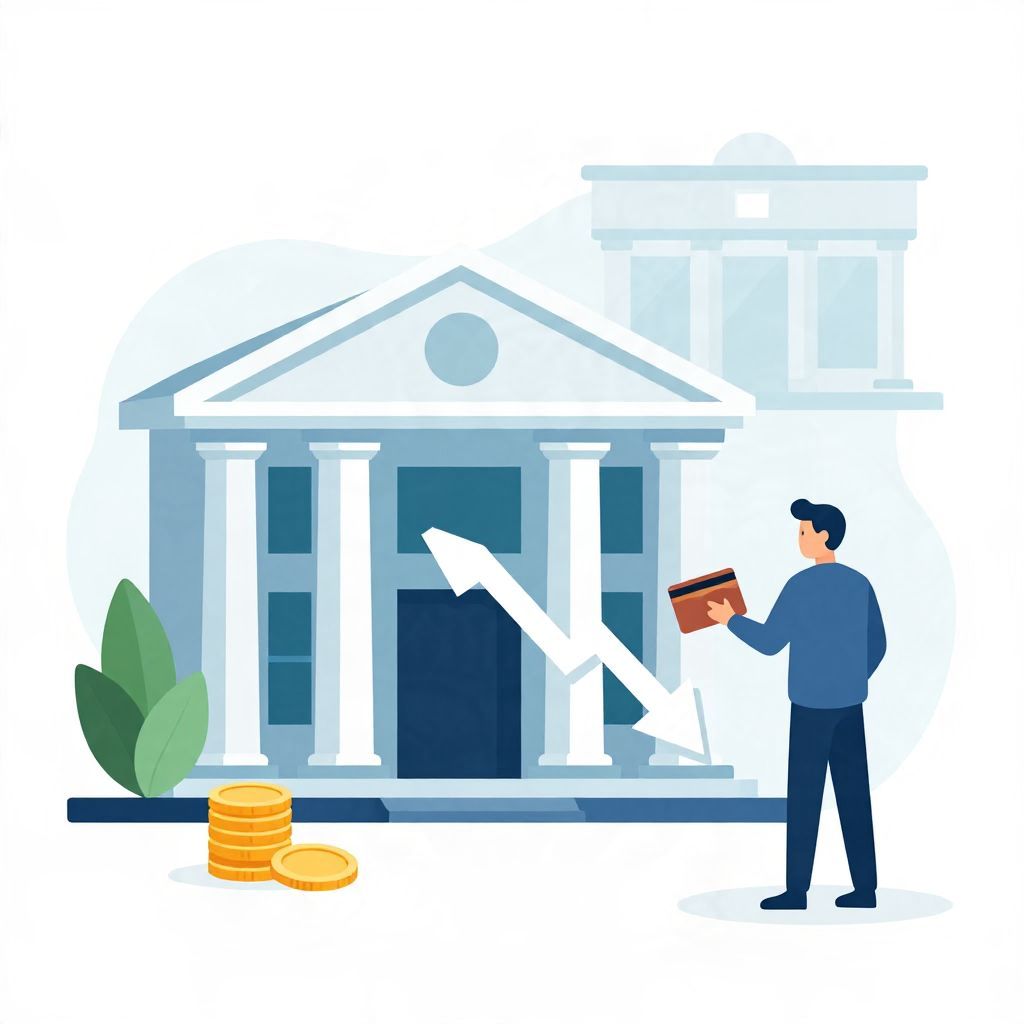
If you’re asking, “Is Bank of America closing?” the short answer is: not as a whole, based on the information available in general public reporting and normal banking operations. However, like most large banks, Bank of America may close or consolidate individual branches over time, and that can affect where and how you bank.
If you’re a customer, the important question is whether a nearby branch is closing, whether your account access will change, and what steps you should take to protect your money and avoid fees. Here’s what that means in practical terms.
Is Bank Of America Closing?
Bank of America is not typically described as shutting down the entire bank. What people usually mean is that a specific branch may be closing, or that the bank may reduce in-person locations in certain areas. Your deposits, loans, and online access generally continue unless you receive a direct account-specific notice.
What “closing” usually means for a bank customer
When a bank branch closes, it does not automatically mean the bank itself is going out of business. Large banks often adjust their branch networks based on customer demand, operating costs, and digital banking usage. In many cases, customers can still use online banking, ATMs, mobile deposits, and customer service channels.
Common reasons a branch may close
- Low in-person traffic as more customers use mobile and online banking
- High operating costs for rent, staffing, and maintenance
- Overlap with another nearby branch
- Local market changes or branch consolidation
What usually does not change right away
- Your checking or savings account balance
- Automatic payments and direct deposits
- Loan terms, unless you receive a separate notice
- Online and mobile banking access
How to tell whether your local Bank of America branch is affected
If you bank with Bank of America, the safest approach is to check for a direct notice from the bank rather than relying on rumors or social media. Branch closures are usually communicated through mailed notices, email, posted branch signs, or messages inside online banking.
Look for these signs
- A letter or email from the bank about branch changes
- Updated branch hours or temporary closure notices
- Messages in your online banking account
- Signs posted at the branch itself
- Customer service confirmation if you call the bank
Questions to ask customer service
- Will my account number or routing information change?
- Will my direct deposit or bill pay be affected?
- Where is the nearest alternative branch or ATM?
- Are there any fees if I use another branch or service channel?
- What should I do if I keep cash deposits or safe deposit items at that location?
What happens to your money if a bank branch closes?
In most cases, nothing happens to your money simply because a branch closes. Deposits are held at the bank level, not tied to one building. If you are in the United States, deposit insurance rules may apply depending on the account type and ownership structure, but coverage details can vary by country and institution.
Practical examples
If your local branch closes, your paycheck can still be deposited into your checking account, and your debit card should still work. You may just need to use another branch, an ATM, or digital banking for certain services like cashier’s checks, notary services, or large cash transactions.
If you have a loan, the payment schedule usually stays the same. The mailing address for payments or the customer service contact may change, but the debt itself does not disappear because a branch closes.
How to prepare if your branch is closing
A branch closure can be inconvenient, but a few simple steps can reduce problems. The goal is to make sure your cash flow, bill payments, and account access continue without interruption.
Step-by-step checklist
- Confirm the closure details. Check the date, final business day, and whether the closure is temporary or permanent.
- Review your recurring payments. Make sure direct deposit, autopay, and linked transfers are still working.
- Update cash habits. If you regularly deposit cash, find the nearest branch or ATM that accepts deposits.
- Move important services if needed. If you rely on in-person banking, consider whether another branch, credit union, or online bank is a better fit.
- Keep records. Save notices, statements, and contact information in case you need to resolve a problem later.
Watch for fees and service changes
Branch closures can sometimes lead to more ATM use, mailed checks, or out-of-network transactions, which may create fees depending on your account type. Read your account terms carefully, because fee schedules vary and can change over time. A closure itself does not guarantee new fees, but it may make existing fees more noticeable.
Should you move your account if your branch closes?
Not necessarily. A branch closure alone is not usually a reason to rush into switching banks. The better question is whether the bank still meets your needs. If you rarely visit branches, online banking may be enough. If you need frequent cash services or face-to-face support, another institution may be more convenient.
Reasons to stay
- You use digital banking for most transactions
- Your direct deposit, bill pay, and cards are working smoothly
- You are satisfied with account features and fees
- There is another convenient branch or ATM nearby
Reasons to consider switching
- You need frequent in-person deposits or withdrawals
- The next closest branch is too far away
- Fees or minimum balance requirements no longer fit your budget
- You want a bank or credit union with better local access
How branch closures compare with bank failure
It helps to separate a branch closure from a bank failure. A branch closure is usually a business decision about location and staffing. A bank failure is a much more serious event involving the institution’s ability to meet obligations. Those are very different situations, and a branch closing does not mean the bank is failing.
Why the distinction matters
- A branch closure may be inconvenient, but your accounts usually remain open.
- A bank failure can trigger special resolution processes and account access changes.
- Customer communication is usually more urgent in a failure than in a routine branch closure.
If you are worried about the safety of your deposits, focus on whether your account is insured under the relevant rules in your country and whether your balance exceeds any coverage limits. If you are unsure, review the bank’s disclosures or ask customer service for clarification.
Tips for managing your banking if local branches are shrinking
Many customers now manage most banking tasks without visiting a branch. Still, it is smart to have a backup plan in case your usual location closes or changes hours.
Helpful habits
- Use mobile deposit for checks when allowed
- Keep a small emergency cash reserve at home, stored safely
- Track your account balance regularly to avoid overdrafts
- Save customer service numbers in your phone
- Know where the nearest fee-free ATM or branch is located
If you handle business banking
Business owners may need extra planning because cash deposits, change orders, and payroll timing can be more sensitive. If a branch closure affects your business account, ask about deposit cutoffs, treasury services, and alternative locations before your next payroll or vendor payment cycle.
When to be cautious about rumors
Search results and social media posts can make a routine branch closure sound like a major crisis. Before reacting, check whether the news refers to one branch, a region, or the entire institution. It is also wise to avoid making financial decisions based on unverified claims, especially if they involve your savings, credit, or loan payments.
Good rule of thumb
If you have not received a direct notice from the bank, treat rumors as unconfirmed. If you have received a notice, read it carefully and verify the effective date, affected services, and any action required from you.
Bottom line
So, is Bank of America closing? In general, no—the more likely issue is a local branch closure or consolidation, not the entire bank shutting down. If you bank there, check for official notices, review your payment setup, and decide whether your current account still fits your needs. For more practical guidance, see how to close a Bank of America account and this related overview.