
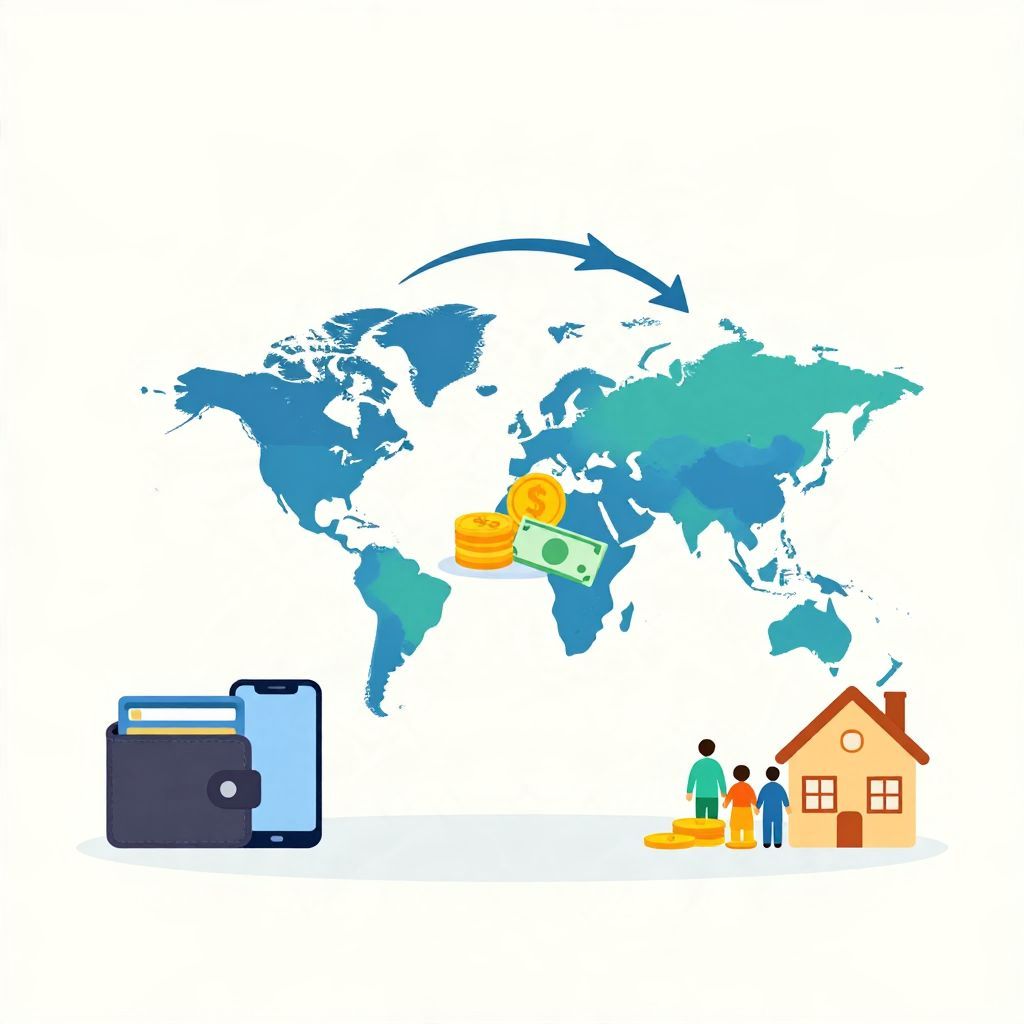
If you’ve seen the term remittances in banking, money transfer, or international finance, it usually means money sent from one person or place to another. In everyday use, remittances often refer to funds people send across borders to support family, pay bills, or cover living expenses.
They can be sent through banks, money transfer services, mobile apps, or informal channels. The exact process, fees, speed, and rules depend on the countries involved, the provider, and local regulations.
What Are Remittances?
Remittances are payments transferred from one party to another, often from a worker in one country to family or friends in another. In personal finance, the term most commonly refers to cross-border money sent for support, expenses, or savings. The sender usually pays a fee, and the recipient receives the money in cash, bank deposit, or digital wallet.
How Remittances Work
At a basic level, remittances move money from the sender to the recipient through a payment network. The sender gives the transfer provider the amount to send, plus any fees. The provider converts the money if needed, routes it through banking rails or payment systems, and delivers the funds to the recipient.
Typical steps in a remittance transfer
- The sender chooses a provider, such as a bank, money transfer company, or app.
- The sender enters the recipient’s details and the amount to send.
- The provider shows the transfer fee and exchange rate, if a currency conversion is involved.
- The sender pays the total cost.
- The recipient gets the money in the chosen payout method.
What affects the final amount received
- Transfer fee: A flat fee or percentage charged by the provider.
- Exchange rate: If currencies differ, the provider may convert the money at a rate that includes a markup.
- Receiving method: Cash pickup, bank deposit, or wallet transfer may have different costs and speeds.
- Country rules: Local banking and compliance rules can affect timing and availability.
Examples of Remittances
Here are a few common examples of what remittances look like in real life.
Example 1: Family support across borders
A worker in one country sends money each month to help parents pay rent and groceries in another country. This is a classic remittance because the transfer supports household expenses and crosses a national border.
Example 2: Student support
A parent sends money to a child studying abroad to cover tuition, housing, or daily costs. Even if the transfer is made through a bank app, it is still a remittance if it is a cross-border payment for personal support.
Example 3: Domestic transfer
If someone sends money to a relative within the same country, that is usually just a domestic transfer, not a remittance in the international finance sense. Some people use the word loosely, but most financial discussions reserve remittances for cross-border payments.
Illustrative cost example
Suppose you send 500 units of currency to another country. If the provider charges a 10-unit fee and applies an exchange rate that reduces the recipient’s converted amount, the total cost is more than the fee alone. The recipient may receive less than the headline amount because of conversion costs. This is why it helps to compare the total amount received, not just the advertised fee.
Why Remittances Matter
Remittances are important because they can help households manage everyday financial needs. For many families, these transfers support essentials such as food, housing, school costs, medical bills, and emergency expenses. They can also act as a financial bridge when local income is unstable or when a family member works abroad.
Common reasons people send remittances
- Supporting relatives with living expenses
- Helping pay for education or healthcare
- Covering temporary income shortfalls
- Sending savings back home
- Assisting after a job loss or family emergency
Remittances vs. Other Types of Money Transfers
Not every transfer is a remittance. The difference usually comes down to purpose, location, and context.
Remittances
Typically cross-border transfers sent for personal or family support. They often involve currency conversion and international payment systems.
Bank transfers
A bank transfer can be domestic or international. If it crosses a border and is used to support someone personally, it may be considered a remittance.
Wire transfers
Wire transfers are a method of sending money, not a separate financial category. A wire can be used for remittances, business payments, or other purposes.
Payments and peer-to-peer transfers
Digital payment apps can send money quickly, but whether the transfer counts as a remittance depends on whether it is cross-border and personal in nature.
Costs, Fees, and Exchange Rates
When people ask what remittances are, they often also want to know how much the transfer really costs. The true cost is not just the transfer fee. It can also include exchange-rate markups, receiving fees, and intermediary charges, depending on the provider and countries involved.
What to compare before sending
- Transfer fee: How much you pay upfront.
- Exchange rate: How favorable the conversion rate is compared with the market rate.
- Speed: Same-day transfers may cost more than slower options.
- Delivery method: Cash pickup, bank deposit, or wallet deposit.
- Recipient costs: Some banks or wallets may charge a fee to receive funds.
Simple cost illustration
If you send 200 units of currency and pay a 5-unit fee, your upfront cost is 205 units. If the exchange rate used by the provider is less favorable than the market rate, the recipient may get less foreign currency than expected. That is why remittance comparisons should focus on the total cost to sender and the net amount to recipient.
Are Remittances Taxable or Regulated?
Tax and legal treatment varies by country. In many cases, a personal remittance is not taxed like income to the recipient, but that is not universal. Large transfers, business-related payments, or transfers that look like income may trigger reporting or tax questions. Rules can also differ depending on whether the money is a gift, salary, loan repayment, or family support.
Because regulations vary, it is wise to keep records of the sender, recipient, purpose, amount, and transfer date. If you are unsure about taxes, reporting thresholds, or documentation requirements, check the rules that apply in your country or ask a qualified professional.
What to Watch Out for When Sending Remittances
Remittances are useful, but they are not risk-free. The main concerns are cost, timing, fraud, and compliance issues.
Common risks
- High fees: Small transfers can become expensive if the fee is fixed.
- Poor exchange rates: The recipient may receive less than expected.
- Delays: Transfers can take longer due to verification or banking hours.
- Fraud: Scammers may pose as family members or fake transfer services.
- Wrong recipient details: Mistakes can cause delays or failed transfers.
Practical safety tips
- Double-check the recipient’s name and account details.
- Compare the total cost, not just the advertised fee.
- Use reputable providers and secure login methods.
- Save receipts and confirmation numbers.
- Avoid sending money under pressure without verifying the request.
How Remittances Fit Into Personal Finance
For senders, remittances are often part of a monthly budget. If you regularly send money to family, it helps to treat the transfer like a fixed expense so it does not disrupt rent, savings, or debt payments. For recipients, remittances can be a key part of household cash flow, but relying on them alone can be risky if the sender’s income changes.
Budgeting tips for senders
- Set a monthly remittance amount you can afford consistently.
- Build the transfer into your budget before spending on nonessentials.
- Keep an emergency fund so you do not need to borrow to send money.
- Compare providers periodically, since fees and rates can change.
Budgeting tips for recipients
- Use remittances for planned needs first, such as bills and food.
- Keep a small reserve if transfers are irregular.
- Track how much arrives after fees and conversion.
- Separate remittance money from other income if possible.
Key Takeaway
So, what are remittances? They are money transfers, usually across borders, sent from one person to another for personal or family support. The most important things to understand are the total cost, the exchange rate, the delivery method, and any tax or reporting rules that may apply where you live. For related reading, you may also find what a remittance address is and what the currency in Puerto Rico is helpful.