
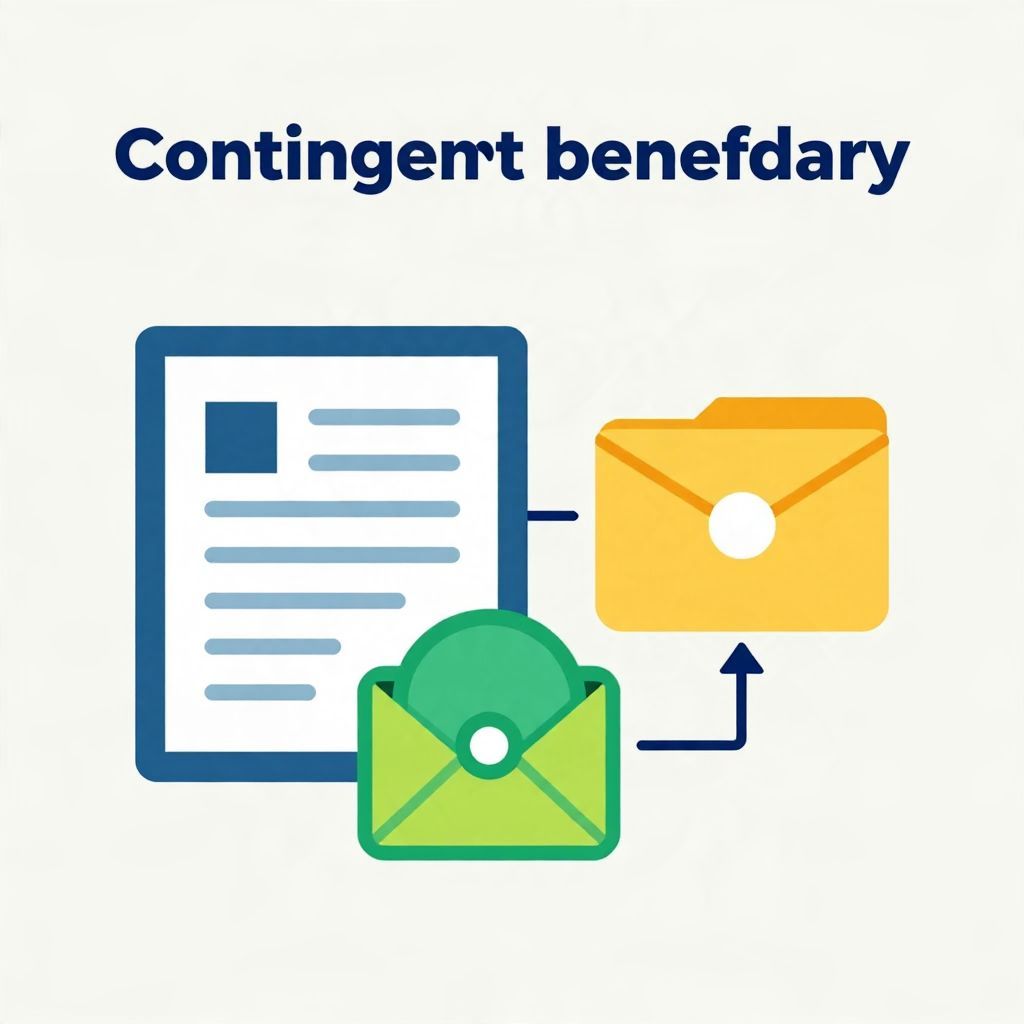
If you’re asking, “What does contingent beneficiary mean?” the short answer is that it is the person or entity who receives an asset if the primary beneficiary cannot or does not. You’ll often see this term on life insurance policies, retirement accounts, and payable-on-death bank accounts.
Understanding contingent beneficiaries helps prevent confusion, delays, and disputes later. It also gives you a backup plan if your first choice dies, cannot be found, or is otherwise unable to inherit.
What does contingent beneficiary mean?
A contingent beneficiary is the backup beneficiary named to receive money or property only if the primary beneficiary is unavailable, has died, or cannot legally inherit. In simple terms, the primary beneficiary comes first; the contingent beneficiary steps in only if the first choice does not qualify.
How contingent beneficiaries work
When you name beneficiaries, you are telling a financial institution, insurer, or estate planner who should receive an asset after your death. The order matters. The primary beneficiary is first in line. The contingent beneficiary is second in line.
If the primary beneficiary is alive and eligible, the contingent beneficiary usually gets nothing from that specific asset. If the primary beneficiary has already died or cannot inherit, the contingent beneficiary may receive the asset instead, depending on the account rules and the wording of the beneficiary designation.
Common places you may see this term
- Life insurance policies
- Retirement accounts such as IRAs or employer plans
- Bank accounts with payable-on-death or transfer-on-death designations
- Some investment accounts and annuities
- Estate planning documents, depending on the structure used
Primary beneficiary vs. contingent beneficiary
The difference is straightforward: the primary beneficiary is the first person or entity chosen to receive the asset, while the contingent beneficiary is the backup. If you name only one beneficiary and that person cannot inherit, the asset may have to go through probate or follow the default rules of the account or estate plan.
Quick comparison
- Primary beneficiary: First in line to receive the asset
- Contingent beneficiary: Receives the asset only if the primary cannot
- Multiple beneficiaries: Some accounts allow you to split the asset among several people
- No valid beneficiary: The asset may be handled under the account’s default rules or by the estate
Examples of contingent beneficiaries
Examples make the concept easier to understand. The exact result always depends on the account agreement, local law, and whether the named beneficiary is eligible at the time of death.
Example 1: Life insurance policy
Suppose you name your spouse as the primary beneficiary and your adult child as the contingent beneficiary. If your spouse is alive when the insurance company processes the claim, the spouse receives the death benefit. If your spouse died earlier, the child may receive the payout instead.
Example 2: Retirement account
Imagine you have an IRA and name your sibling as primary beneficiary and your niece as contingent beneficiary. If your sibling has already passed away, the IRA may go to your niece, assuming the beneficiary designation is valid and no other rules override it.
Example 3: Bank account
Some bank accounts allow payable-on-death instructions. If you name one person as primary and another as contingent, the bank will generally pay the account balance to the primary beneficiary first. The contingent beneficiary would receive the funds only if the primary beneficiary is not available or cannot inherit.
Why naming a contingent beneficiary matters
Many people focus only on the primary beneficiary and forget to name a backup. That can create problems later. A contingent beneficiary helps keep your wishes clear and can reduce the chance that an asset ends up in probate or gets distributed in a way you did not intend.
Benefits of naming a backup
- Reduces uncertainty if the primary beneficiary dies first
- Can help avoid delays in transferring assets
- Gives you more control over who receives the asset
- May reduce the chance of conflict among family members
What happens if there is no contingent beneficiary?
If no contingent beneficiary is named and the primary beneficiary cannot inherit, the asset may be handled according to the account’s default rules, the policy contract, or your estate plan. In some cases, it may go through probate. Probate rules vary by jurisdiction, and the outcome can depend on the type of account and local law.
This is one reason beneficiary designations should be reviewed regularly. A designation that made sense years ago may no longer reflect your family situation.
When a contingent beneficiary may not receive the asset
Being named as a contingent beneficiary does not guarantee payment. Several issues can prevent a transfer from happening as expected.
Common reasons the contingent beneficiary may not inherit
- The primary beneficiary is alive and eligible
- The contingent beneficiary has also died or cannot be located
- The beneficiary designation is invalid or outdated
- The account has special rules that override the designation
- Local law or the plan document requires a different distribution
For example, if both the primary and contingent beneficiaries have died and no newer designation exists, the asset may pass to the estate or follow another fallback rule.
How to choose a contingent beneficiary
Choosing a contingent beneficiary is a practical part of financial planning. The best choice depends on your family structure, your goals, and the type of asset involved.
Things to consider
- Who should receive the asset if your first choice cannot?
- Is the person legally able to inherit? This can matter for minors, trusts, or special-needs planning.
- Does the beneficiary need support or protection? In some cases, a trust may be more appropriate than naming a minor directly.
- Have you updated the designation after marriage, divorce, birth, or death?
- Does the asset allow multiple beneficiaries or percentages?
Examples of thoughtful choices
- A spouse as primary and an adult child as contingent
- Two children as primary beneficiaries and a trust as contingent
- A sibling as primary and a charity as contingent
Can you name more than one contingent beneficiary?
Often, yes. Many financial forms let you name multiple contingent beneficiaries and assign percentages. For example, you might leave 50% to one person and 50% to another. The exact options depend on the institution or policy. If you list more than one contingent beneficiary, make sure the percentages total 100% if required by the form.
Contingent beneficiaries and trusts
Sometimes people use a trust instead of naming an individual directly. This can be useful when the beneficiary is a minor, has special needs, or needs help managing money. Trusts can add control, but they also involve extra legal and administrative complexity. Whether a trust is appropriate depends on your goals and the laws where you live.
If you are comparing estate-planning tools, it can help to understand related documents such as a pour-over will and an irrevocable trust.
Common mistakes to avoid
Beneficiary designations are easy to overlook, but small mistakes can create big problems later. Review them carefully and keep them consistent with your broader estate plan.
- Forgetting to name a contingent beneficiary
- Leaving outdated names after divorce or family changes
- Assuming a will controls every asset
- Not checking whether the beneficiary form requires percentages
- Naming someone who may not be able to manage the asset responsibly
Does a contingent beneficiary pay taxes?
Tax treatment depends on the type of asset, the jurisdiction, and the recipient’s situation. Inherited retirement accounts, life insurance proceeds, and investment accounts can each have different tax consequences. A contingent beneficiary generally does not pay taxes simply because they are named; taxes, if any, usually depend on whether and how the asset is received.
Because tax rules vary and can change, it is wise to review the account terms and speak with a qualified tax or legal professional when the amounts are significant.
How to review and update beneficiary designations
It is smart to review your beneficiary choices after major life events and every few years. A quick update can prevent confusion and make sure your assets go where you want them to go.
When to review
- Marriage or divorce
- Birth or adoption of a child
- Death of a beneficiary
- Major changes in finances
- Moving to a different state or country
- Creating or revising an estate plan
Bottom line
What does contingent beneficiary mean? It means a backup recipient who inherits only if the primary beneficiary cannot. Naming one is a simple but important way to make your wishes clearer and reduce future complications. Review your designations regularly so they still match your goals and family situation.