
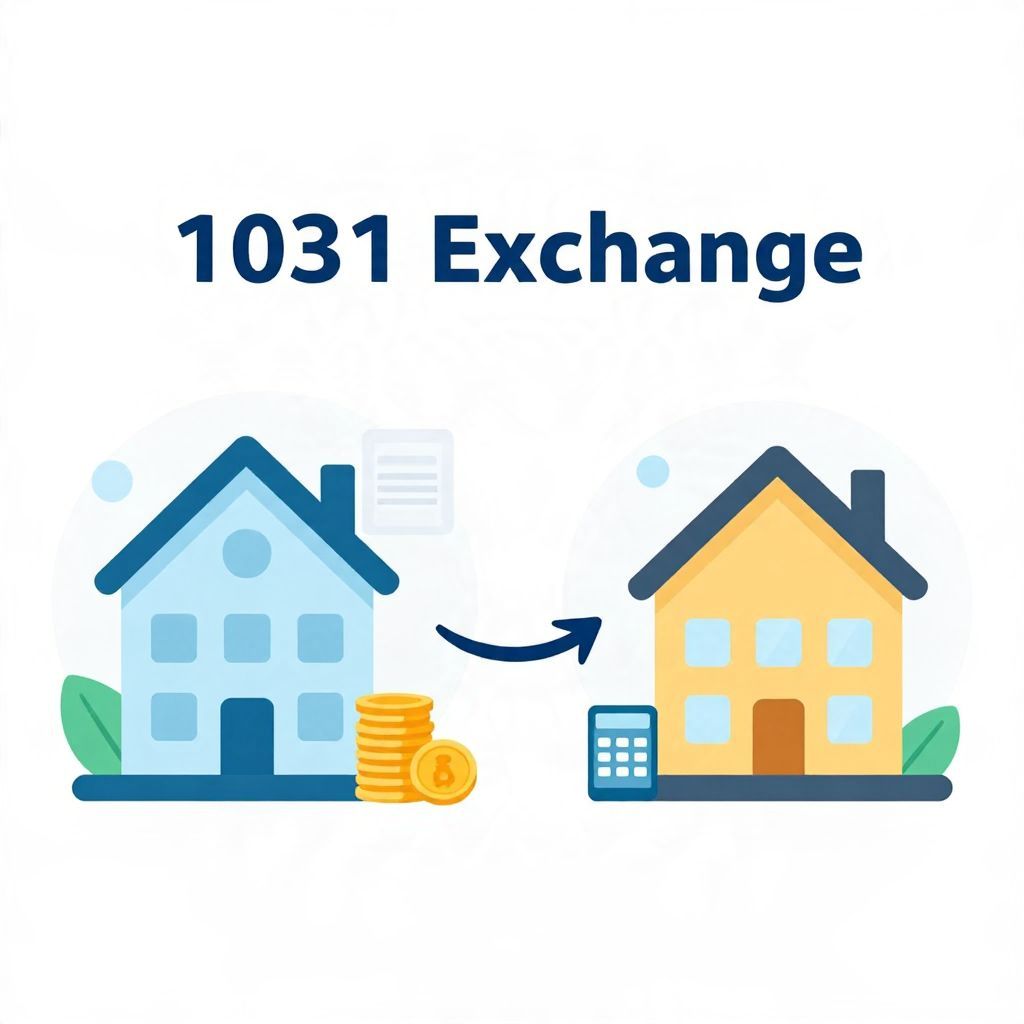
If you’re asking, “What is a 1031 exchange in real estate?” the short answer is that it is a U.S. tax rule that can let an investor sell one investment property and reinvest the proceeds into another like-kind property while deferring capital gains tax. It is commonly used in real estate investing, but it has strict timing and replacement-property rules.
It is not a way to avoid tax forever in every case, and it is not available for personal residences. The main benefit is tax deferral, which can help investors keep more money working in real estate instead of paying tax immediately.
What Is A 1031 Exchange In Real Estate?
A 1031 exchange is a tax-deferred swap of qualifying investment or business real estate under U.S. tax rules. In plain English, you sell one property and buy another eligible property, and you may defer paying capital gains tax on the profit if you follow the required steps and deadlines.
Why it exists
The idea behind the rule is to let investors continue building or reorganizing a real estate portfolio without being forced to pay tax every time they trade one property for another. The tax is generally deferred, not erased, so it may become due later if you eventually sell without doing another exchange.
What “like-kind” means
“Like-kind” is broader than many people expect. For real estate, it generally means the properties are both held for investment or business use, not that they must be identical. For example, an apartment building may be exchanged for raw land, a retail property, or another qualifying investment property, depending on the facts and applicable rules.
How A 1031 Exchange Works
To complete a 1031 exchange, the seller usually cannot take possession of the sale proceeds. Instead, the money is held by a qualified intermediary, and the investor uses those funds to purchase the replacement property. Missing the required deadlines can disqualify the exchange and trigger tax on the sale.
The basic process
- Sell the relinquished property.
- Use a qualified intermediary to hold the proceeds.
- Identify possible replacement properties within the allowed identification period.
- Close on the replacement property within the required purchase window.
- Meet the reinvestment and debt rules if you want full tax deferral.
Common timing rules
In many U.S. exchanges, the investor must identify replacement property within 45 days of selling the original property and complete the purchase within 180 days. These deadlines are strict. If the exchange is not completed on time, the transaction may be treated as a taxable sale instead.
1031 Exchange Example
Here is a simple illustrative example. Suppose an investor bought a rental property years ago for $300,000 and later sells it for $500,000. Before selling costs and taxes, the gain is $200,000. If the investor completes a valid 1031 exchange into another qualifying property, the tax on that gain may be deferred rather than paid immediately.
Illustrative math
- Original purchase price: $300,000
- Sale price: $500,000
- Illustrative gain: $200,000
If the investor instead receives the cash and does not exchange, the gain may be subject to capital gains tax and possibly depreciation recapture, depending on the property and the taxpayer’s situation. The exact tax bill depends on federal, state, and local rules, as well as the investor’s overall tax profile.
What happens if you buy a cheaper property?
If the replacement property costs less than the one sold, the difference may be taxable as “boot” in many cases. Boot can also arise if the investor receives cash, reduces debt without replacing it, or otherwise fails to reinvest enough value into the new property. This is one reason investors often try to match or exceed the value and debt of the property they sold.
What Properties Qualify?
Not every property can be used in a 1031 exchange. The key test is usually how the property is held and used. In general, the rule applies to real estate held for investment or for use in a trade or business.
Common qualifying examples
- Rental homes
- Apartment buildings
- Commercial buildings
- Warehouses
- Vacant land held for investment
Common non-qualifying examples
- A primary residence
- A vacation home used mainly for personal enjoyment
- Property held primarily for quick resale, such as inventory in some situations
Rules can vary based on use, holding period, and jurisdiction. If a property has both personal and rental use, the analysis can become more complex.
Benefits Of A 1031 Exchange
The main benefit is tax deferral, which can improve cash flow and increase the amount of equity available for reinvestment. For long-term investors, deferring tax may help them move into larger or better-located properties, diversify holdings, or consolidate several properties into one.
Potential advantages
- Defers capital gains tax
- May preserve more equity for the next purchase
- Can support portfolio growth or repositioning
- May help reduce management burden by moving into a different type of property
Important trade-offs
There are also downsides. The process is more complex than a regular sale, deadlines are strict, and professional help is often needed. You may also feel pressure to buy quickly, which can lead to less-than-ideal decisions if you are not prepared in advance. In addition, tax is deferred, not eliminated, unless other planning strategies apply later.
Risks, Limits, And Common Mistakes
A 1031 exchange can be useful, but it is easy to make mistakes that ruin the tax deferral. Because tax law is detailed and can change, investors should treat this as a planning tool, not a shortcut.
Frequent errors
- Missing the 45-day or 180-day deadline
- Receiving sale proceeds directly instead of using a qualified intermediary
- Buying property that does not qualify
- Failing to replace enough debt or equity
- Not documenting the exchange properly
Why professional guidance matters
Because the consequences of a failed exchange can be expensive, many investors work with a tax professional, real estate attorney, or qualified intermediary. That does not guarantee success, but it can reduce the chance of accidental noncompliance.
Is A 1031 Exchange Right For You?
A 1031 exchange may make sense if you own investment real estate, expect a taxable gain, and want to keep investing in property rather than cashing out. It is often most useful for people who want to upgrade, relocate, consolidate, or diversify their real estate holdings.
It may be a fit if you want to:
- Defer tax on a profitable sale
- Move from one type of investment property to another
- Rebalance a portfolio
- Increase or preserve real estate equity for reinvestment
It may not be a fit if you want to:
- Sell a home you live in personally
- Take cash out and spend it immediately
- Avoid the complexity of strict deadlines and documentation
- Exit real estate entirely
Frequently Asked Questions About 1031 Exchanges
Does a 1031 exchange eliminate taxes?
Usually no. It generally defers taxes rather than eliminating them. The deferred tax may become due later if you sell the replacement property without doing another exchange or if other tax rules apply.
Can I use a 1031 exchange for my primary home?
Generally no. A primary residence does not usually qualify because the property is not held for investment or business use. Some mixed-use situations can be more complicated, so the facts matter.
Do I need to buy a property of equal value?
To fully defer tax, investors often aim to buy replacement property of equal or greater value and replace any debt they gave up. If they buy for less, the shortfall may create taxable boot.
Are 1031 exchanges only for the United States?
The term “1031 exchange” refers to U.S. tax law. Other countries may have different rollover, deferral, or capital gains rules for real estate transactions.
Bottom Line
A 1031 exchange in real estate is a tax-deferral strategy for qualifying investment or business properties. It can be powerful, but it comes with strict deadlines, documentation requirements, and tax trade-offs. If you want to compare it with other tax-planning ideas, you may also find what tax optimization means and how to get equity out of your home without refinancing helpful as related reading.