
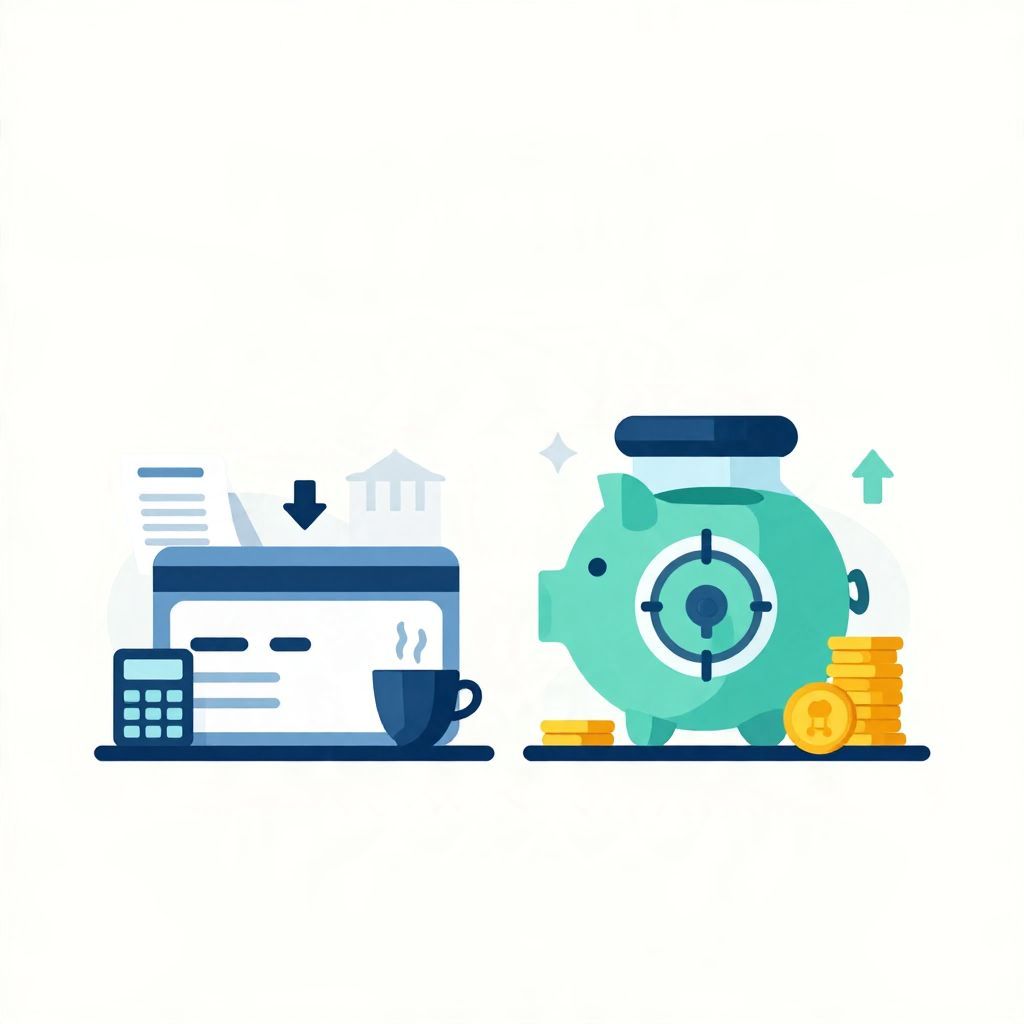
If you’re trying to decide where to keep your money, the difference between a checking and savings account comes down to how you use the funds. Checking accounts are designed for frequent spending and bill payments, while savings accounts are meant for storing money you do not need right away.
Both are common bank accounts, but they serve different purposes. Understanding the key differences can help you avoid fees, organize your cash flow, and choose the right account for everyday spending versus longer-term saving.
What Is The Difference Between A Checking And Savings Account?
A checking account is built for day-to-day transactions like paying bills, using a debit card, writing checks, and withdrawing cash. A savings account is designed to hold money you want to keep separate from spending, often with limits on withdrawals and sometimes with interest. In short: checking is for spending, savings is for storing.
How checking accounts work
Checking accounts are the account type most people use for routine money movement. Your paycheck may be deposited there, and you can use the balance to pay rent, buy groceries, transfer money, or set up automatic payments.
Typical features of a checking account
- Debit card access: You can spend directly from the account.
- Bill pay: Many accounts let you pay utilities, subscriptions, and loans online.
- Checks and transfers: Some still support paper checks and bank transfers.
- Frequent use: It is meant for regular deposits and withdrawals.
Why people use checking accounts
Checking accounts make it easier to manage monthly cash flow. For example, if your income arrives every two weeks, you might deposit it into checking and use that account to cover expenses throughout the month. Because the money is intended to move often, convenience matters more than earning interest.
How savings accounts work
Savings accounts are meant to help you set money aside. People often use them for emergency funds, short-term goals, or money they want to keep separate from everyday spending. The account may earn interest, but the main benefit is organization and discipline.
Typical features of a savings account
- Separation from spending: It helps reduce the temptation to spend money you want to save.
- Interest: Some savings accounts pay interest, usually quoted as APY.
- Withdrawal limits: Depending on the country and provider, there may be limits or fees for frequent transfers.
- Goal-based saving: Useful for emergencies, vacations, car repairs, or upcoming expenses.
Why people use savings accounts
A savings account is useful when you want money available, but not too available. For instance, if you are building a $1,000 emergency fund, keeping it in savings can make it easier to leave untouched until a real need comes up. That separation can be especially helpful if you tend to overspend from your checking account.
Key differences at a glance
Although both accounts hold cash, they are built for different jobs. The exact rules vary by bank and by country, but the general differences are consistent.
- Purpose: Checking is for everyday transactions; savings is for storing money.
- Access: Checking offers easier access through cards, checks, and payments.
- Interest: Savings accounts are more likely to pay interest, though rates vary.
- Withdrawal use: Checking is meant for frequent use; savings may limit frequent withdrawals.
- Budgeting role: Checking tracks spending, while savings supports goals and reserves.
Simple comparison table in words
If you need money for lunch, rent, or a utility bill, checking is the better fit. If you want to protect money for an emergency, a holiday, or a future purchase, savings is usually the better fit. Many people use both accounts together for better money management.
Interest: APY versus everyday use
Savings accounts often advertise interest using APY, or annual percentage yield. APY reflects the effect of compounding over a year, while a checking account may pay little or no interest. If a checking account does pay interest, it is often less of a priority than convenience and transaction access.
Illustrative example
Suppose you keep $5,000 in a savings account with a 2.00% APY for one year. A simple estimate of interest would be about $100 before taxes, assuming the balance stays the same and the rate does not change. This is only an illustration; actual results depend on the account terms and compounding schedule.
By contrast, if the same $5,000 sits in a checking account that pays no interest, it remains fully available for spending but does not grow from interest. That trade-off is why many people keep only the money they need for bills in checking and move the rest to savings.
Fees, minimum balances, and account rules
Fees and minimum balance requirements vary widely by institution, so it is important to read the account terms carefully. Some checking accounts charge monthly maintenance fees unless you meet certain conditions, such as direct deposit or a minimum balance. Some savings accounts also charge fees or require a minimum balance to avoid them.
Common fee considerations
- Monthly service fees: May apply if balance or activity requirements are not met.
- Overdraft fees: More common with checking accounts when spending exceeds available funds.
- Excess withdrawal fees: Some savings accounts may limit frequent transfers or withdrawals.
- Minimum balance fees: Either account type may require a minimum balance to avoid charges.
Because policies differ by provider and jurisdiction, always confirm the current fee schedule before opening an account. A “free” account may still have conditions attached.
Which account should you use for different goals?
Choosing between checking and savings depends on timing and purpose. A good rule is to keep money in checking if you expect to spend it soon, and in savings if you want to delay spending it.
Use checking for:
- Paying monthly bills
- Receiving income
- Using a debit card for purchases
- Writing checks or making frequent transfers
Use savings for:
- Emergency funds
- Vacation or holiday savings
- Car repairs or medical costs
- Short-term goals you want to protect from impulse spending
Can you have both accounts?
Yes. In fact, many people benefit from having both. A common setup is to direct income into checking, pay bills from checking, and automatically move a set amount into savings each month. This can make budgeting simpler and help you save consistently without relying on willpower alone.
Example of a basic money system
- Your paycheck is deposited into checking.
- Automatic bill payments come out of checking.
- A scheduled transfer moves part of each paycheck into savings.
- Only planned spending stays in checking.
This structure can reduce overdrafts and make it easier to see how much money is truly available for spending.
What about safety and deposit protection?
In many countries, bank deposits may be protected by a government-backed deposit insurance system up to a certain limit, but the rules depend on where you live and the type of institution. Coverage limits, eligible account types, and protections can vary, so it is important to verify the details for your jurisdiction rather than assuming every account is covered in the same way.
Deposit protection does not remove all risk, but it can help reduce the chance of losing insured funds if a bank fails. It does not protect against spending losses, fees, or poor budgeting decisions.
Common mistakes to avoid
People sometimes confuse checking and savings accounts or use them in ways that create extra fees or stress. A few simple habits can help.
- Keeping too much in checking: This can make spending too easy and may leave you with less saved than you intended.
- Keeping too little in checking: This can lead to overdrafts if bills hit before your next deposit.
- Ignoring account fees: Small monthly charges can add up over time.
- Using savings like checking: Frequent transfers may trigger limits or make saving less effective.
How to choose the right account setup
If you are deciding how to organize your money, start with your spending pattern and savings goals. Your best setup may be different from someone else’s, but the basic logic is the same: keep spending money accessible, and keep savings separated.
Ask yourself these questions
- Do I need this money for bills in the next few weeks?
- Do I want to earn interest on money I am not using?
- Would easy access tempt me to spend savings too quickly?
- Are there fees or balance requirements I need to avoid?
If most of your money is for short-term spending, checking may be the right home for it. If the money is for a future goal or emergency reserve, savings is usually the better choice.
Bottom line
The difference between a checking and savings account is simple: checking is for everyday spending, while savings is for setting money aside. Most people need both to manage money well. If you want to keep learning about banking basics, you may also find what a check register is and how a CD works helpful for understanding how different accounts fit into a broader savings strategy.