
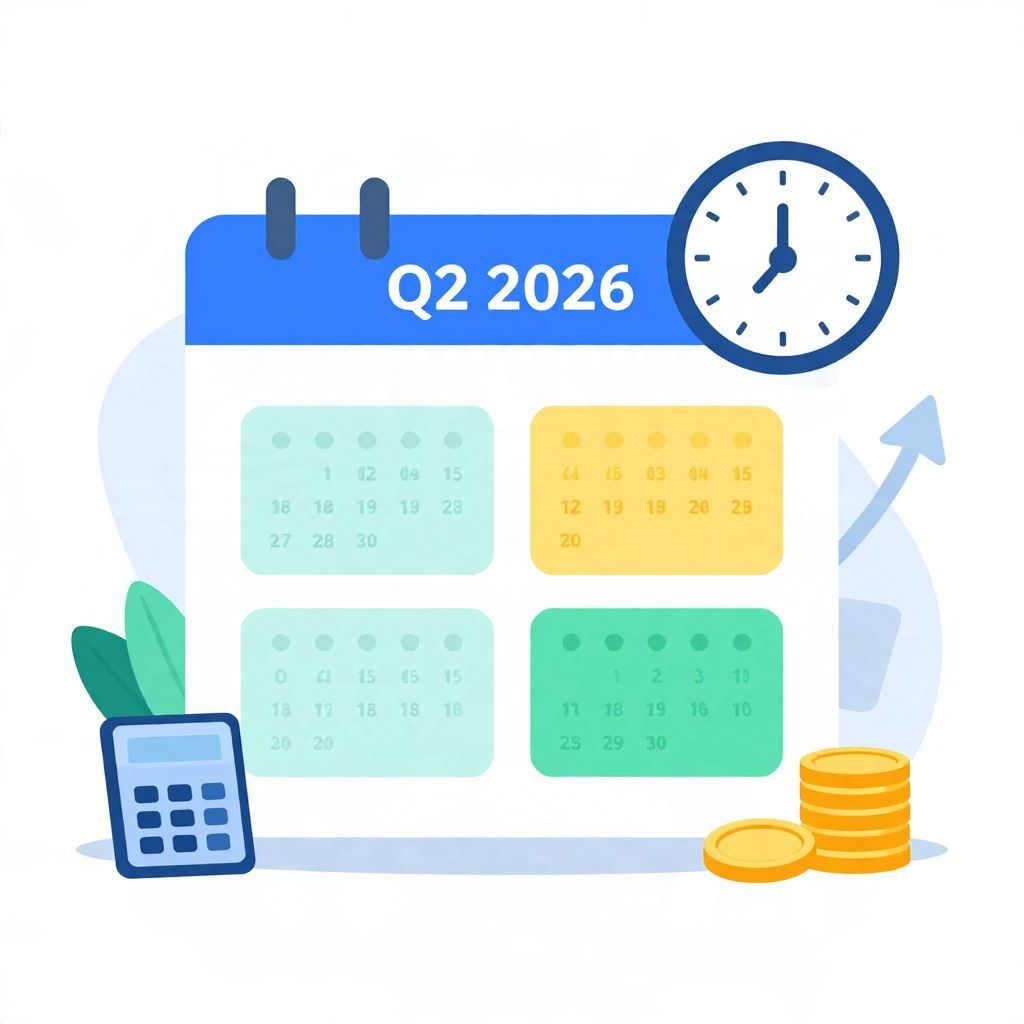
If you’re asking when is Q2 2026, the answer is simple: Q2 2026 runs from April 1, 2026 through June 30, 2026. In finance, “Q2” means the second quarter of the year, and it is often used in budgeting, earnings reports, tax planning, and business forecasting.
Knowing the exact quarter dates can help you line up savings goals, payment deadlines, reporting periods, and spending plans. Below, you’ll find a clear explanation of what Q2 2026 means, why it matters, and how to use it in practical financial planning.
When Is Q2 2026?
Q2 2026 is the second quarter of 2026, covering April 1, 2026 to June 30, 2026. This is the standard calendar-year definition used in most personal finance, business finance, and reporting contexts. If someone refers to “Q2 2026,” they usually mean that three-month period.
What Does Q2 Mean in Finance?
“Q2” stands for Quarter 2. A year is commonly divided into four quarters:
- Q1: January 1 to March 31
- Q2: April 1 to June 30
- Q3: July 1 to September 30
- Q4: October 1 to December 31
Businesses, governments, and investors use quarters to organize financial statements, compare performance, and set deadlines. For individuals, quarters can also be useful for tracking bills, estimating taxes, reviewing spending, or breaking annual goals into smaller steps.
Why Q2 2026 Matters for Personal Finance
Quarterly dates are more than calendar labels. They can affect how you budget, when you review your finances, and how you prepare for upcoming obligations. Q2 is especially useful because it sits in the middle of the year, making it a natural checkpoint for financial progress.
Budgeting and cash flow
If you budget monthly or quarterly, Q2 2026 is a good time to compare actual spending against your plan. You can check whether you are staying on track with categories such as housing, transportation, groceries, insurance, and entertainment.
Tax planning
In many countries, tax deadlines and estimated tax payments may fall during the year rather than only at year-end. If you are self-employed, a freelancer, or a business owner, Q2 can be an important period for reviewing income, withholding, and possible tax installments. Tax rules vary by jurisdiction, so always check the requirements that apply where you live.
Debt management
Q2 can be a useful target window for paying down credit card balances, refinancing debt, or reviewing loan terms. For example, if you want to reduce high-interest debt before summer expenses begin, Q2 gives you a clear three-month planning period.
Savings goals
Many people use quarterly milestones to build emergency savings, fund travel, or prepare for large purchases. A quarter-long target can feel more manageable than a full-year goal.
How to Use Q2 2026 in Financial Planning
Breaking your finances into quarters can make goals easier to track. Here is a simple way to use Q2 2026 in your planning.
- Review your starting point. Look at your income, expenses, debts, and savings at the beginning of April 2026.
- Set one or two clear goals. Examples: save a specific amount, pay extra toward a loan, or reduce discretionary spending.
- Divide the goal into monthly steps. For example, a $900 savings goal over Q2 equals $300 per month.
- Track progress weekly or monthly. Small reviews help you catch overspending early.
- Adjust if needed. If income changes or an emergency comes up, revise the plan instead of abandoning it.
Example: quarterly savings goal
Suppose you want to save $1,200 during Q2 2026. Since the quarter lasts three months, the monthly target is:
$1,200 ÷ 3 = $400 per month
If you prefer weekly planning, you can divide by about 13 weeks:
$1,200 ÷ 13 ≈ $92.31 per week
This is only an illustrative example. Your actual plan depends on your income, fixed expenses, and financial priorities.
Q2 2026 for Business Finance and Reporting
Businesses often rely on quarters for earnings reports, performance reviews, and internal planning. Q2 2026 may be used to measure revenue, operating costs, profit margins, and cash flow compared with Q1 or with the same quarter in a previous year.
Common Q2 business uses
- Quarterly earnings reporting for investors or owners
- Budget updates based on actual results
- Sales forecasting for the next quarter
- Expense reviews to identify cost overruns
- Tax estimates or compliance deadlines, depending on jurisdiction
If you run a small business, Q2 is often a good time to check whether your cash reserves are enough to cover payroll, inventory, rent, and other recurring costs.
How Q2 2026 Can Affect Loans, Credit, and Banking
Quarterly timing can matter in lending and banking because some fees, statements, interest calculations, and review periods are tied to calendar cycles. The exact effect depends on the product and the institution.
Loans
If you have a loan with variable terms, Q2 may be a useful checkpoint to review your amortization schedule, remaining balance, and interest paid year to date. If you are considering refinancing, comparing offers during Q2 can help you decide whether the new terms are better after fees and closing costs.
Credit cards
Credit card statements are usually monthly, not quarterly, but Q2 can still be useful for reviewing your average utilization, payment history, and interest charges. Lowering your balance during Q2 may improve your financial flexibility later in the year.
Bank accounts
Some savings accounts, certificates of deposit, or other deposit products may advertise interest in annual terms, while interest is credited on a monthly, daily, or quarterly basis depending on the account. Be careful to distinguish APR from APY and to read the account terms rather than assuming all products work the same way.
Simple Financial Questions to Ask During Q2 2026
A quarter is a good time to pause and ask a few practical questions about your money. These questions can help you make better decisions without overcomplicating the process.
- Am I spending more than I planned?
- Do I have enough cash for emergencies?
- Are any debts costing me too much in interest?
- Do I need to increase retirement contributions?
- Are there any tax deadlines or estimated payments I need to prepare for?
- Have my goals changed since the start of the year?
Is Q2 2026 the Same in Every Country?
For a calendar year, the dates of Q2 are generally the same everywhere: April 1 through June 30. However, how people use quarters in finance can vary by country, tax system, or business reporting standard. Some organizations use a fiscal year that does not start in January, which means their “Q2” may fall on different dates.
For example, a company with a fiscal year beginning in February may define quarters differently from a company using the calendar year. If you are reading a financial report, always check whether it refers to a calendar quarter or a fiscal quarter.
Practical Example: Planning Around Q2 2026
Imagine you want to use Q2 2026 to strengthen your finances. You might choose one goal for each month:
- April: Build a spending plan and review subscriptions
- May: Make an extra debt payment or increase savings
- June: Review progress and prepare for Q3 expenses
This approach works because it turns a broad annual goal into smaller, measurable actions. Even modest progress can matter if you stay consistent.
Key Takeaway
Q2 2026 runs from April 1, 2026 to June 30, 2026. In finance, that quarter is often used for budgeting, tax planning, debt review, savings goals, and business reporting. If you want to learn more about how quarters work, you may also find what Q1 means and what quarterly means helpful for putting Q2 2026 into context.