
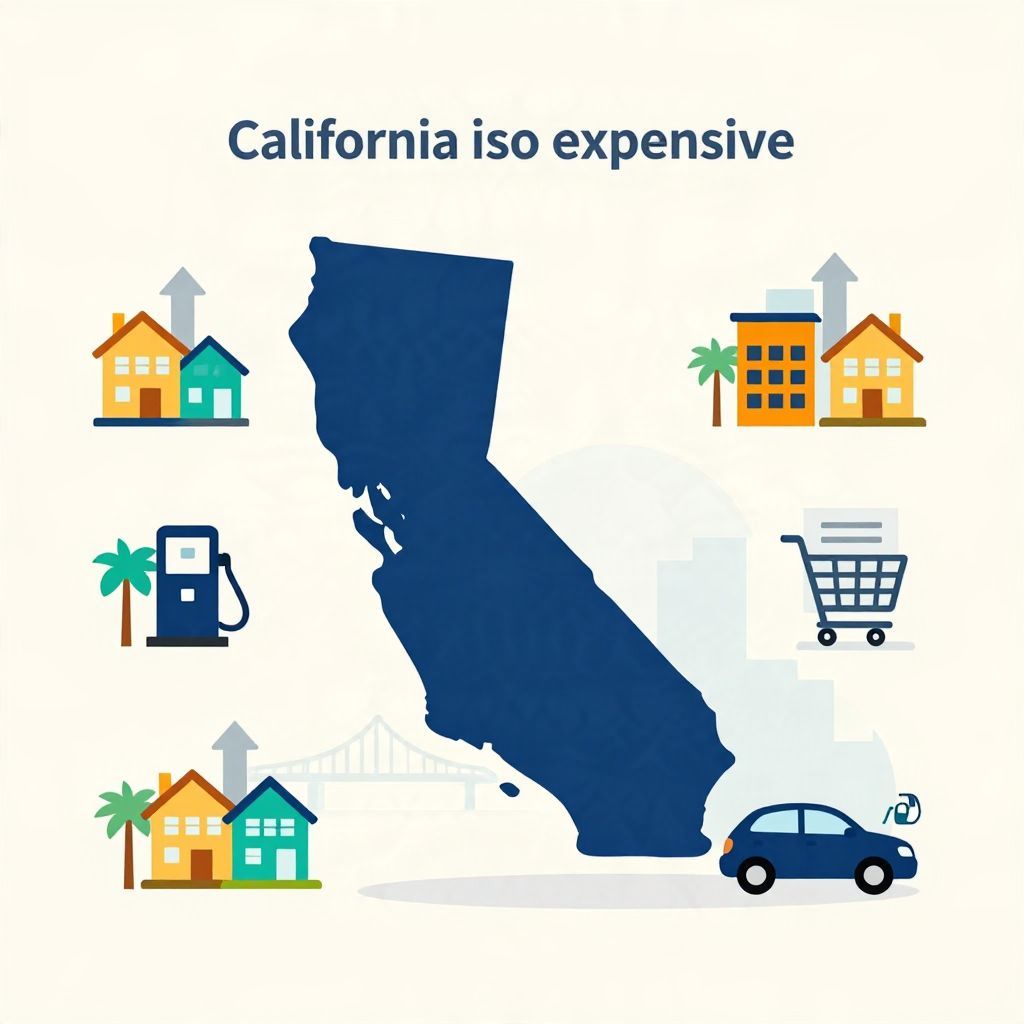
If you’ve ever asked, “Why is California so expensive?” you’re not alone. Housing, taxes, transportation, insurance, and everyday services can all cost more there than in many other states.
The short answer is that California’s high prices come from a mix of strong demand, limited housing supply in many areas, higher labor and regulatory costs, and regional differences that affect everything from rent to groceries. Your exact cost of living still depends on the city, income, household size, and lifestyle.
Why Is California So Expensive?
California is expensive mainly because many people want to live and work there, but housing and some services have not kept pace with demand. In many places, that pushes up rent, home prices, wages, and the cost of doing business. Local taxes, insurance costs, and transportation needs can add even more pressure on household budgets.
The biggest reasons California costs so much
1) Housing demand is high, but supply is limited
Housing is usually the biggest driver of cost of living. When more people want homes in a region than there are homes available, prices rise. This affects both renting and buying.
In California, several factors can restrict supply:
- Limited land in desirable coastal and urban areas
- Zoning rules that can make it harder to build dense housing
- Long permitting timelines and construction delays
- High land and labor costs for new development
When housing is scarce, even middle-income households may feel squeezed. A larger share of income goes to rent or mortgage payments, leaving less for savings, debt repayment, and retirement contributions.
2) Popular job markets raise local costs
California has major industries such as technology, entertainment, healthcare, logistics, agriculture, and professional services. Strong job markets attract workers, which increases demand for housing, childcare, and transportation near employment centers.
Higher-paying jobs can also lift local price levels. Businesses may charge more because their own costs are higher, including payroll, rent, and utilities. That does not mean every worker earns enough to keep up; many households still face a gap between wages and expenses.
3) Taxes and fees can be higher in some areas
Taxes are not the only reason California is expensive, but they can matter. Depending on where you live, you may face state income tax, local sales tax, property tax, vehicle fees, and other charges. The exact burden depends on your income, home value, and location.
For budgeting, it helps to separate:
- Gross income: what you earn before taxes and deductions
- Net income: what you take home after taxes and payroll deductions
A salary that looks comfortable on paper may feel much smaller after taxes, retirement contributions, health premiums, and commuting costs.
4) Transportation can be expensive
Many parts of California are car-dependent, especially outside dense urban cores. That means households may pay for gas, insurance, parking, maintenance, registration, and loan payments. If you commute long distances, those costs can add up quickly.
Public transit is available in some metro areas, but it may not fully replace a car for every household. If you need both a car and transit, your transportation budget can become a major monthly expense.
5) Insurance costs may be higher or harder to predict
Insurance is another factor that can make California feel expensive. Homeowners, renters, auto, and health insurance costs vary by provider, location, and risk profile. In some areas, wildfire risk, earthquake exposure, traffic density, and repair costs can affect premiums or availability.
Because insurance pricing depends on many variables, it is better to compare quotes than to assume one statewide average applies to everyone. A household in one county may pay very different premiums from a household in another county.
6) Business costs often get passed to consumers
When it costs more for businesses to operate, consumers often pay more too. Higher commercial rents, labor costs, compliance expenses, and shipping costs can show up in restaurant prices, services, and retail goods.
This is especially noticeable in cities where storefront space is scarce or expensive. A haircut, meal, or home repair may cost more simply because the business has higher overhead.
7) Geography affects prices within the state
California is not one uniform market. Costs vary widely between regions. Coastal metros, major job hubs, and high-demand suburbs usually cost more than inland or rural areas.
For example, a household may find that:
- Rent is much higher in a major metro area than in a smaller inland city
- Gas and parking costs are more painful in dense urban areas
- Utilities, commuting, and childcare can differ by neighborhood
So when people say California is expensive, they are often describing certain cities or counties rather than the entire state.
What California’s high cost means for your budget
If you live in California or are thinking about moving there, the key question is not just whether prices are high, but whether your income can support your full budget. A higher salary does not automatically mean a better financial situation if housing, taxes, and commuting costs rise even faster.
A simple budget example
Here is an illustrative monthly example for a household, using rough numbers to show the trade-off:
- Gross monthly income: $8,000
- Estimated taxes and payroll deductions: $2,000
- Net income: $6,000
- Rent: $2,400
- Car payment, insurance, gas, parking: $900
- Groceries and household items: $900
- Utilities, phone, internet: $300
- Debt payments: $500
- Other spending and savings: $1,000
In this example, the household is already close to spending the full take-home amount. If rent rises or an unexpected expense hits, savings may shrink quickly. That is why high-cost areas often require a larger emergency fund.
How to tell if the move is affordable
If you are comparing California with another state, look beyond salary alone. Compare the full picture:
- Estimate net pay, not just gross salary.
- Research rent or mortgage costs in the exact city or neighborhood.
- Include transportation, parking, and insurance.
- Check state and local taxes that may affect your take-home pay.
- Account for childcare, healthcare, and debt payments.
- Leave room for savings and emergencies.
Why “expensive” can mean different things to different people
Whether California feels unaffordable depends on your household situation. A single professional, a family with children, a retiree on fixed income, and a remote worker may all experience the state differently.
Factors that change the experience
- Income level: Higher earners may absorb costs more easily, but not always
- Household size: Bigger households need more housing, food, and transportation
- Debt load: Student loans, credit cards, and car loans reduce flexibility
- Work location: A long commute can make a cheaper home less affordable overall
- Housing status: Renters and homeowners face different risks and costs
How to manage higher costs if you live in California
You may not be able to change the local cost of living, but you can still improve your financial position with a few practical steps.
1) Build a realistic monthly budget
Track your actual spending for at least one to three months. Separate fixed costs, like rent and loan payments, from variable costs, like dining out and shopping. This helps you see where your money is going and where you can adjust.
2) Protect your emergency fund
In a high-cost state, a small emergency can become a big problem if you do not have cash reserves. Even a modest emergency fund can help cover a car repair, medical bill, or temporary income loss without relying on high-interest debt.
3) Reduce expensive debt first
If you carry credit card debt or other high-interest balances, paying them down can free up monthly cash flow. In expensive areas, reducing interest charges can be just as important as cutting discretionary spending.
4) Compare housing carefully
Sometimes a slightly longer commute or a smaller unit can reduce costs, but the savings should be real after factoring in gas, transit, parking, and time. Do not focus only on rent; look at the total monthly cost.
5) Review insurance and recurring bills
Shop around periodically for auto, renters, and homeowners insurance, if allowed by your situation and local rules. Also review phone plans, internet packages, subscriptions, and utility usage. Small recurring savings can add up over a year.
Should you avoid California because it is expensive?
Not necessarily. California can still make financial sense if your income, career path, family needs, and lifestyle goals align with the costs. Some people earn more there, build strong careers, or value access to specific industries and communities. Others may find that the same income goes further in a lower-cost state.
The right choice depends on your personal budget, not just headlines about high prices. A careful comparison of income, taxes, housing, and daily expenses will tell you more than a general reputation ever will.
The bottom line
California is expensive because high demand, limited housing supply, higher operating costs, and regional differences push up the price of living there. For households, the most important step is to compare net income against real monthly expenses, especially housing, transportation, taxes, and insurance. If you want more practical money guidance, you may also find personal finance tips and guides useful, along with related banking information like whether SoFi has Zelle.