
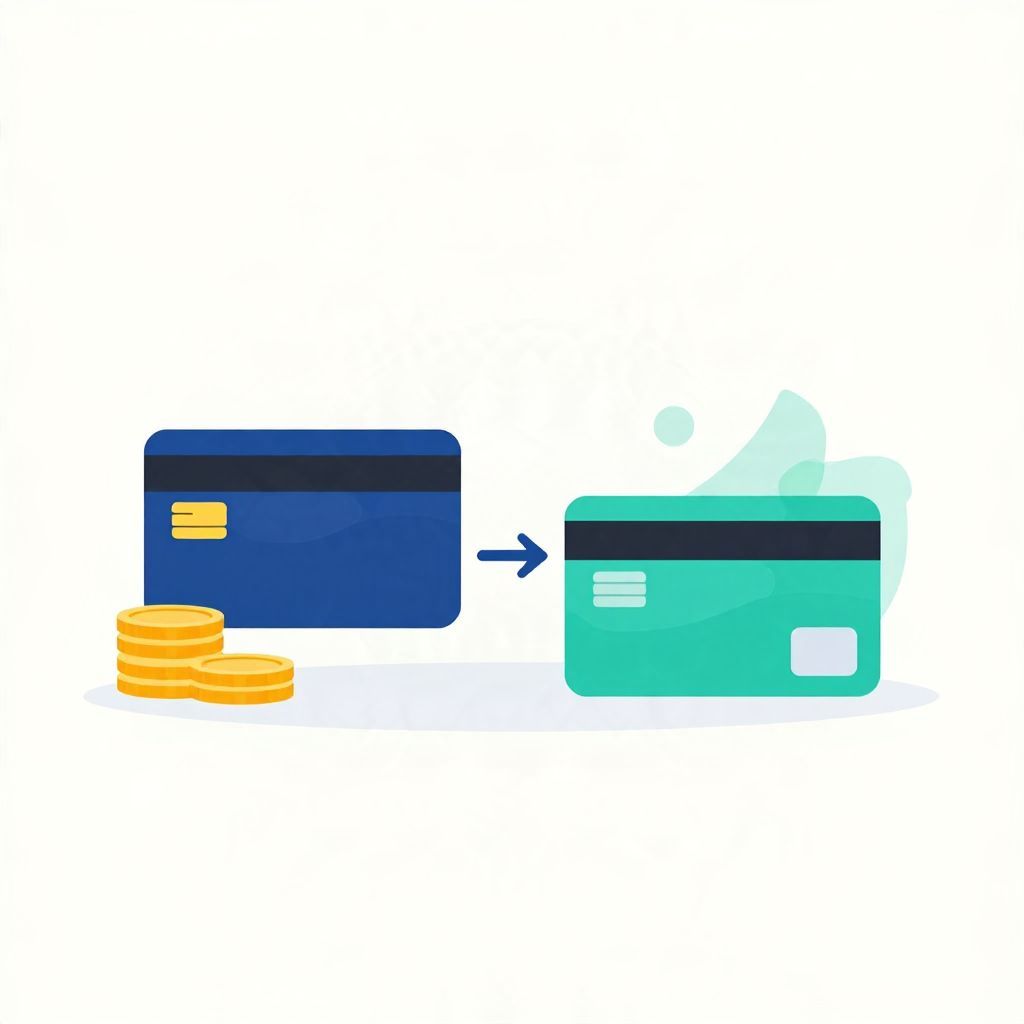
If you’re asking, “Can you pay off a credit card with another credit card?” the short answer is yes, sometimes. But it usually happens through a balance transfer, cash advance, or similar workaround—not by simply swiping one card to pay another.
That matters because each method has different fees, interest rates, and risks. In many cases, using one credit card to cover another can help temporarily, but it can also make debt more expensive if you are not careful.
Can You Pay Off a Credit Card With Another Credit Card?
Yes, but not usually as a normal card-to-card payment. Most people do it through a balance transfer, a cash advance, or a third-party payment service. These options can move debt around, but they do not erase it. Fees, interest, and repayment terms determine whether the move helps or hurts.
How It Usually Works
Credit card companies generally do not let you directly pay one card with another the same way you would pay a bill from a bank account. Instead, you use a method that converts available credit into a payment or balance move.
1. Balance transfer
A balance transfer moves debt from one credit card to another, usually to a card with a lower introductory APR or a promotional period. This is the most common and often the least expensive method if you qualify.
Example: If you owe $3,000 on Card A and move it to Card B with a 0% promotional APR for 12 months, you may avoid interest during that period. However, a balance transfer fee often applies, commonly calculated as a percentage of the amount transferred. If the fee were 3%, the cost would be $90 on a $3,000 transfer.
2. Cash advance
Some cards let you withdraw cash against your credit line, then use that cash to pay another card. This is usually expensive. Cash advances often start accruing interest immediately and may include a separate fee.
This option is generally a last resort because the cost can be high and the interest may begin before you even make a payment.
3. Convenience checks or payment services
Some issuers send checks that draw from your card’s credit line, or third-party services may let you pay bills with a card. These can function like short-term borrowing, but they often come with fees and may be treated like cash advances depending on the provider.
When It Can Make Sense
Using one credit card to pay another can be useful in a few specific situations, especially if your goal is to reduce interest or simplify debt repayment. The move only helps if the total cost is lower than staying with your current card balance.
- You qualify for a low or 0% balance transfer offer.
- You can repay the balance before the promotional rate ends.
- The transfer fee is lower than the interest you would otherwise pay.
- You want to consolidate multiple card balances into one payment.
For example, if your current card charges a high APR and you expect to carry the balance for several months, a balance transfer may save money. But if you cannot pay it down during the promo period, the remaining balance may start accruing interest at a regular rate, which could be much higher than expected.
When It Can Backfire
Paying off one card with another can be risky if it becomes a way to delay debt rather than reduce it. The main danger is that you end up owing money on two cards instead of one, or you pay extra fees without improving your situation.
Common downsides
- Balance transfer fees can reduce or eliminate the savings.
- Cash advance interest often starts immediately.
- Lower available credit can hurt your utilization ratio if the new card is close to maxed out.
- Promotional rates expire and the remaining balance may become more expensive.
- Late or missed payments can trigger penalty rates and fees.
There is also a behavioral risk: moving debt around can create a false sense of progress. If spending continues on the original card or the new card, the debt problem can get worse.
Balance Transfers: What to Check Before You Apply
If you are considering a balance transfer, compare the full cost rather than focusing only on the introductory APR. The best choice depends on the fee, the length of the promo period, and your ability to repay on time.
Key questions to ask
- What is the balance transfer fee?
- How long does the promotional APR last?
- What APR applies after the promo ends?
- Is there a limit on how much you can transfer?
- Will the transfer count toward your credit limit?
- Are new purchases charged interest immediately?
Some cards separate transferred balances from new purchases, while others do not. In some cases, paying only the minimum can leave you with interest on new spending even if the transferred balance is promotional. Always read the terms carefully.
Can It Hurt Your Credit Score?
It can, depending on how you do it and what happens afterward. A balance transfer itself is not automatically bad for credit, but the surrounding factors matter.
Ways it may affect credit
- Hard inquiry: Applying for a new card may cause a temporary dip.
- Average age of accounts: A new account can lower the average age of credit history.
- Credit utilization: High balances on the new card can raise utilization.
- Payment history: On-time payments help; late payments hurt significantly.
If the transfer helps you pay down debt faster, your credit profile may improve over time. If it leads to missed payments or higher utilization, it can do the opposite.
Better Alternatives to Consider
Before using one credit card to pay another, compare it with other debt payoff options. In many cases, a simpler and cheaper solution may exist.
1. Debt avalanche method
With this approach, you make minimum payments on all debts and put extra money toward the highest-interest balance first. This usually minimizes interest cost over time.
2. Debt snowball method
This method focuses on paying off the smallest balance first for motivation. It may not save the most interest, but it can help some people stay consistent.
3. Personal loan
A fixed-rate personal loan may offer a lower rate than a credit card and a set payoff timeline. This can work well if the loan terms are better than your card terms and you avoid adding new card debt.
4. Hardship plan or creditor negotiation
Some issuers offer temporary hardship options, lower payment plans, or reduced rates. Availability varies by lender and situation, and terms are not guaranteed.
Simple Example: Comparing Costs
Here is a basic illustration using made-up numbers to show how the decision can change. This is not a quote or guarantee.
Assume you owe $5,000 on a card at 22% APR and expect to take 12 months to pay it off.
- Option A: Keep the balance on the current card and pay interest as scheduled.
- Option B: Transfer the balance to a card with a 3% fee and 0% promotional APR for 12 months.
If you transfer $5,000, the fee would be $150. If you pay the full amount within the promo period, you may avoid interest and only pay the fee. If you do not pay it off in time, the remaining balance may start accruing interest at the new card’s standard APR, which could make the transfer less beneficial.
The lesson is simple: a balance transfer works best when you have a realistic payoff plan.
What to Avoid
If you are trying to get out of credit card debt, avoid strategies that only shuffle balances without reducing the total owed.
- Do not rely on cash advances unless you have no better option.
- Do not keep charging new purchases while paying off transferred debt.
- Do not assume a 0% offer means 0 cost; fees still matter.
- Do not miss due dates, since one late payment can undo the benefit.
Bottom Line
Yes, you can pay off a credit card with another credit card, but usually only through a balance transfer, cash advance, or similar method. The best choice depends on fees, APR, repayment timing, and your ability to stop adding new debt. If you want to compare related options, you may also find Can I Pay a Credit Card With a Credit Card? and Can I Buy a Car With a Credit Card? helpful.