
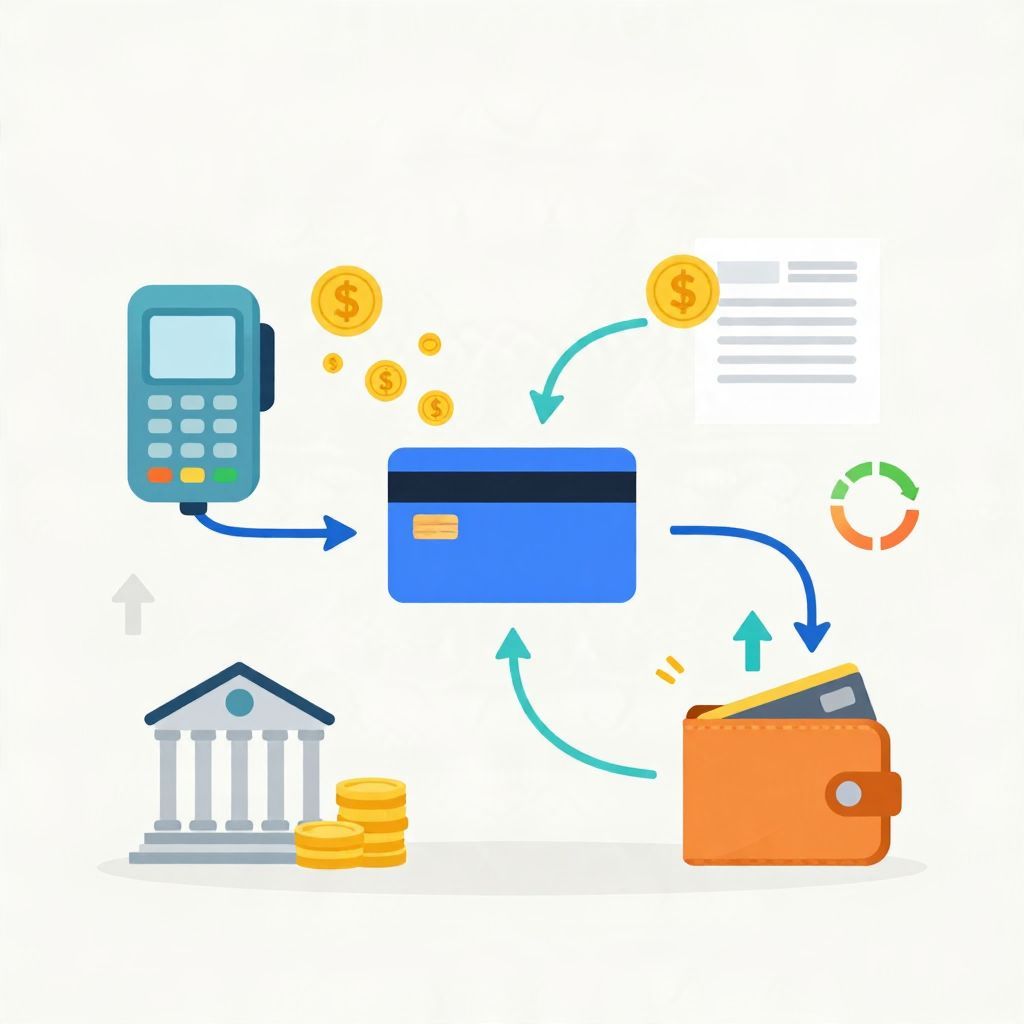
If you’ve ever wondered, “What are at least two ways credit card companies make money?”, the short answer is that they usually earn revenue from merchant fees and interest charges. Many also make money from annual fees, cash advance fees, late fees, and related services.
Understanding how credit card issuers earn money can help you use credit more wisely, avoid unnecessary costs, and compare cards more effectively. The details vary by country, card type, and issuer, but the basic business model is similar in many markets.
What are at least two ways credit card companies make money?
Credit card companies commonly make money in two main ways: they charge merchants a fee every time a card is used, and they charge cardholders interest when balances are not paid in full. They may also earn from fees such as annual fees, late fees, cash advance fees, and foreign transaction fees, depending on the card and local rules.
1. Merchant fees: the “swipe” or processing fee
When you pay with a credit card, the business accepting the card usually pays a fee to process that transaction. This fee is often split among the card network, the bank that issued the card, and the payment processor. The card company’s share helps fund rewards, fraud protection, and the overall card system.
How it works in practice
Suppose you buy a $100 item with a credit card. The merchant may not receive the full $100 after processing costs. If the total processing cost were 2%, the merchant might keep about $98 before other business expenses. The exact percentage varies by card type, transaction method, and location.
This matters because card issuers do not rely only on cardholders for revenue. Even people who pay their balance in full each month still help generate income through merchant fees.
Why merchants accept these fees
- Credit cards can increase sales by making purchases easier.
- Customers may spend more when they can pay later.
- Cards can reduce cash handling and some payment risks.
- Some cards bring in customers who want rewards or convenience.
2. Interest charges on unpaid balances
Another major way credit card companies make money is by charging interest on balances that are carried from month to month. If you do not pay your statement balance in full by the due date, interest may apply to the remaining amount, depending on the card’s terms and your jurisdiction.
APR versus the amount you actually pay
Credit card interest is usually quoted as an APR (annual percentage rate), which is not the same as the amount you pay over a year in every situation. The effective cost depends on how interest is calculated, when payments are made, and whether the card uses a daily periodic rate.
For example, if a card has a 24% APR and you carry a $1,000 balance for one month, the interest cost is not simply 24% of $1,000. A rough monthly estimate would be:
- Annual rate: 24%
- Estimated monthly rate: 24% ÷ 12 = 2%
- Estimated interest for one month: $1,000 × 2% = $20
This is only an illustration. Real interest calculations can differ because of compounding, daily balance methods, grace periods, and payment timing.
Why interest is so profitable
Interest can become a large source of revenue because balances may stay unpaid for months or years. A cardholder who only makes minimum payments may pay much more in interest over time than the original purchase amount.
Example: if someone carries a $3,000 balance at a high APR and makes only minimum payments, a large share of each payment may go toward interest rather than reducing the principal. The exact outcome depends on the card terms, but the overall cost can be significant.
Other common ways credit card companies make money
Annual fees
Some cards charge an annual fee just for keeping the account open. These cards may offer rewards, travel perks, or other features, but the fee only makes sense if the benefits outweigh the cost for that specific user.
Late payment fees
If a payment is missed or arrives after the due date, the issuer may charge a late fee. The amount depends on the card agreement and local consumer protection rules. Late payments can also trigger penalty interest rates or other negative account changes.
Cash advance fees
Using a credit card to get cash is usually more expensive than making a regular purchase. Cash advances often come with a fee and interest may start immediately, with no grace period in many cases.
Foreign transaction fees
Some cards charge extra when you make purchases in another currency or through an overseas merchant. Not all cards do this, and the amount varies by issuer and network.
Balance transfer fees
If you move debt from one card to another, the new card may charge a balance transfer fee. This can still be worthwhile if the new APR is much lower, but it is important to compare the fee against the interest savings.
Why credit card companies use this business model
Credit card companies are not just lending money; they are running a payment system. Their revenue often comes from a mix of transaction fees, interest, and service fees. That combination helps cover fraud prevention, customer service, rewards programs, technology, and credit risk.
Credit risk is part of the price
Some cardholders will not repay on time, and some may default entirely. Lenders price that risk into the card’s fees and interest rates. In other words, the cost of lending is shared across the customer base.
Rewards are usually not “free”
Cash back, points, and miles can feel like a bonus, but they are typically funded by the fees merchants pay and by interest or fees paid by some cardholders. That does not mean rewards are bad; it just means they are part of the card’s economics.
What this means for you as a cardholder
Knowing how card issuers make money can help you use credit cards more strategically. The goal is not to avoid cards entirely, but to understand where costs come from and how to reduce them.
Ways to reduce your costs
- Pay the statement balance in full when possible to avoid interest.
- Read the card agreement so you understand fees and APR terms.
- Watch for annual fees and check whether rewards justify them.
- Avoid cash advances unless you truly need them.
- Pay on time to avoid late fees and possible penalty rates.
When a fee may still be worth it
Sometimes paying a fee can make sense. For example, a card with an annual fee might be worthwhile if the rewards or benefits exceed the cost. A balance transfer fee may also be reasonable if it helps you pay off expensive debt faster. The key is to compare the total cost and benefit, not just the headline rate.
Simple example: how the money can add up
Imagine a cardholder makes $2,000 in purchases in a month and pays the full balance on time. The issuer may still earn revenue through merchant fees on those purchases. If another cardholder carries a $2,000 balance and pays interest, the issuer may earn additional revenue from that interest.
Now add a late fee, an annual fee, or a cash advance fee, and the issuer’s revenue can increase further. This is why credit card companies can be profitable even when some customers use rewards heavily or pay on time.
Important caveats and trade-offs
Credit card terms vary by country, state, and issuer. Interest calculation methods, fee caps, and consumer protections are not identical everywhere. If you are comparing cards, look at the full terms rather than focusing on one number alone.
Also remember that credit cards can be useful tools for convenience, fraud protection, and building credit history, but they can become expensive if balances are carried too long. The same product can be helpful or costly depending on how it is used.
Bottom line
At least two major ways credit card companies make money are merchant fees and interest on unpaid balances. They may also earn from annual fees, late fees, cash advance fees, and other charges. If you want to use cards wisely, focus on paying on time, avoiding interest, and choosing a card whose fees match your needs. For more practical guidance, see how to use a credit card and how Klarna makes money.