
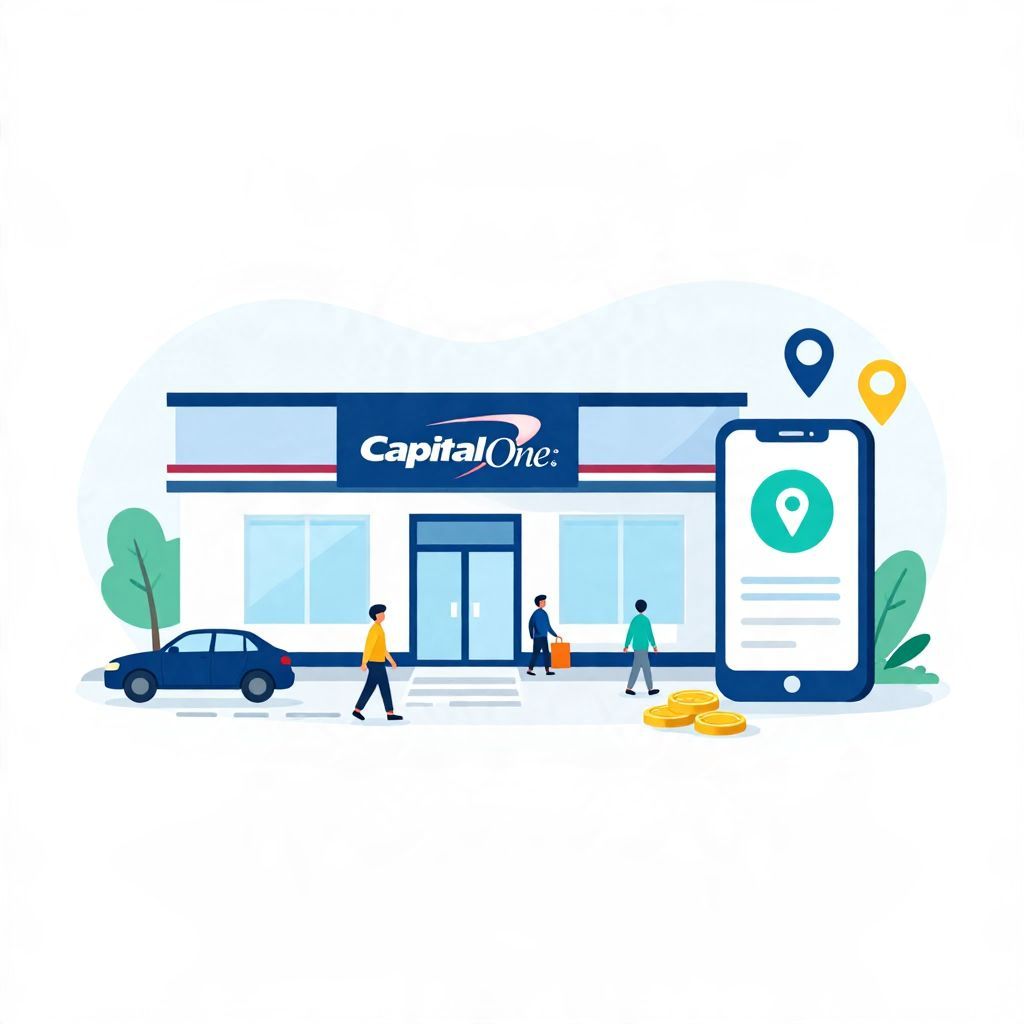
If you’re wondering, “Does Capital One have physical locations?” the short answer is yes, but not always in the way many people expect. Capital One operates a mix of branches, cafés, and ATMs in some areas, while also offering a strong online and mobile banking experience.
That means the availability of in-person service depends on where you live and which Capital One products you use. Before you assume you can walk into a nearby branch, it helps to understand how Capital One’s physical presence works and what alternatives are available if there isn’t a location close to you.
Does Capital One Have Physical Locations?
Yes. Capital One does have physical locations, but they are limited compared with traditional banks that maintain large branch networks nationwide. Depending on your area, you may find branches, Capital One Cafés, or ATMs. However, many customers primarily use Capital One through its digital banking tools rather than in-person visits.
What Kind of Physical Locations Does Capital One Offer?
Capital One’s physical footprint can include several types of locations, and each serves a slightly different purpose. If you are looking for full-service banking, it is important to know that not every location offers the same level of support.
Branches
Some Capital One branches provide traditional banking services such as opening accounts, making deposits, asking about loans, or getting help with account issues. Availability varies by region, so a branch may be easy to find in one city and absent in another.
Capital One Cafés
Capital One Cafés are designed to be more relaxed than a standard bank branch. They may offer financial guidance, account support, Wi-Fi, and a place to work or meet. In some cases, they also include self-service features and access to banking help from staff.
ATMs
Capital One also has ATMs in certain locations. These can be useful for cash withdrawals, deposits, and balance checks, depending on the machine. If you use ATMs often, it is worth checking whether there are nearby fee-free options or partner networks available to you.
How to Find a Capital One Location Near You
If you need an in-person visit, the easiest way to check availability is through Capital One’s official location finder or mobile app. Because branch and Café locations can change, it is better to confirm details before you go.
- Visit Capital One’s official website or open the mobile app.
- Use the location or ATM search tool.
- Enter your ZIP code, city, or address.
- Review the type of location, hours, and services offered.
- Call ahead if you need a specific service, such as notary support or loan assistance.
This step matters because a location labeled as a branch may not offer every service you expect, and a Café may focus more on general account support than complex banking transactions.
What Services Can You Get in Person?
The services available at a Capital One physical location depend on the site. Some locations are more limited than others, so it is smart to verify what is offered before making the trip.
Common in-person services may include:
- Opening or discussing checking and savings accounts
- Getting help with online or mobile banking
- Making deposits or withdrawals, where available
- Using ATMs for cash access
- Asking questions about credit cards or loans
- Receiving general account support
Not every location will support every transaction. For example, some issues may still need to be handled by phone, secure message, or online chat. That is especially common with digital-first banks and hybrid banking models.
Why Capital One’s Physical Presence Can Feel Different
Many people expect a bank to have a branch on every corner. Capital One does not operate like that. Instead, it combines digital banking with a smaller physical network, which can be convenient for some customers and frustrating for others.
Advantages of fewer physical locations
- More emphasis on online and mobile tools
- Potentially simpler account management from anywhere
- Access to modern features without relying on branch visits
Possible drawbacks
- Fewer nearby branches in some areas
- Less convenience if you prefer face-to-face help
- Some services may require remote support instead of in-person assistance
For many customers, the trade-off is acceptable if they are comfortable banking digitally. For others, especially people who deposit cash often or want regular in-person service, a larger branch network may be more practical.
Is Capital One Mostly Online?
Yes, for many customers, Capital One functions mostly as an online bank. That does not mean it has no physical presence, but it does mean digital tools are central to the experience. You can usually manage accounts, pay bills, transfer money, and monitor transactions through the website or app.
This setup can be helpful if you want 24/7 access and prefer not to visit a branch. Still, if you are comparing banks, it is worth thinking about how often you expect to need in-person help.
Who Might Benefit from Capital One’s Physical Locations?
Capital One’s physical locations can be useful for people who want some in-person support without relying entirely on a traditional branch-heavy bank. This is especially true if you live near a branch or Café and value occasional face-to-face service.
- New banking customers: In-person help can make account setup easier.
- People who prefer guidance: A branch or Café may help with questions about products and features.
- Cash users: Access to ATMs can make withdrawals and deposits more convenient.
- Hybrid users: If you like online banking but want a backup physical option, Capital One may fit well.
Who Might Want a Different Bank?
Capital One may not be the best fit if you need frequent branch access. A bank with a larger physical network could be more convenient if you regularly handle cash, need cashier’s checks often, or prefer walking into a nearby branch for routine questions.
It may also be less ideal if your local area has no Capital One locations and you do not want to rely on online support. In that case, a regional bank or credit union with nearby branches could be easier to use day to day.
Things to Check Before Choosing Capital One
If physical access matters to you, consider a few practical questions before opening an account.
- How close is the nearest location? Distance matters if you plan to visit in person.
- What services are available there? A branch, Café, and ATM may each offer different support.
- Do you deposit cash often? If yes, confirm how deposits work and whether nearby ATMs support them.
- Are you comfortable banking online? If not, a limited branch network may be inconvenient.
- Do fees or access limits affect you? ATM fees, transfer timing, and account rules can matter more than branch count.
These questions can help you avoid surprises and choose a bank that fits your habits rather than forcing you to change them.
Capital One Physical Locations vs. Digital Banking
There is no single “best” model for everyone. Physical locations offer convenience for certain tasks, while digital banking offers flexibility and speed. The right choice depends on how you manage money.
If you like handling everything from your phone, Capital One’s digital-first approach may be enough. If you want the reassurance of being able to speak with someone in person, you should confirm that a nearby location exists and offers the support you need.
A simple way to compare your options
- Choose a digital-first bank if you value convenience and rarely need branch visits.
- Choose a branch-heavy bank if you want frequent in-person service.
- Choose Capital One if you want a mix of online banking and some physical access, depending on location.
Final Takeaway
So, does Capital One have physical locations? Yes, but the network is limited and varies by area. You may find branches, Capital One Cafés, and ATMs, but many customers rely mainly on online and mobile banking. Before opening an account, check nearby locations and services so you know whether the bank fits your needs. If you want to compare account setup and banking styles, you may also find how to set up a bank account and the difference between a bank and a credit union helpful.