
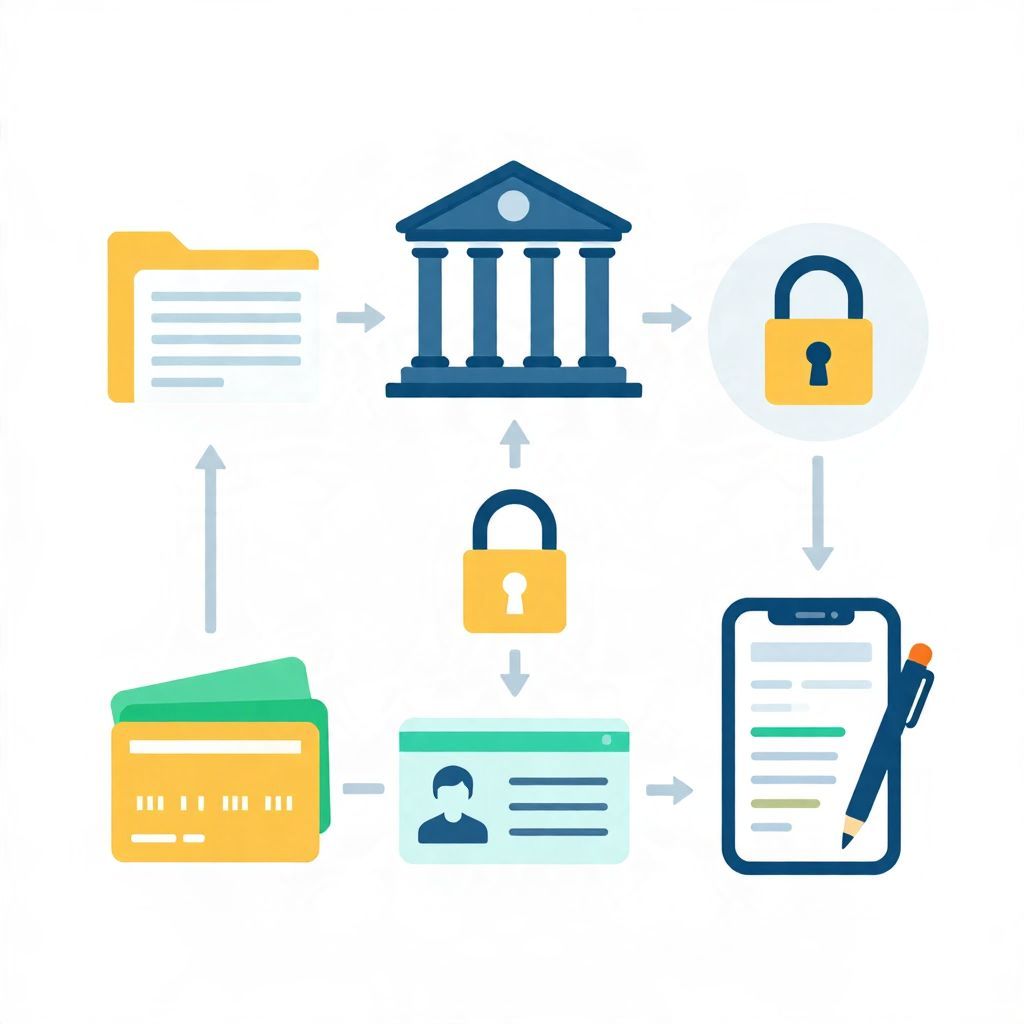
If you’re wondering how to set up a bank account, the process is usually straightforward: choose the right account, gather your documents, apply online or in person, fund the account if required, and set up any features you need, such as a debit card or direct deposit.
The exact steps can vary by country, bank, and account type, but the basic idea is the same. A little preparation can help you avoid delays, fees, and choosing an account that does not fit your spending or saving habits.
How To Set Up A Bank Account
To set up a bank account, compare account types and fees, collect identification and proof of address, complete the application, verify your identity, deposit money if needed, and activate online banking or a debit card. Approval and access can be immediate or take longer depending on the bank and your documents.
What you need before you apply
Before you start, it helps to know what most banks ask for. Requirements vary by institution and jurisdiction, but many banks want enough information to confirm your identity and comply with local rules.
Common documents and details
- Government-issued photo ID such as a passport, national ID card, or driver’s license
- Proof of address such as a utility bill, lease, or official letter
- Tax or national identification number if required in your country
- Contact details including phone number and email address
- Initial deposit if the account requires one
If you are opening an account for a child, joint account, or business, the bank may ask for extra documents. For example, a business account may require registration papers, ownership details, or a business tax number.
Step-by-step: how to set up a bank account
1. Decide what type of account you need
Start by choosing the account that matches your goal. A checking account is usually used for everyday spending, while a savings account is designed for money you want to keep separate and not spend often. Some people open both.
Think about how you will use the money:
- Everyday bills and purchases: checking account
- Emergency fund or short-term savings: savings account
- Shared household expenses: joint account, if appropriate
- Business income and expenses: business account
2. Compare fees, features, and access
Not all accounts are the same. Before applying, compare the features that matter most to you. A low monthly fee may be more useful than a flashy sign-up offer if the account fits your routine better.
Look at:
- Monthly maintenance fees
- Minimum balance requirements
- ATM access and withdrawal limits
- Overdraft policies and fees
- Mobile app and online banking tools
- Interest paid on balances, if any
- Transfer options, such as ACH, wire, or bill pay
If an account pays interest, remember that rates may be shown as APY, which reflects compounding, rather than APR. APY is more relevant for deposit accounts because it shows the effective annual return before taxes and fees. The actual amount you earn can still change with account terms and balance levels.
3. Gather your documents
Having your paperwork ready can make the application smoother. If you are applying online, you may need to upload photos or scans. Make sure the images are clear and all details are readable.
Double-check that your name and address match across documents where possible. Mismatched information can slow verification.
4. Choose how you want to apply
Most banks let you apply online, in person, or sometimes by phone. The best option depends on your comfort level and whether you need help with the process.
- Online: convenient and often fast, but you must complete identity checks digitally
- In person: useful if you want help or have unusual documents
- Mobile app: some providers let you start and finish the application on a phone
If you are unsure how long the process takes, the timing can vary widely. Some accounts are opened in minutes, while others require extra review. For a deeper look, you may want to read about how long it takes to open a bank account.
5. Complete the application accurately
Fill out every required field carefully. Common mistakes include typos in your name, wrong address details, or missing identification numbers. Small errors can cause delays or rejection.
Be honest about your information. Banks may ask about your employment, source of funds, or tax residency depending on local rules. These questions are often part of identity and compliance checks, not a judgment about your finances.
6. Verify your identity
Identity verification is a normal part of opening a bank account. Depending on the bank, this may happen through document upload, a selfie check, a video call, a code sent to your phone, or an in-branch review.
If the bank cannot verify you right away, it may ask for more documents. That does not always mean the application will fail; it may simply need more review.
7. Fund the account if required
Some accounts require an opening deposit, while others do not. If a deposit is needed, the amount can vary by provider and account type. Use the bank’s approved funding method, such as transfer from another bank, cash deposit, or debit card payment if allowed.
Be careful with minimum balance rules. An account may require a certain balance to avoid fees or to earn interest. If you cannot comfortably maintain that balance, another account may be a better fit.
8. Set up online banking and alerts
Once the account is open, activate online banking and the mobile app if available. This lets you check balances, move money, pay bills, and monitor activity from your phone or computer.
Useful alerts may include:
- Low balance warnings
- Large transaction alerts
- Direct deposit notifications
- Login or security alerts
- Overdraft warnings
9. Order or activate your debit card
If your account includes a debit card, follow the activation instructions carefully. Some banks issue a card immediately in branch, while others mail it to you. Keep your PIN secure and avoid sharing it.
When you first use the card, test it with a small purchase or ATM withdrawal if needed. Review the card’s fees, cash withdrawal limits, and any international use rules if you plan to travel.
How to choose the right bank account
The best account is not always the one with the biggest bonus or the most features. It is the one that fits your habits and helps you avoid unnecessary fees.
Questions to ask yourself
- Will I use this account for daily spending or for savings?
- Do I need physical branches, or is online-only banking enough?
- Can I keep the minimum balance comfortably?
- How often will I use ATMs or cash deposits?
- Do I want overdraft protection, and do I understand the fees?
- Will I need joint access or shared account features?
If you are deciding between account types, it can help to understand the difference between everyday spending and saving. You can also compare account features more closely by reading about the difference between a checking and savings account.
Common mistakes to avoid
Opening a bank account is simple, but a few avoidable mistakes can create frustration later.
- Ignoring fees: monthly fees, ATM fees, and overdraft fees can add up
- Choosing the wrong account type: a savings account may not be ideal for frequent payments
- Missing minimum balance rules: this can trigger charges
- Not reading the terms: account limits, transfer rules, and fee schedules matter
- Using weak security: protect your login, card, and PIN
- Skipping alerts: notifications can help you catch fraud or low balances early
What happens after the account is open?
After opening the account, your next steps are usually practical: move money in, set up direct deposit if you are paid by an employer, and connect any bills or transfers you want to automate.
Helpful setup tasks
- Update your employer with your new account details for direct deposit
- Add recurring bills, if appropriate
- Save your login details securely
- Review statements regularly
- Check for fees during the first month
It is also wise to keep a small cushion in the account if fees or timing gaps could cause a negative balance. Even one delayed deposit or automatic payment can matter if your balance is too tight.
Can you open a bank account with bad credit?
In many cases, yes. A standard bank account is not the same as a loan, so credit history may not be the main factor. However, banks may still review your banking history or use consumer reporting systems to assess risk. Policies vary by institution and country.
If one bank declines your application, ask whether a different account type, a second review, or a basic account option is available. Avoid applying repeatedly in a short period if the bank says to wait.
Final tips for a smoother application
A few small habits can make the process easier: use consistent personal information, keep your documents ready, compare fees before applying, and make sure the account matches how you actually spend and save. If you are opening an account for the first time, a basic checking account and a separate savings account are often a simple starting point.
In short, how to set up a bank account comes down to preparation, accurate information, and choosing an account that fits your needs. Take a few minutes to compare options, understand the fees, and set up security features from day one so your account works for you, not against you.