
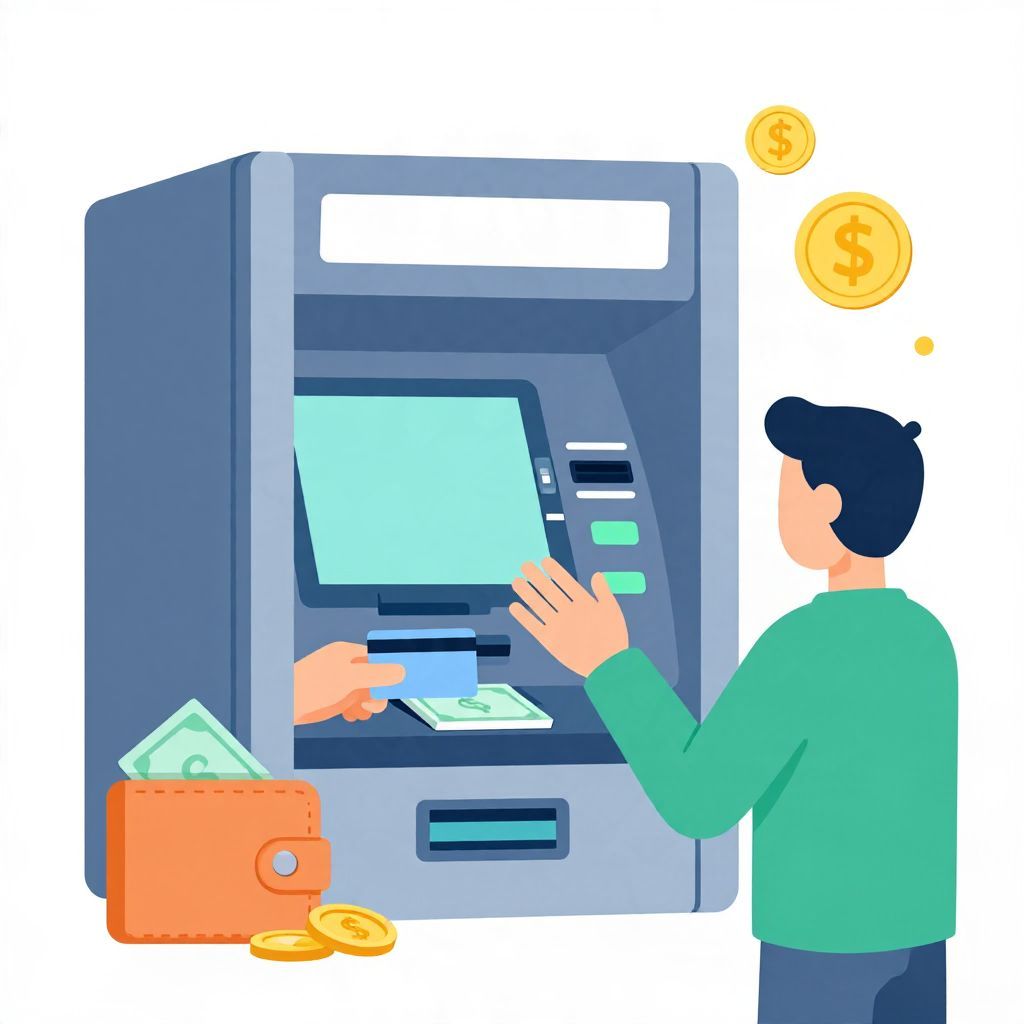
If you want to withdraw cash, check your balance, or deposit money, learning how to use an ATM can save time and make everyday banking easier. The basic process is simple, but the exact screens and options can vary by bank, card type, and country.
This guide explains the usual steps, common ATM features, safety tips, and fees to watch for so you can use an ATM with more confidence.
How To Use An ATM
To use an ATM, insert or tap your debit card, enter your PIN, choose the transaction you want, and follow the on-screen prompts. You can usually withdraw cash, check your balance, transfer money, or deposit cash or checks if the machine supports it. Always review fees and take your card, cash, and receipt before leaving.
Step-by-Step: How To Use an ATM Safely
1. Check that the ATM looks secure
Before you insert your card, take a quick look around. A safe ATM area is usually well lit and clean, with no obvious damage to the card slot, keypad, or screen. If anything looks loose, broken, or unusual, use a different machine.
It is also smart to stand close enough to block others from seeing your PIN. If possible, use an ATM in a bank branch or another busy, reputable location.
2. Insert, tap, or swipe your card
Most ATMs accept a debit card, and some accept credit cards for cash advances. Many newer machines also allow contactless use with a tap-enabled card or digital wallet. Follow the instructions on the screen carefully.
If the ATM asks for your card type or language, choose the option that matches your card and preference before continuing.
3. Enter your PIN carefully
Your Personal Identification Number, or PIN, is the code that protects your account. Enter it slowly and shield the keypad with your hand. Never share your PIN with anyone, and do not write it on your card or keep it in an obvious place.
If you enter the wrong PIN too many times, the ATM or your bank may temporarily block the card for security reasons.
4. Choose the transaction you want
Common ATM options include:
- Cash withdrawal — take money out of a checking or savings account
- Balance inquiry — view your available balance
- Deposit — add cash or checks, if supported
- Transfer — move money between linked accounts
- Mini statement — print a short list of recent activity, where available
Some ATMs also offer bill payment, mobile phone top-ups, or foreign currency services, depending on the provider and country.
5. Follow the prompts and confirm the amount
If you are withdrawing cash, the ATM will usually ask how much you want. Enter the amount carefully. Some machines only dispense certain denominations, so your requested amount may need to fit the available bills.
For deposits, the ATM may ask whether you are depositing cash or checks. You may need to place cash or endorsed checks into an envelope at older machines, while newer deposit ATMs may count items directly. Follow the machine’s instructions exactly.
6. Take your cash, card, and receipt
Many people forget one of these items when they are in a hurry. Always wait until the ATM returns your card and cash before walking away. If you print a receipt, keep it or shred it later, since it may show part of your account information.
Count your cash discreetly after leaving the machine. If the amount is wrong, contact your bank or ATM provider as soon as possible.
Common ATM Transactions Explained
Cash withdrawal
This is the most common ATM use. You request an amount, the machine checks your available balance and daily limit, and then it dispenses cash if the transaction is approved. Your bank may charge a fee, and the ATM operator may charge an additional fee if the machine is outside your bank’s network.
Balance check
A balance inquiry lets you see how much money is in your account. Some ATMs show both your current balance and your available balance. These can differ if pending card purchases, holds, or fees have not fully cleared yet.
Deposit
Deposits can be useful if you want to add cash or checks outside normal branch hours. Availability varies by machine and bank. Deposited funds may not always be available immediately, especially for checks, because banks can place holds while they verify the deposit.
Transfer between accounts
If your accounts are linked, you may be able to move money from checking to savings or vice versa. This can help with budgeting or keeping money separated for bills and savings goals.
ATM Fees and Limits to Watch For
Possible fees
ATM fees depend on your bank, the machine owner, and sometimes your account type. Common charges include:
- Out-of-network withdrawal fees
- ATM operator surcharges
- Cash advance fees if using a credit card
- Foreign transaction or currency conversion fees when using an ATM abroad
Because fees vary by institution and location, it is worth checking your bank’s fee schedule before using a machine outside your network.
Withdrawal limits
Most banks set daily cash withdrawal limits for security. The ATM itself may also have a maximum amount per transaction. If you need more cash than the machine allows, you may have to make multiple withdrawals or visit a branch, depending on your bank’s rules.
Deposit holds
When you deposit a check or cash at an ATM, the funds may not be fully available right away. The timing depends on the bank, the deposit type, and account history. If you need the money quickly, confirm availability before relying on it for an urgent payment.
How To Use an ATM Without Making Common Mistakes
Do not rush through the screens
Read each prompt before pressing “yes” or “confirm.” ATMs sometimes ask whether you want to accept a fee or whether you want the transaction in the local currency or your home currency. The default choice is not always the cheapest one.
Avoid using an ATM if it looks tampered with
Card skimmers and keypad overlays can be hard to spot. Warning signs may include loose parts, unusual stickers, or a card slot that looks different from the rest of the machine. If something seems off, cancel the transaction and find another ATM.
Keep your receipt and account alerts in mind
Receipts can help you track cash withdrawals or deposits, but they are not always necessary. Many people prefer mobile alerts instead, since those can show account activity more quickly. Either way, review your account regularly so you notice errors or unauthorized transactions early.
ATM Safety Tips
- Use ATMs in well-lit, busy places when possible.
- Cover the keypad when entering your PIN.
- Do not accept help from strangers while using the machine.
- Put your cash away before leaving the area.
- Check your account activity after large withdrawals or deposits.
If your card is lost, stolen, or retained by the machine, contact your bank immediately. Most banks can freeze the card and help you understand the next steps.
Using an ATM in Another Country
If you are traveling, ATM use can be slightly different. The machine may offer local currency, and your bank may charge foreign exchange or international ATM fees. Currency conversion rates can also vary by provider, so the final amount you pay may be higher than the displayed withdrawal amount.
When using an ATM abroad, it is often helpful to choose the local currency if you are given a choice, since dynamic currency conversion can be more expensive. That said, the best option depends on your bank, card issuer, and the machine’s terms.
What To Do If Something Goes Wrong
- Card is stuck: Contact the bank or ATM provider right away.
- Cash was not dispensed: Keep the receipt if possible and report the issue immediately.
- Wrong amount charged: Note the time, location, and amount, then contact your bank.
- Deposit not credited: Save any receipt and ask your bank about the review process.
Disputes are usually easier to resolve when you report them quickly and keep documentation. Policies vary by bank and jurisdiction, so follow the instructions your provider gives you.
Quick Summary
How to use an ATM comes down to a few simple steps: insert or tap your card, enter your PIN, choose a transaction, confirm the amount, and take your card and cash before leaving. The most important habits are staying alert, watching for fees, and protecting your PIN.
If you want to build on these basics, you may also find how to set up a bank account and can I deposit cash at any ATM? helpful next reads.