
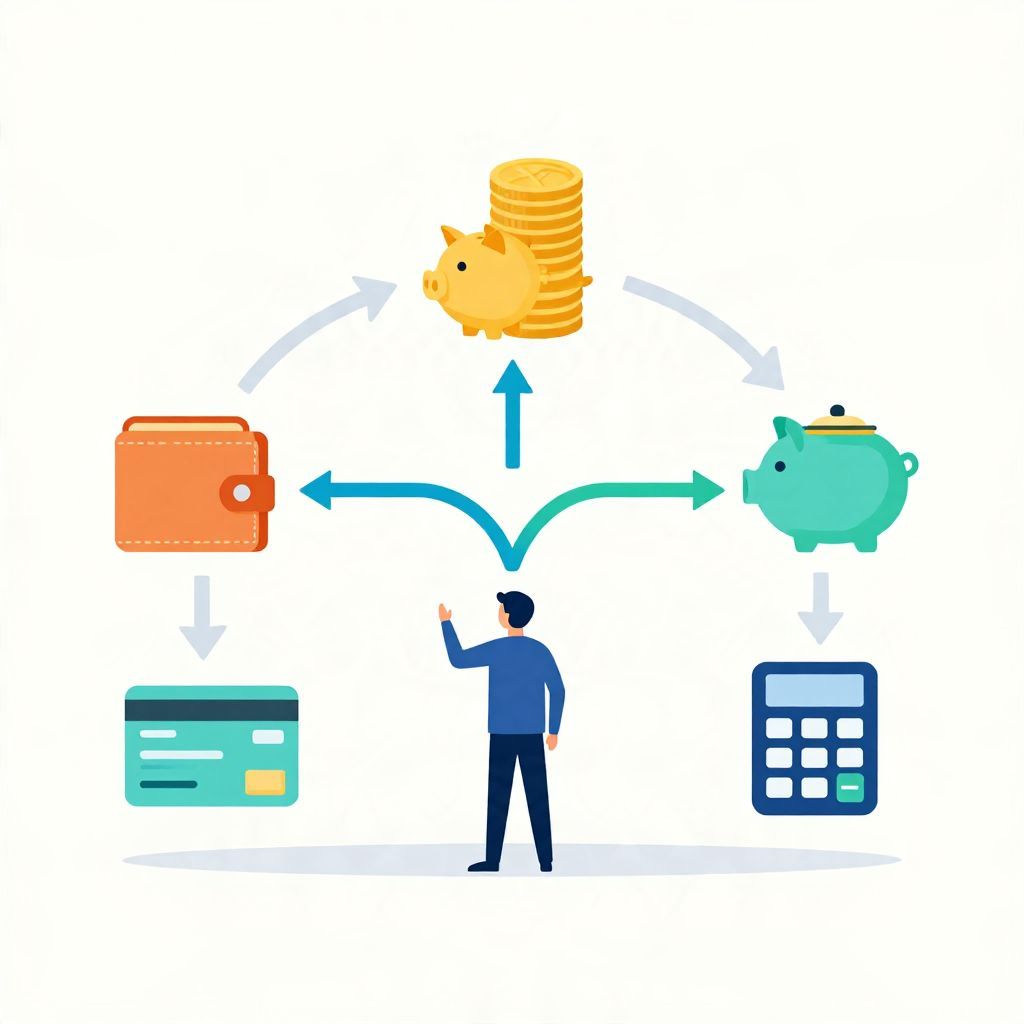
Making the right choices with your money starts with knowing how money works in everyday life: how to budget, save, borrow, spend, and invest without losing sight of your goals. Good money management is less about perfection and more about making informed decisions that fit your income, needs, and risk tolerance.
If you are asking what “managing your money involves knowing how” really means, the short answer is this: it means understanding your cash flow, setting priorities, using credit carefully, planning for emergencies, and choosing financial products based on cost and risk rather than guesswork. Those habits help you avoid unnecessary fees, debt stress, and missed opportunities.
Making the Right Choices With Your Money—Managing Your Money—Involves Knowing How
Managing your money involves knowing how to track income and expenses, build a budget, save for short- and long-term goals, handle debt, protect yourself with insurance, and invest appropriately for your time horizon. The best choices are usually the ones that reduce financial strain, keep costs manageable, and support your future goals.
What “knowing how” means in personal finance
In practical terms, financial knowledge is the ability to compare options and understand consequences. For example, if you know how interest works, you can tell the difference between a low-cost loan and an expensive one. If you know how budgeting works, you can see whether a purchase fits your monthly plan.
Core money skills everyone should learn
- Budgeting: planning where your money goes before you spend it.
- Saving: setting aside money for emergencies and future goals.
- Debt management: borrowing only when needed and understanding repayment costs.
- Credit use: knowing how payments, balances, and utilization affect borrowing ability.
- Banking: choosing accounts and services that match your needs and fees.
- Investing: understanding risk, time horizon, and diversification.
- Tax awareness: recognizing that taxes can change the real value of income and returns.
How to make better day-to-day money decisions
Most financial problems come from small decisions repeated over time: overspending, missing payments, carrying expensive debt, or not saving for irregular expenses. A simple system helps you make better choices consistently.
1. Know your cash flow
Cash flow is the money coming in and going out during a month. Start with your net income, not gross income. Gross income is what you earn before taxes and deductions; net income is what actually reaches your bank account.
- Income: wages, side income, benefits, or other regular money coming in.
- Fixed expenses: rent, insurance, loan payments, subscriptions.
- Variable expenses: groceries, transport, utilities, entertainment.
- Irregular expenses: annual fees, repairs, medical costs, holidays.
A practical budget starts by listing these categories and checking whether your spending is below your take-home pay. If it is not, you need to reduce spending, increase income, or both.
2. Use a simple budgeting method
You do not need a complicated spreadsheet to manage money well. A basic approach is enough if you use it consistently.
- List your net monthly income.
- Write down essential expenses first.
- Set savings goals before discretionary spending.
- Compare planned spending with actual spending.
- Adjust each month based on what changed.
For example, if your net income is 3,000 in your local currency and your fixed costs are 1,700, you have 1,300 left for food, transport, savings, debt payments, and personal spending. If you want to save 300, the rest of your monthly spending must fit within 1,000.
3. Build an emergency fund
An emergency fund is money reserved for unexpected events such as job loss, car repairs, or medical bills. It reduces the need to borrow at high cost when life gets messy.
Many people aim for a small starter fund first, then build toward a larger reserve. The right amount depends on income stability, family responsibilities, and whether your expenses are predictable. The key is to keep this money accessible and separate from everyday spending.
How to think about saving and goals
Saving is not just “money left over.” It is a deliberate decision to delay spending now so you can handle future needs or opportunities. Good saving habits turn vague intentions into specific targets.
Short-term vs. long-term goals
- Short-term: emergency fund, holiday, car maintenance, school fees.
- Medium-term: home deposit, relocation, major purchase.
- Long-term: retirement, financial independence, education funding.
Short-term savings usually belong in safe, liquid accounts because you may need the money quickly. Long-term savings can sometimes be invested, but that introduces market risk and the possibility of loss.
Why saving early matters
When you save or invest earlier, compound growth has more time to work. Compounding means earnings can generate additional earnings over time. This is not a guarantee of profit, but it shows why time is valuable in financial planning.
For example, if two people save the same amount each month, the one who starts earlier may end up with more total wealth even if they contribute less overall, because their money had more time to grow. Results depend on the return earned, fees, taxes, and whether the money stays invested.
How to handle debt without losing control
Borrowing can be useful when it helps you buy something important or manage a temporary gap in cash flow. It becomes risky when the cost of borrowing is high or the repayment schedule is too tight.
Know the real cost of borrowing
When comparing loans or credit cards, look beyond the monthly payment. The key question is: how much will this debt cost in total?
- APR usually refers to the annual cost of borrowing, including interest and sometimes certain fees, depending on the product and jurisdiction.
- Monthly payment tells you affordability, but not the full cost.
- Total repayment shows what you will actually pay over time.
Example: a smaller monthly payment may seem easier, but if it stretches repayment over many more months, you may pay more interest overall. Always compare the full repayment amount, not just the installment size.
Good debt vs. bad debt is not always simple
People often divide debt into “good” and “bad,” but the real answer depends on the interest rate, purpose, and your ability to repay.
- Potentially useful debt: education, business equipment, or a home purchase, if the terms are manageable.
- Riskier debt: high-interest credit card balances, payday loans, or borrowing for nonessential spending.
Even “useful” debt can become harmful if the payment is too large or your income changes. The safest approach is to borrow conservatively and understand the worst-case scenario.
How to reduce debt stress
- Pay at least the minimum on every account to avoid penalties.
- Focus extra payments on the highest-interest debt first, if that fits your budget.
- Avoid adding new debt while you are trying to pay down old balances.
- Contact the lender early if repayment becomes difficult.
How credit fits into money management
Credit is a tool, not free money. Used well, it can help you build a financial track record and smooth out expenses. Used poorly, it can create expensive debt and damage your borrowing options.
What affects credit use
- Payment history
- Amount owed relative to available credit
- Length of credit history
- Types of credit used
- Recent applications for new credit
Exact scoring systems vary by country and lender. If you are trying to build or repair credit, the basics usually matter most: pay on time, keep balances manageable, and avoid unnecessary applications.
Banking choices that support better money habits
Your bank account setup can either help or hinder your money management. The goal is to make spending visible, savings separate, and fees predictable.
Useful banking habits
- Keep a checking account for spending and a separate savings account for goals.
- Turn on low-balance alerts if available.
- Review monthly statements for errors or unwanted charges.
- Understand account fees, overdraft rules, and transfer timing.
Fees matter because they reduce the money you keep. A small recurring fee can add up over time, especially if your balance is low. If a product charges more than the value it provides, it may not be the right fit.
Insurance, investing, and retirement: the bigger picture
Good money management is not only about surviving this month. It also means protecting yourself from major setbacks and preparing for the future.
Insurance helps transfer risk
Insurance can protect against large financial losses from events like illness, accidents, property damage, or death. The right coverage depends on your situation, location, and legal requirements. Too little coverage can leave you exposed; too much can strain your budget.
Investing helps money potentially grow over time
Investing may help your money outpace inflation over long periods, but it comes with risk. Prices can rise and fall, and you can lose money. Before investing, consider:
- How long you can leave the money invested
- How much risk you can tolerate
- Whether you have emergency savings first
- Fees, taxes, and diversification
Short-term money usually should not be exposed to large market swings. Long-term money may have more room for growth-oriented investments, but there are no guarantees.
Retirement planning rewards consistency
Retirement planning is easier when you start early and contribute regularly. The exact account types, tax treatment, and contribution rules vary by country. What matters most is building the habit of saving for the future before lifestyle spending absorbs all your income.
How to make a smart financial decision step by step
When you are unsure what to do with your money, use a simple decision process.
- Define the goal. Is this for safety, growth, convenience, or enjoyment?
- Check the cost. Include fees, interest, taxes, and hidden charges.
- Check the risk. Could you lose money, miss payments, or face penalties?
- Compare alternatives. Look at at least two or three options.
- Match the choice to your timeline. Short-term money should stay accessible.
- Review the outcome. Adjust if the choice does not fit your budget or goals.
Common mistakes to avoid
- Spending based on gross income instead of net income.
- Ignoring small recurring fees and subscriptions.
- Using credit to cover routine overspending.
- Keeping no emergency savings.
- Investing money you may need soon.
- Choosing financial products without reading the terms.
Final takeaway
Making the right choices with your money means understanding the basics well enough to act with confidence: spend less than you earn, save regularly, borrow carefully, and choose financial products based on cost, risk, and purpose. If you want to strengthen the habits behind those choices, you may also find how to build credit as a college student and how starting to save earlier affects compound interest useful next reads.