
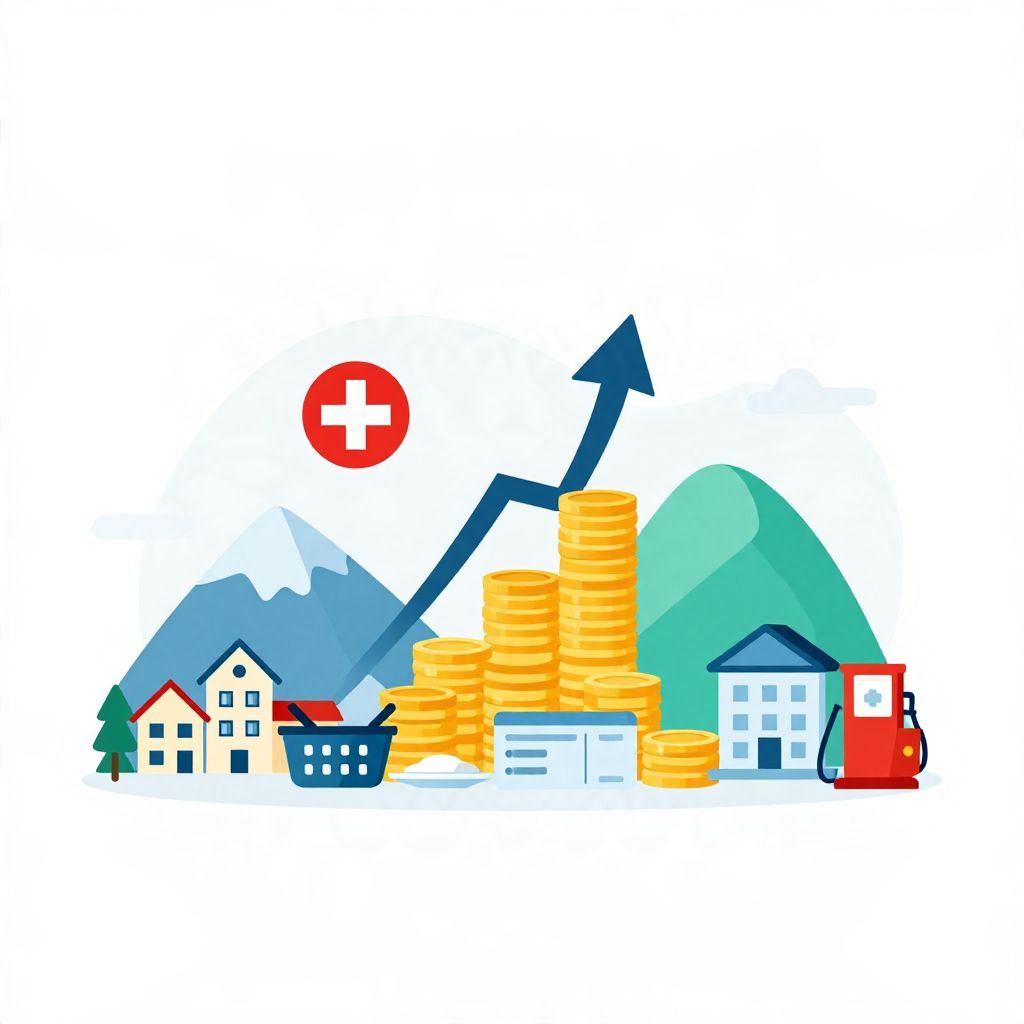
If you’ve wondered why Switzerland is so expensive, the short answer is that a strong economy, high wages, limited land, strict rules, and a high cost of doing business all push prices up. That affects everything from rent and groceries to eating out and transportation.
For visitors and residents alike, the result is a country where everyday life often costs more than in many other places. The upside is that incomes are also generally higher than in lower-cost countries, but your budget still needs to account for the premium.
Why Is Switzerland So Expensive?
Switzerland is expensive because many of the costs that businesses and households face are high at the same time: labor, housing, imports, regulation, and infrastructure. Those higher costs flow through to consumer prices, so you usually pay more for goods and services than you would in many neighboring countries.
The main reasons prices are high
1. High wages raise business costs
One of the biggest drivers is labor. Switzerland has a high-income economy, and employers generally need to pay competitive wages to attract workers. That is good for employees, but it also means restaurants, shops, hotels, and service providers have higher payroll costs.
When a business pays more for staff, it often passes some of that cost on to customers through higher prices. This is especially noticeable in labor-intensive industries like dining, haircuts, childcare, cleaning, and hospitality.
2. Housing is limited and expensive
Switzerland has limited land in desirable urban areas, and housing supply can be tight. In many cities and commuter regions, demand for apartments is strong while available space is constrained. That tends to keep rents elevated.
Higher rent affects more than just tenants. Landlords, retailers, and service businesses also face expensive commercial space, and those costs can show up in the price of a coffee, a meal, or a local service.
3. Imports can cost more
Switzerland is not part of the European Union, and it imports many consumer goods, food items, and raw materials. Imported products can become more expensive because of transportation, compliance, distribution, and exchange-rate effects.
Even when the Swiss franc is strong, imported goods may still carry a premium once they reach store shelves. This is one reason some everyday products can cost more than you might expect compared with nearby countries.
4. Regulations and quality standards add costs
Strict standards can improve safety, quality, and reliability, but they can also raise the cost of doing business. Compliance, testing, packaging rules, and administrative requirements may increase expenses for companies operating in Switzerland.
For consumers, that can mean higher prices but also a different value proposition: more consistency, strong consumer protections, and often high-quality infrastructure and services. Whether that trade-off feels worthwhile depends on your priorities and budget.
5. A strong currency can make local prices look higher
The Swiss franc is often considered a strong currency. For foreign visitors, that can make Switzerland feel especially expensive when prices are converted into their home currency. A meal priced in francs may look much more expensive after exchange rates are applied.
This does not mean every item is overpriced in local terms. It means the cost can feel higher to someone earning or budgeting in another currency. Exchange rates can change, so the impact varies over time.
6. Transportation and logistics are costly
Switzerland’s geography and infrastructure are excellent, but moving goods through mountainous terrain and across a relatively small market can be costly. Distribution, warehousing, and transport expenses all feed into final retail prices.
In a country where many goods are imported and then distributed efficiently but at a premium, even small extra costs can matter. That is one reason everyday consumer items may be pricier than in larger, lower-cost markets.
What gets expensive in Switzerland?
Groceries
Groceries often surprise first-time visitors. Basic items such as bread, dairy, meat, and packaged foods can cost more than in neighboring countries. The exact difference depends on the store, brand, and whether the item is locally produced or imported.
For example, a family that spends 800 CHF per month on groceries in Switzerland might spend substantially less in a lower-cost country, but the comparison depends on diet, shopping habits, and location. Premium products and imported brands usually widen the gap.
Rent and utilities
Housing is one of the largest budget categories for residents. Rent can take a significant share of income, especially in major cities and popular commuter areas. Utilities may also be relatively high depending on the property and local service structure.
If you are planning a move, it is wise to budget conservatively. A common budgeting mistake is focusing only on rent and forgetting move-in costs, deposits, insurance, commuting, and furnishings.
Dining out
Restaurants tend to be expensive because they combine high labor costs, high rents, and food sourcing costs. Even casual meals can feel pricey compared with other countries.
If you eat out frequently, the difference can add up quickly. For example, a lunch habit that costs 15 CHF to 25 CHF per day can become a major monthly expense if repeated on workdays.
Childcare and services
Services that require a lot of human labor often cost more in Switzerland. Childcare, home repairs, personal care, and some professional services can be expensive because wages and overhead are high.
This matters for family budgeting. A household may find that childcare costs affect savings goals, emergency fund contributions, or the ability to pay down debt faster.
Is Switzerland expensive for residents or just tourists?
Both, but in different ways. Tourists feel the impact immediately because they pay out of pocket for hotels, meals, transport, and attractions. Residents feel it through recurring costs like rent, insurance, groceries, and services.
Residents may also earn higher wages on average than people in many other countries, which helps offset some of the expense. Still, a high income does not automatically mean a comfortable budget if housing and everyday costs are also high.
How to budget for Switzerland if you live there or plan to visit
1. Build a realistic daily spending estimate
Start with three categories: lodging or rent, food, and transportation. Then add a buffer for taxes, fees, and incidental spending.
- Travelers: estimate per day for meals, local transit, and small purchases.
- Residents: estimate monthly rent, groceries, insurance, commuting, and household items.
- Everyone: add a cushion for unexpected costs.
2. Compare gross and net income if you are moving
If you are considering a job in Switzerland, compare your gross salary with your expected net pay after taxes, social contributions, and mandatory deductions. A high gross salary can look impressive, but your take-home pay is what matters for budgeting.
For example, if a job pays 120,000 CHF gross per year, your net amount will be lower after deductions. The exact difference depends on your canton, household situation, insurance choices, and other factors, so it is best to use a local salary calculator or employer estimate rather than assume a fixed percentage.
3. Watch the exchange rate if you budget in another currency
If you earn in euros, dollars, pounds, or another currency, exchange rates can change your real cost. A trip that looked affordable last month may become more expensive if your home currency weakens.
To reduce surprises, convert your budget using a conservative exchange rate and keep a margin for currency shifts and card fees.
4. Look for ways to reduce fixed costs
Fixed costs like rent, insurance, and commuting are harder to cut than discretionary spending, so they deserve the most attention.
- Choose housing carefully, especially if you can live slightly outside the most expensive areas.
- Compare service plans and insurance options where allowed.
- Use public transport when it is more efficient than driving.
- Cook more meals at home if you are trying to control food spending.
Does a high cost of living mean Switzerland is a bad value?
Not necessarily. “Expensive” does not automatically mean “bad value.” The right question is whether the higher prices are matched by higher income, quality, safety, infrastructure, or personal preference.
For some people, the trade-off is worthwhile because of career opportunities, public services, stability, and quality of life. For others, the same price level may make it difficult to save, invest, or manage debt comfortably.
What to know before making financial decisions around Switzerland
If you are moving there
Before accepting a job or lease, estimate your monthly budget using realistic figures for rent, groceries, insurance, and transportation. Do not rely only on salary headlines or broad cost-of-living impressions.
If you are traveling there
Book early when possible, compare lodging options, and set a daily spending limit. Even simple choices, like eating one meal from a grocery store instead of a restaurant, can make a noticeable difference over several days.
If you are comparing countries
Compare like with like. A country with higher wages, stronger currency, and better infrastructure may also have higher prices. The right comparison is not just “cheap versus expensive,” but total cost versus expected income and lifestyle.
Bottom line
Switzerland is expensive because many cost drivers stack together: high wages, costly housing, imported goods, strong consumer standards, and an expensive business environment. If you budget carefully and understand the trade-offs, the higher prices are easier to plan for. For more context on cost-of-living comparisons, you may also find why California is so expensive and this Switzerland cost guide useful.