
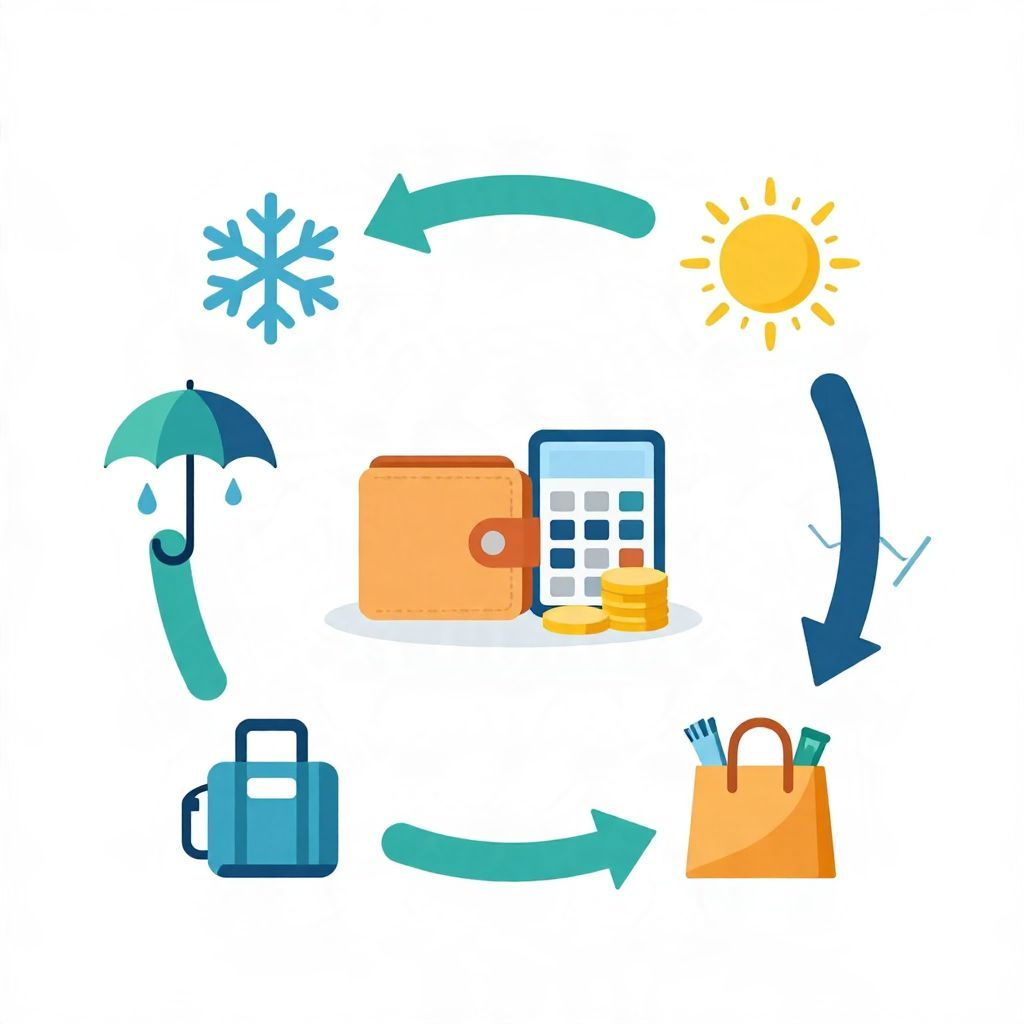
If your budget feels easy in one month and much harder in another, you are not imagining it. Variable expenses can change a great deal at different times of year because many everyday costs rise and fall with seasons, holidays, weather, school schedules, travel, and one-off events.
Understanding those patterns helps you plan ahead, avoid surprises, and build a budget that works across the whole year instead of only in “normal” months.
Why might variable expenses change a great deal at different times of year?
Variable expenses change because they are not fixed by contract and often depend on how much you use, what you buy, and when you buy it. Seasonal needs, holiday spending, utility usage, travel, back-to-school costs, and irregular maintenance can all make spending higher or lower at different times of year.
What counts as a variable expense?
Variable expenses are costs that can move up or down from month to month. Unlike rent or a mortgage payment, they are not usually the same every billing cycle.
Common examples
- Groceries and dining out
- Gas or public transit
- Electricity, heating, and cooling
- Clothing and shoes
- Entertainment and travel
- Gifts and holiday spending
- Car repairs and home maintenance
- School supplies and childcare extras
Some of these costs are partly predictable, but the exact amount can still vary a lot. That is why a budget based only on one month can be misleading.
Common reasons variable expenses change during the year
1. Weather and seasons affect utility bills
Heating and cooling costs often rise when temperatures are extreme. In winter, heating can increase gas, electricity, or fuel use. In summer, air conditioning can push electricity bills higher. Even if your monthly usage is similar in “effort,” the cost can still change because the weather changes your energy demand.
Seasonal weather can also affect other spending. You may buy more warm clothing, winter tires, umbrellas, sunscreen, or home supplies depending on the season.
2. Holidays and celebrations increase spending
Many people spend more during holiday periods because of gifts, travel, food, decorations, and social events. These expenses may be optional, but they are still real budget items. If you do not plan for them, they can create credit card debt or force you to cut back later.
Birthdays, weddings, graduations, religious holidays, and family gatherings can also create spending spikes at specific times of year.
3. School schedules create predictable spikes
Families often see higher expenses at the start of a school term. Back-to-school spending may include supplies, uniforms, clothes, technology, sports fees, lunch money, and transportation. College students may also face move-in costs, textbooks, and dorm or apartment setup expenses.
Even if these costs happen only a few times a year, they are still part of annual living expenses. Spreading them across 12 months can make budgeting easier.
4. Travel and vacation plans are often seasonal
Travel is a classic variable expense because it depends on timing, destination, and length of trip. Costs may rise during school breaks, public holidays, or popular travel seasons. You may also spend more on gas, flights, hotels, food, parking, and activities.
Even “staycations” can affect your budget if you eat out more, attend events, or pay for local entertainment.
5. Food spending can shift with routines
Groceries are variable because they depend on household size, diet, and how often you cook at home. In some months, spending may rise because of guests, holidays, or busy schedules that lead to more takeout. In other months, it may fall if you eat more simply or use what is already in the pantry.
Food prices can also change over time, which means the same shopping list may cost more in one season than another. That is one reason budgeting for groceries should include a cushion.
6. Car use changes with the time of year
Gas spending can rise when you drive more for trips, school runs, commuting changes, or holiday travel. Car maintenance may also cluster in certain months, especially before long trips or during weather changes. For example, you might buy tires, wiper blades, or perform seasonal servicing at specific times of year.
Insurance premiums are often fixed for the policy period, but related out-of-pocket costs like repairs, deductibles, and registration can still vary.
7. Home maintenance is often irregular
Some home costs do not happen every month but can be substantial when they do. Examples include roof repairs, HVAC servicing, lawn care, pest control, snow removal, and appliance replacement. These are variable because they depend on property condition, climate, and whether something breaks.
Homeowners and renters alike may face seasonal costs, such as winterizing a property or paying more for cooling in hot months.
8. Income timing can influence spending patterns
When income is irregular, variable expenses may appear to change even if your habits stay similar. For example, someone paid by commission, freelance work, seasonal employment, or overtime may spend more in higher-income months and less in slower months. That can make yearly budgeting more complicated.
It is important to separate spending changes from income changes. A month with higher expenses is not always a sign of overspending; sometimes it simply reflects a planned seasonal cost.
Why seasonal changes matter for budgeting
Seasonal variation matters because a monthly budget should reflect the whole year, not just one average month. If you budget only for your lowest-expense months, you may run short when larger bills arrive. If you budget only for your highest-expense months, you may overestimate what you need and miss opportunities to save.
A simple example
Suppose your monthly variable expenses look like this:
- Groceries: $450 most months, $600 during holidays
- Gas: $120 most months, $200 during travel months
- Utilities: $140 in mild months, $240 in extreme-weather months
- Gifts and celebrations: $50 most months, $300 in certain months
Your spending is not “wrong” in the high months. It is just uneven. If you only budgeted from a mild month total, you would likely be caught off guard later.
How to plan for variable expenses that change through the year
Track spending for at least 12 months
The most useful way to understand variable expenses is to review a full year of spending. That helps you see patterns that monthly snapshots miss. If you cannot review a full year, start tracking now and note any seasonal events that affect spending.
Separate needs from wants
Some seasonal expenses are necessary, such as heating, school supplies, or basic car maintenance. Others are optional, such as extra gifts, premium travel, or entertainment upgrades. Distinguishing between the two helps you decide where to adjust if money gets tight.
Create sinking funds
A sinking fund is money you set aside gradually for a known future expense. This is especially useful for expenses that happen once or a few times a year, such as holiday gifts, insurance deductibles, vacations, or annual subscriptions.
For example, if you expect to spend $600 on holiday gifts, saving $50 per month for 12 months can make that expense easier to handle. The exact amount depends on your goal and timeline.
Build seasonal categories into your budget
Instead of one generic “miscellaneous” line, consider separate categories for:
- Holiday gifts
- Travel
- Back-to-school costs
- Home maintenance
- Car repairs
- Seasonal clothing
This makes it easier to see what is driving the change in your spending.
Use annual totals, not just monthly averages
Monthly averages can be helpful, but annual totals are often more accurate for planning. For example, if you spend $1,200 on travel over a year, that averages $100 per month. Even if you do not travel every month, setting aside $100 monthly may be a practical way to prepare.
When variable expenses become a warning sign
Not every increase is a problem, but some changes deserve attention. Variable expenses may be a concern if they rise because of impulse spending, repeated overdrafts, growing credit card balances, or a pattern of buying to cope with stress.
Signs to watch for
- You regularly spend more than you planned and do not know why
- You rely on credit cards to cover routine expenses
- Your savings rate drops every time a seasonal cost appears
- You are surprised by the same expenses every year
- You are cutting essential spending to pay for nonessential seasonal purchases
If these patterns keep happening, reviewing your budget categories and setting aside money earlier in the year can help.
How to reduce the impact of seasonal expense swings
Look for timing, not just price
Sometimes the best way to manage variable expenses is to change when you buy, not only what you buy. Buying gifts early, booking travel in advance when possible, or scheduling maintenance before a breakdown can reduce stress and may lower costs. However, there is no guarantee of savings, and early purchases should still fit your budget.
Compare before you commit
For larger variable expenses, compare options carefully. This may include utility plans, travel choices, repair quotes, or insurance deductibles. The lowest upfront price is not always the lowest total cost, especially if it comes with higher fees, less flexibility, or more risk.
Keep a buffer in your checking account
A small cash cushion can help absorb temporary spikes in spending without forcing you into debt. The right amount depends on your income stability and regular obligations. Even a modest buffer can reduce the chance of overdrafts or late payments.
Variable expenses and debt: why the connection matters
When variable expenses rise unexpectedly, people sometimes turn to credit cards, buy now pay later plans, or personal loans. These tools can help in an emergency, but they also add costs through interest or fees. If the expense is predictable, saving in advance is usually cheaper than borrowing for it.
That said, some situations are unavoidable. The key is to understand the trade-off: borrowing may solve a short-term cash flow problem, but it can make the total cost higher over time.
Bottom line
Variable expenses change a great deal at different times of year because daily life is seasonal. Weather, holidays, school calendars, travel, home upkeep, and irregular needs all affect how much you spend. The best response is to track patterns, plan for known spikes, and build a budget that reflects the full year, not just one month. For more budgeting guidance, see making the right choices with your money and, if location-based costs are affecting your budget, why California is so expensive.